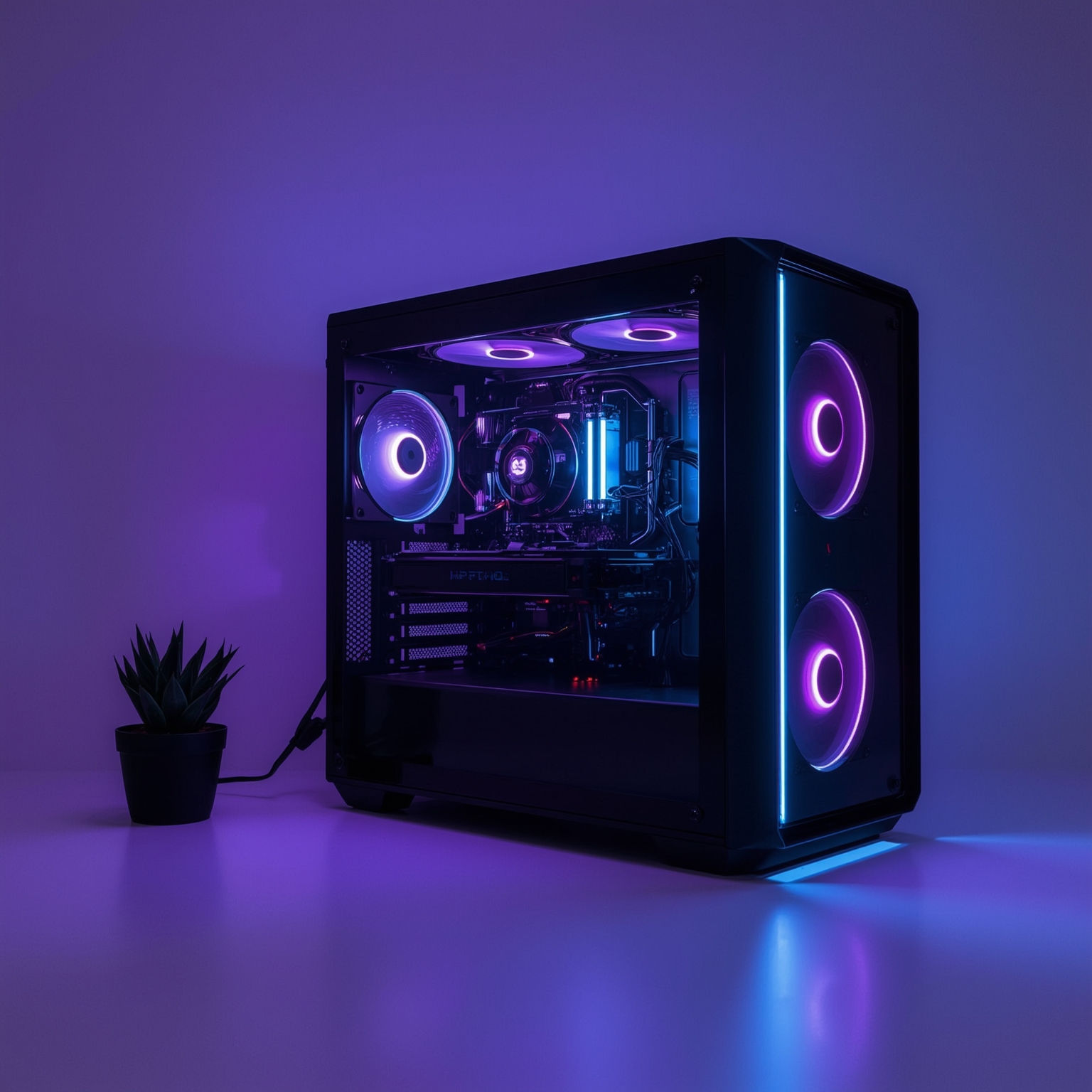
Building your own PC is a remarkably achievable endeavor for anyone with a modicum of patience and curiosity. While assembling a personal computer might seem intimidating at first glance, the actual process is far less daunting than many assume. It primarily requires time, organization, and a willingness to learn the intricacies of hardware compatibility. However, that time investment can be significant, and for some, the hours spent sourcing, assembling, and troubleshooting might feel disproportionate to the reward. Yet, the satisfaction derived from powering on a computer that you have meticulously configured from the ground up—knowing precisely which components are inside and how each can be upgraded in the future—creates a sense of ownership no pre-built tower can easily match.
For that reason, companies like Maingear, which specialize in high-performance custom desktops, must go beyond mere technical excellence to justify their premium pricing. Their challenge is to offer something so meticulously crafted, visually distinctive, or technically refined that even the most capable do-it-yourself enthusiasts recognize its value. From even a cursory glance at the photograph above, it becomes obvious that Maingear has successfully found its differentiator with the Apex Rush—a system designed not only to perform at elite levels but to look stunning while doing so. Properly maintained, this ultra-expensive, artistically inspired tower could easily pass for a functional work of modern art.
Previously, when I reviewed Maingear’s MG-1 desktop, I found it to be a thoughtfully assembled and highly customizable system, albeit one whose external design looked somewhat close to what I might have cobbled together myself using off-the-shelf components. However, opening the case revealed what elevated it above an ordinary DIY project. The internal structure included an expertly engineered screw-in GPU bracket that firmly secured the graphics card, while the neatly channeled cable management would impress even the most seasoned IT professionals. The interior lighting was elegant rather than gaudy—a slim RGB strip bathed the components in a subtle, ambient glow that spoke to refinement rather than excess. In short, the MG-1 was expertly put together but retained a utilitarian simplicity that could, to the untrained eye, be mistaken for a hobbyist’s weekend build.
The Maingear Apex Rush Artist Series takes that attention to detail several steps further. Though a self-built system could certainly save you a significant amount of money—often by a margin of hundreds or even thousands of dollars—it would be difficult to replicate the Apex Rush’s polished presentation, sophisticated cable routing, and gallery-worthy exterior finish. The artwork that decorates its tempered-glass panels transforms the unit from a machine into a signature object. Its structural integrity, component stability, and cooling performance are all exemplary, geared squarely toward hardcore gamers and enthusiastic creators who demand top-tier responsiveness. Of course, that artistry and craftsmanship come at a substantial premium. The glass surfaces, no matter how beautifully finished, can be susceptible to scuffing or scratches if treated carelessly, and the limited number of front and rear input ports might disappoint users accustomed to broader connectivity options.
When Maingear unveiled the Apex Rush during CES 2025, company CEO Wallace Santos explained in an interview with Gizmodo that the goal was to design a desktop unlike any other in both aesthetic presence and functional capability. The resulting Artist Series delivers on that ambition. My review configuration combined AMD’s cutting-edge Ryzen 7 9800X3D processor with Nvidia’s commanding GeForce RTX 5080 graphics card, supported by 32 GB of RAM, a spacious 2 TB solid-state drive, and a cooling ecosystem loaded with RGB illumination inside and out. This top-tier setup retails for approximately $4,325—roughly $1,000 more than the prior-generation MG-1, which featured an Intel 14th‑generation CPU and Nvidia’s RTX 4080 Super. It’s important to note that the Artist Series further elevates the cost thanks to the bespoke artwork on the case, making it as much a collector’s item as a performance machine.
If one were to build an equivalent computer independently using individually sourced parts, the total might come closer to $2,600, even without pursuing discounts. The significant difference in price essentially buys a stress-free, polished experience—complete assembly, expert validation, and robust lifetime support. At that investment level, the Apex Rush is designed to be a long-term companion, a machine capable of anchoring your setup for many years before any major replacement becomes necessary. The included MSI Pro B850-P motherboard provides enough RAM and PCIe expansion slots to support meaningful future upgrades. Still, for buyers guided solely by specifications, similar configurations from other builders—such as a well-equipped Cyberpower PC Gamer Supreme—can be found for under $3,000. The justification for choosing Maingear, therefore, comes down to the craftsmanship, aesthetic allure, and seamless ownership experience. Whether its striking exterior remains immaculate over the years depends entirely on your willingness to protect it from hazards such as errant impacts or curious cats mistaking it for a convenient launching pad.
The Apex Rush’s panels attach via precision pressure-fit pins, allowing for straightforward removal of both front and side sections when cleaning or upgrading hardware. Its vibrant visual aesthetic evokes an unmistakable retro energy reminiscent of Grand Theft Auto: Vice City’s neon-drenched Miami tones. The unit’s “fishbowl” glass sides, one on the front and one on the left, are adorned with high-quality vinyl artwork bordered by multicolor LED lighting. Buyers can select from several distinctive art variations: the futuristic “Machina,” a pan-Asian-themed “Good Fortune,” or the “Night Drive” edition, which I had the opportunity to review. The latter’s palette harmonizes exquisitely with the internal RGB components—the fans, RAM modules, and liquid-cooling loop—creating a cohesive and immersive glow. The only visual misstep is the oversized “Maingear” logo emblazoned on the front panel, whose glaring brightness occasionally detracts from the overall serenity of the design.
Maingear’s confidence in its assembly quality is evident in how it ships its machines. Unlike many competing manufacturers, it doesn’t require additional foam support within the interior chamber to ensure safe transit. Every component, including the GPU, is solidly secured in place by a carefully engineered printed bracket. True to expectations, the Apex Rush is a heavy unit—it’s not made for casual relocation. Mobility comes at the expense of durability where the artwork is concerned; repeated moving risks damaging the delicate finish, particularly on the glass panels. In my own experience relocating the review unit several times, minor scratches appeared on the painted portions of the upper glass and along the metallic edges of the top panel. The metal framework, however, withstood movement admirably. The lesson is clear: while this machine is robust at its core, it deserves to be treated with the gentleness afforded to fine furniture rather than the rough handling of typical gaming gear.
Another thoughtful but arguably imperfect design choice concerns input and output placement. Whereas many towers awkwardly situate their primary ports on the top panel—leading to a tangle of protruding dongles and cables arching over the chassis—the Apex Rush intelligently relocates its front I/O cluster near the right front foot. This arrangement, though aesthetically cleaner, offers only modest functionality: one USB-C port, two USB-A ports, and a headphone jack. Users reliant on multiple modern peripherals may find this limiting, and the placement, while sleek, could benefit from a more ergonomic position on the near-facing side. The rear panel continues this minimalist approach, providing four USB-A 2.0 ports, two high-speed USB-C 10G sockets, and an HDMI interface. Heavy multitaskers might wish for a broader selection akin to what Alienware supplies on its extravagant Area‑51 unit.
Inside, the Apex Rush exemplifies Maingear’s hallmark precision. The interior is left unapologetically technical—no superfluous plastic covers cloaking the motherboard or hiding the circuitry. This open presentation highlights the inherent beauty of silicon, wiring, and heat sinks working in concert, exposing what many enthusiasts love about computing hardware: the intricate machinery of digital life. Every cable follows an exacting path, disappearing through multiple discreet openings that route them cleanly behind the motherboard tray. There, in the back compartment, Maingear’s organizational workmanship truly shines. All wires descend neatly toward the side-mounted power supply unit, neatly fastened with reusable Velcro ties and shielded by a hinged metal door that grants easy access when modifications are required. The particular PSU included in my configuration—an MSI MAG A850GL rated at 850 watts—provides reliable power delivery suitable for the RTX 5080 GPU, though it approaches the threshold of its capacity should one ever upgrade to the beefier RTX 5090. The system offers enough modular flexibility to accommodate future swaps, whether staying with Nvidia or migrating to an AMD alternative further down the technological road.
Performance-wise, the Apex Rush behaves exactly as its pedigree suggests. If Alienware’s enormous Area‑51 desktop strives to impress through sheer bulk and ostentation, Maingear’s offering achieves its impact through sophistication, whisper-quiet operation, and immaculate visual harmony. Its AMD Ryzen 7 9800X3D processor stands near the pinnacle of consumer-grade CPUs, known particularly for its gaming dominance. When benchmarked against Intel’s Core Ultra 9 285K, the AMD chip consistently delivers higher frame rates and smoother gameplay. Intel’s Arrow Lake generation, at least during its early life cycle, struggled under unfavorable comparisons, requiring multiple microcode updates to approach the expected balance of efficiency and performance. Even so, AMD’s chip remains the stronger choice for gaming, thanks to its unique 3D V‑Cache layering technology, which expands the CPU’s available memory bandwidth—a crucial advantage in modern gaming workloads.
As for graphics performance, Nvidia’s newer RTX 50‑series has matured admirably since launch. Driver updates have stabilized output and improved frame rates across most contemporary titles. In synthetic benchmarks such as 3DMark Speedway, the Apex Rush’s configuration surpasses older setups by roughly 200 points, and in the more demanding Steel Nomad test, by closer to 500 points. In practical gaming terms, this equates to noticeable gains: for instance, Cyberpunk 2077 running with ray tracing enabled and DLSS tuned to balanced mode performs about five frames per second better on the Apex Rush compared to a similarly equipped system running on Intel’s Core Ultra 9 285K processor. CPU‑heavy titles such as Total War: Warhammer III benefit even more substantially from AMD’s architecture.
Of course, expectations must remain realistic. Even a machine of this caliber cannot produce miracle-level performance without assistance from AI upscaling technologies like DLSS. To achieve absolute maximum fidelity at native 4K resolutions without such aids would demand the still‑unreleased RTX 5090—and an even deeper dent in the wallet. At present, the RTX 5080 strikes a sweet balance between cost, heat efficiency, and cutting-edge capability, marking it as the current gold standard for uncompromised high-resolution gaming.
Still, the Apex Rush’s luxury status comes with a cost premium that not every buyer will find easy to justify. It undeniably costs more than an equivalent homemade rig or even other premium prebuilds. Yet, the value becomes clearer when factoring in Maingear’s lifetime support guarantee, complimentary repair services, and an unblemished software environment free from unnecessary factory-installed bloatware. The company’s reputation for craftsmanship and reliability remains intact, and in the Apex Rush, it demonstrates what happens when a gaming PC transcends its utilitarian roots to become a statement of artistry, engineering, and enduring performance.
Sourse: https://gizmodo.com/maingear-apex-rush-desktop-pc-review-gaming-benchmarks-2000670460