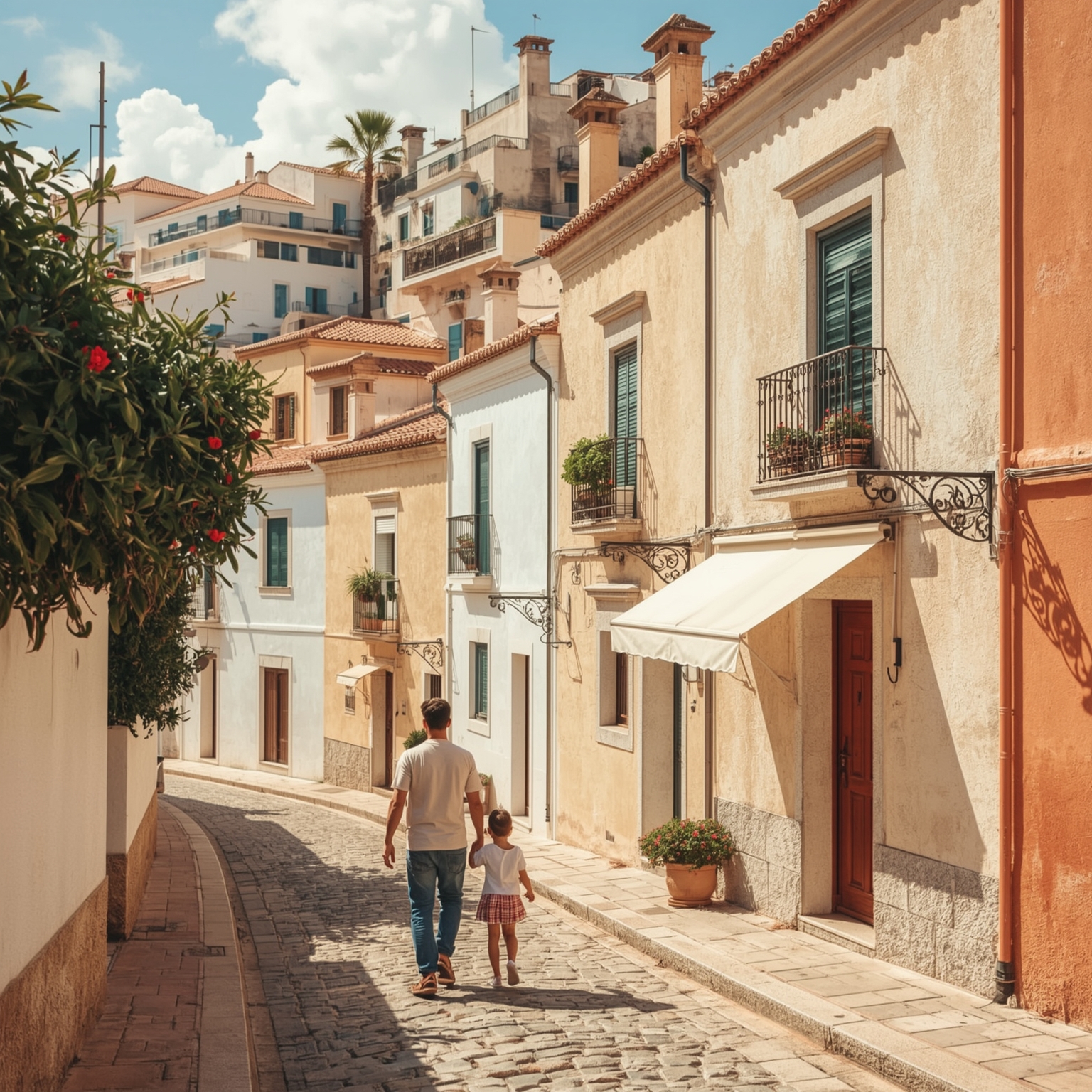
This as-told-to narrative is drawn from an extensive series of conversations with Izabela Oquendo, a 35‑year‑old mother of two who made the profound decision to relocate her family from the familiar rhythms of Connecticut to the sun‑drenched coast of Alicante, Spain. The exchange has been carefully edited for both clarity and length to preserve the authenticity of her voice while enhancing readability.
At first glance, Izabela’s life in Connecticut appeared enviable—almost cinematic in its image of prosperity and stability. She and her husband were each flourishing professionally: she as an accountant with a solid roster of clients, and he as a reputable home inspector whose business was steadily growing. Their material circumstances mirrored what many would define as success: two gleaming, recently purchased cars parked proudly on their driveway and a meticulously renovated two‑story, 2,000‑square‑foot home that they had invested countless hours and energy into perfecting. From the outside, it looked like the embodiment of the American dream—prosperous careers, a thriving household, and apparent contentment. Yet beneath that polished exterior, Izabela admits, genuine happiness was eluding them.
Personal and emotional turbulence began to shadow their outward achievements. They experienced conflicts and painful fallouts with close friends, leaving an empty space where companionship and support had once existed. In 2023, Izabela’s father passed away, an event that profoundly altered the emotional landscape of her family. Simultaneously, her mother—originally from Poland—decided to return to her homeland to care for her ailing brother. These changes, compounding one another, left the couple feeling profoundly isolated, as though their robust, interconnected life in Connecticut had quietly unraveled.
Prompted by a longing for reconnection, both familial and personal, they began to contemplate a radical change of scenery. The idea of moving closer to Izabela’s mother began to take shape, coupled with the enticing vision of living in a warmer, seaside climate. Since the family naturally gravitated toward the ocean and found renewed joy near the beach, Spain—with its Mediterranean allure—emerged as the perfect destination. In January 2024, they embarked on an exploratory trip to experience the country first‑hand. Almost immediately, the warmth, cultural vibrancy, and coastal beauty convinced them that this new environment resonated with what they had been seeking.
Before taking the leap overseas, they undertook a deliberate and liberating process of simplification. They sold their Connecticut home and auctioned off nearly all of its contents—every piece of furniture, kitchen utensil, and accumulated trinket that had once filled their expansive house. They even released ownership of their additional real‑estate investments, managing to secure a respectable profit. But before crossing the Atlantic, they fulfilled a long‑held dream: an extended RV road trip across the United States. For Izabela, it was both a practical experiment—testing whether she could manage her accounting business remotely—and an emotional endeavor meant to strengthen family bonds before immersing themselves in an entirely new culture and language.
In July 2024, the family set out on their American odyssey. Their route wove through a tapestry of states—Tennessee, Kentucky, Michigan, South Dakota, Washington, Montana, California, Nevada, Arizona, and Texas—each stop adding layers to their shared experience. The children, still young enough to embrace novelty without hesitation, delighted in every unfamiliar vista, every campsite, and each day spent discovering new corners of the country. By early 2025, they returned to Connecticut filled with stories and memories but also a clarity of purpose about their impending move abroad.
As they waited for their international relocation to finalize, the Oquendos temporarily settled into a modest apartment within a beachside community, paying around $2,000 per month. The shift—from an expansive suburban house to a compact apartment—was a symbolic and practical preparation for the life of minimalism that awaited them in Europe.
When May arrived, so did their transatlantic transition. They arrived in Spain carrying only what truly mattered: two large suitcases, two carry‑on bags, and nine boxes shipped separately. Every remaining possession had been thoughtfully chosen. Because Izabela holds Polish citizenship through descent, she and the children entered Spain as EU citizens, simplifying the bureaucratic process. Her husband later secured his legal residency through Spain’s family reunification visa, ensuring that the family could remain together without complication.
Settled in Alicante—just south of Valencia—the family found themselves in a thriving urban center experiencing rapid growth and development. The skyline was dotted with cranes and new apartment buildings. The city bustled with a cosmopolitan energy; people from across Europe mingled there, reflected in the variety of languages heard on the streets and the international spread of restaurants. And yet, despite the vibrancy, Izabela sometimes felt that the environment lacked the traditional Spanish essence she had idealized. If given another chance, she mused, she might have chosen a smaller, more authentically Spanish town to immerse the family more deeply in local culture.
Their new apartment—approximately 1,500 square feet, furnished with three bedrooms and two bathrooms—was comfortable but presented challenges. Having always lived in detached homes, both Izabela and her husband had to adapt to shared walls and quieter routines, particularly with young children full of energy. Despite this, they were already envisioning the next phase: purchasing a home of their own within several months, ideally in a more traditional community. They also hoped to extend an invitation for Izabela’s mother to join them for part of the year once they acquired a larger residence. One particularly charming coastal city, Calpe, had caught their attention—a picturesque town adorned with cafés, boutiques, and a beach that evoked precisely the Mediterranean lifestyle they had imagined.
Yet, life in Spain came with unexpected financial realities. Izabela openly admitted her surprise at the cost of living, which turned out to be notably higher than anticipated. When they first began researching the move, Spain’s reputation for affordability had strongly influenced their decision, but economic changes in recent years had altered that equation. Their rent matched what they had paid in Connecticut, and grocery expenses proved nearly identical. Although they appreciated the experiences money could not buy—sunshine, culture, and a slower rhythm of life—the pragmatic side of relocation proved more expensive than expected.
Language, too, presented its set of obstacles. Her husband’s functional Spanish provided some assistance, yet the local dialect and cultural nuances often made communication more complex than anticipated. Despite these challenges, they gradually adapted. Izabela’s attention, however, was most focused on how her children would transition—learning a new language, forming friendships, and integrating socially. From the outset, she prioritized education and cultural adaptation by enrolling them in dedicated Spanish lessons to build linguistic foundations. Her daughter, an outgoing and sociable child, initially struggled to connect with classmates because spontaneous conversation was hindered by the language barrier. The difficulty was emotionally taxing, particularly since socializing had always come easily to her back in the U.S. Thankfully, participation in an English‑language camp provided a safe space for interaction and confidence building, helping her bridge the gap between familiar and new worlds.
Reflecting on this aspect of parenting abroad, Izabela advises other families to approach the process of relocation and cultural adaptation with empathy and patience. She emphasizes that children possess remarkable resilience—they can adjust to dramatic change if guided with steadiness and love. Drawing on her own childhood as the daughter of Polish immigrants, she understands that stability is not rooted in geography or wealth but in consistency, presence, and emotional security within the family structure.
This new chapter has prompted a reevaluation of what truly defines happiness for the Oquendo family. Before leaving Connecticut, their days were dominated by the hustle of work—both parents constantly in motion, sometimes crossing paths only briefly between professional obligations. Life had become a relentless pursuit of achievement and accumulation. In Spain, that exhaustion has been replaced with slower rhythms and more intentional living. Izabela continues to practice accounting and bookkeeping remotely for her U.S. clients but intentionally limits her work hours, now focusing her time on emerging interests in holistic and therapeutic practices. During her months traveling the U.S., she began writing a book exploring purpose and meaning—a project she completed and published after settling in Spain. That creative journey became both a literal and metaphorical guide to the transformation her family experienced.
Her typical day now unfolds at an unhurried pace: her husband takes their daughter to school while she begins her morning bookkeeping tasks. She works for only part of the day before collecting her daughter at two in the afternoon, and together they share lunch, run errands, take leisurely walks, and simply enjoy unstructured time—a striking contrast to her former ten‑hour workdays. The rhythm of life feels expansive rather than compressed.
Perhaps the most profound change, Izabela reflects, is internal. Her sense of happiness is no longer tethered to professional advancement, possessions, or measurable successes. Whereas once she and her husband were perpetually striving for larger houses, finer cars, and more clients, today her ambitions are simpler, rooted in emotional fulfillment and familial harmony. They still work and plan for the future, but now those goals serve their happiness instead of defining it. Money, once central to their sense of security and pride, has taken its rightful place as a tool rather than a purpose. In this shift, Izabela has discovered that the truest wealth lies not in accumulation, but in peace of mind, meaningful relationships, and the unhurried joy of everyday life beneath the Spanish sun.
Sourse: https://www.businessinsider.com/family-moves-connecticut-to-spain-more-expensive-2025-10