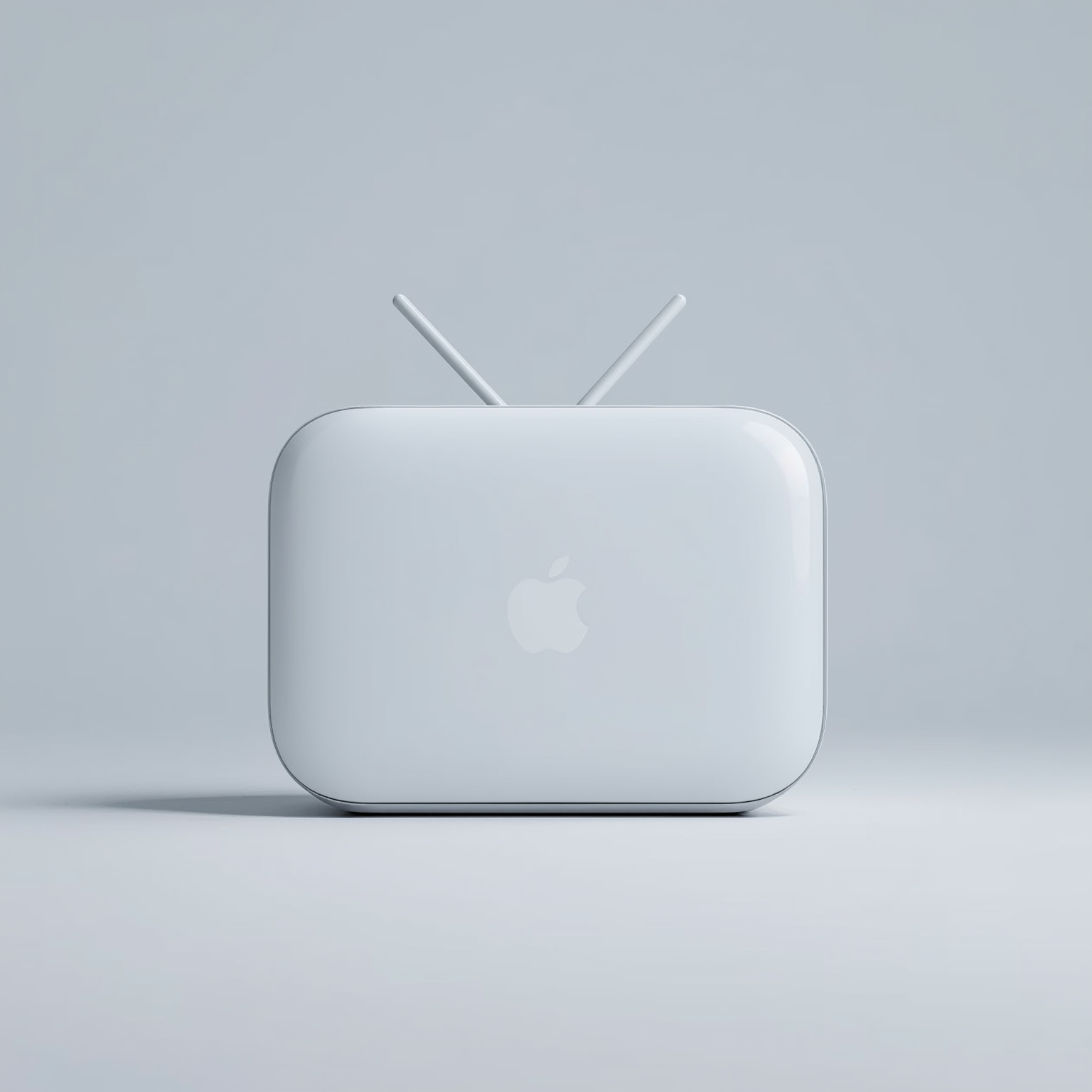
Are you prepared to experience Apple’s latest shift in its streaming universe — watching Apple TV on an Apple TV device, all through the Apple TV app? The company’s subscription-based streaming platform, long recognized by the moniker Apple TV+, has now undergone a subtle yet symbolically significant transformation. Apple has quietly removed the ‘+’ from its title, reintroducing the service simply as Apple TV. The decision, discreetly conveyed in a press release coinciding with the announcement of the release date for the upcoming film *F1: The Movie*, marks a deliberate reimagining of Apple’s entertainment identity.
To many consumers, the Apple TV name may already evoke mild confusion, as the term refers to multiple entities within Apple’s ecosystem. There is the Apple TV app — a core software experience preinstalled across the company’s major devices such as iPhones, iPads, and Mac computers. In addition, Apple TV is also the name of Apple’s physical streaming hardware, a compact yet powerful device comparable to a Roku box or Amazon’s Fire TV Stick. The most current hardware version bears the official name Apple TV 4K, highlighting its high-definition streaming capabilities. Now, with the streaming service adopting that same unadorned title, the Apple TV brand becomes more unified — or, depending on perspective, more intricate in its overlap.
Despite this blending of identities, marketing and branding specialists interviewed by *Business Insider* assert that the decision should not be perceived as confusing. On the contrary, they regard it as an intelligent and calculated move that reinforces the company’s brand philosophy. Matt Sia, Executive Creative Director at the global design services agency Pearlfisher, summarized the rationale with striking clarity: once a brand achieves icon status, minimalism becomes the ultimate form of confidence. According to Sia, Apple’s decision to drop the ‘+’ functions as an assertion of maturity — it no longer needs a symbol to validate its position in the crowded streaming marketplace. The act communicates assurance, authority, and an evolved sense of identity, capturing Apple’s historical preference for understated design and conceptual refinement.
Apple’s streaming platform, under either incarnation of the name, has built a portfolio of critically acclaimed television and film productions. Series such as the Emmy Award–winning *Severance* and *The Studio* have showcased Apple’s commitment to quality, creative storytelling, and high production standards. Nevertheless, when measured by sheer viewership volume, Apple still trails behind streaming giants like Netflix and Disney+. It does not currently appear on Nielsen’s top streaming charts — a reminder that prestige and popularity do not always correlate directly. The company has described the rebranding from Apple TV+ to Apple TV as part of a broader evolution toward what it calls a “vibrant new identity.” However, Apple has not yet clarified whether this linguistic simplification will be accompanied by additional design, functional, or strategic changes to the platform itself.
Several industry experts agree that the absence of the ‘+’ is unlikely to be lamented by audiences or brand watchers. Chris Rosica, President of Rosica Communications, stated simply that “no one’s going to miss the plus.” His opinion reflects a prevailing belief that the modification sharpens the brand’s presentation without subtracting meaning. The streamlined name may also help reinforce Apple’s strong global recognition, leveraging the enormous equity already associated with the master Apple brand. Nick Cooper, Global Vice President of Strategy and Innovation at Landor, a prominent design and branding consultancy, emphasizes that aligning Apple TV directly with the overarching Apple brand can yield tangible competitive advantages. By positioning its streaming service under the same unmistakable umbrella as its hardware and software, Apple strengthens consumer trust, coherence, and identification against formidable entertainment rivals.
Michelle Edelman, CEO and Chief Strategy Officer at the creative marketing agency Petermayer, similarly applauds the decision as both natural and pragmatic. She argues that the change merely acknowledges how consumers already refer to the platform in casual conversation. From a user’s perspective, she explains, “Apple TV never needed the ‘+’ in its name,” as the simpler version has always felt intuitive and self-explanatory.
However, not all analysts believe the shift will fundamentally alter audience behavior or brand loyalty. Jesse Unger, cofounder of marketing consultancy Significant, points out that while simplicity is generally desirable in brand architecture, its practical impact depends on what customers truly value. In an era when viewer attachment may revolve more around specific intellectual property — beloved series or film franchises — than the streaming platform itself, minimal name changes may yield limited perceptual benefits. As Unger put it, the critical question is whether the update adds genuine clarity or tangible value for audiences already deciding where to invest their entertainment time.
Apple’s rebrand also follows a broader trend across the streaming industry, where name evolutions have become a strategic tool to modernize and unify brand portfolios. Warner Bros. Discovery, for instance, has repeatedly reconfigured HBO Max over recent years, while ESPN+ recently emerged as ESPN Select. These precedents demonstrate that streaming services frequently adjust their naming conventions to better reflect evolving brand hierarchies, audience expectations, and content strategies. In that same spirit, Apple’s latest revision aligns with its competitors not only in visual simplicity but also in strategic timing. Earlier this year, Apple joined several of its peers, including Peacock, in raising its subscription prices — another signal that the streaming landscape continues to consolidate around premium positioning and perceived brand value.
Ultimately, the removal of the ‘+’ may appear minor on the surface, yet experts interpret it as a sophisticated affirmation of Apple’s enduring philosophy: that elegance lies in simplicity. By distilling its name to its essence, Apple reinforces an image of self-assured sophistication and lucid brand coherence — a quiet, confident statement that sometimes, less is indeed far more.
Sourse: https://www.businessinsider.com/apple-rebrand-apple-tv-plus-streaming-2025-10