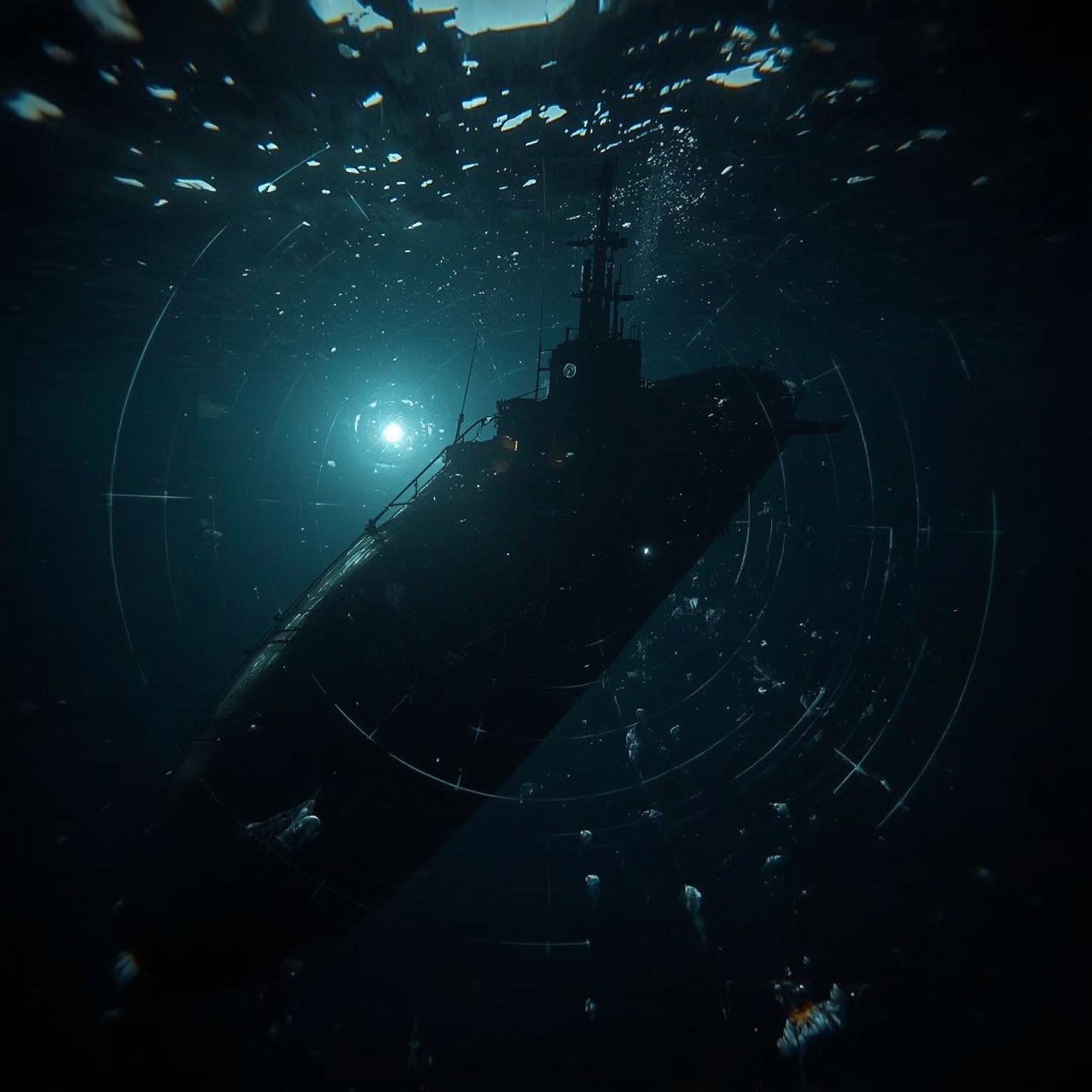
According to NATO leadership, a solitary Russian attack submarine has drawn international attention after being observed making its way back toward home waters in an impaired condition, reportedly compelled to remain on the surface rather than navigate submerged. Senior alliance officials, speaking with Business Insider under the condition of anonymity, characterized the submarine’s behavior as distinctly atypical and operationally unfavorable, emphasizing that such persistent surfacing is unusual for an active-duty submarine and likely indicative of underlying technical complications.
Over the past week, NATO’s maritime surveillance assets have continuously monitored the vessel—a Kilo-class diesel-electric attack submarine identified as the *Novorossiysk*—as it traveled northward from the Mediterranean Sea along the western coast of Europe. Shadowing this particular model carries strategic interest given that Kilo-class submarines are designed for stealth operations; their performance and survivability are heavily dependent on the ability to remain concealed beneath the surface. When forced to travel openly above water, such submarines expose themselves to detection and potential threats, effectively surrendering their greatest tactical advantage.
Alliance analysts have interpreted the submarine’s prolonged surface transit as a probable sign of malfunction or damage, a suspicion that gained credibility when NATO’s civilian chief bluntly described the submarine as “broken.” French, Belgian, and other European naval forces took part in the shadow operation, maintaining visual and electronic contact as *Novorossiysk* progressed through the region. Last Saturday, the Dutch Navy confirmed that it escorted both the submarine and an accompanying Russian tugboat while the vessels crossed the North Sea—an action framed as a precautionary measure to prevent any interference with European undersea cables and infrastructure, which have long been a source of security concern across the continent.
Commander Arlo Abrahamson, serving as spokesperson for NATO’s Allied Maritime Command, stated that the *Novorossiysk* surfaced repeatedly throughout its journey from the Mediterranean to its home port, a pattern that is operationally irregular. “Allied forces have maintained continuous observation of this submarine during its transit,” Abrahamson explained, noting that as of Tuesday, the United Kingdom reported the tracking effort had evolved into a coordinated operation involving nearly a dozen allied warships from six NATO member nations. This level of multinational coordination underscores both the alliance’s vigilance and the gravity of the incident.
The *Novorossiysk*, a vessel approximately 240 feet long and commissioned in 2014 after construction began in 2010, belongs to the Russian Black Sea Fleet—once regarded as a formidable element of Moscow’s naval might. Capable of firing Kalibr cruise missiles, a weapon frequently employed against Ukrainian targets since Russia’s invasion, the submarine has symbolic and strategic significance. Its compromised condition, therefore, has been interpreted by Western analysts not merely as an isolated technical failure but as emblematic of wider deterioration within Russia’s maritime capabilities. Rumors about potential mechanical failures began to circulate soon after the vessel appeared off France’s coast last week, prompting speculation that the submarine’s surfacing was the result of a critical technical issue. Russian officials, however, refuted these claims through state media on Monday, asserting instead that the *Novorossiysk* was undertaking a planned “inter-fleet transfer” after completing standard operational duties in the Mediterranean as part of a standing naval task force.
Moscow’s Black Sea Fleet additionally insisted that international maritime regulations required the submarine to remain surfaced while navigating the English Channel—precisely the area where it was initially sighted by French naval forces. Despite this official rationale, NATO sources have privately suggested that the submarine’s prolonged exposure above water for most of the Mediterranean-to-Black Sea voyage goes far beyond regulatory necessity. To them, this conspicuous behavior suggests a deeper mechanical or operational failure compromising the vessel’s ability to submerge safely.
NATO Secretary General Mark Rutte, addressing the NATO Parliamentary Assembly in Slovenia, encapsulated the situation by remarking that a “lone and broken Russian submarine [is] limping home from patrol,” implicitly affirming the alliance’s internal assessment that a malfunction or damage has rendered the submarine unfit for normal underwater operations. He linked this episode to a broader narrative of Russia’s eroding naval influence, pointing out that what was once an expansive and well-balanced Mediterranean task force—comprising multiple surface combatants, submarines, and logistical support ships—has now been reduced to a minimal and largely token presence.
For years, the Russian Navy sustained a prominent foothold at the Tartus naval base in Syria, a strategic arrangement that allowed Moscow to extend its maritime reach throughout the Mediterranean in exchange for supporting the Assad regime during Syria’s protracted civil war. However, the recent ousting of Bashar al-Assad by rebel forces in late 2024 has drastically altered the regional landscape, creating serious uncertainty about the future of Russian operations in Syria and eliminating one of Moscow’s last dependable sources of influence in the area. Western officials have interpreted this development as a major blow to Russian geopolitical ambitions.
Further compounding these difficulties, Ukraine has inflicted significant damage on the Black Sea Fleet over the past several years through the extensive use of explosive naval drones and precision missile strikes. These attacks have destroyed or crippled numerous Russian warships, steadily eroding the fleet’s combat effectiveness and forcing Moscow to relocate much of its naval command and operational assets from its longstanding headquarters in Crimea to safer facilities in Novorossiysk. Taken together, these setbacks—technical, tactical, and strategic—paint a picture of a navy under severe strain and a great power struggling to maintain its once-dominant maritime posture across key operational theaters.
Sourse: https://www.businessinsider.com/russian-submarine-surfaced-for-much-of-trip-home-unusual-activity-2025-10