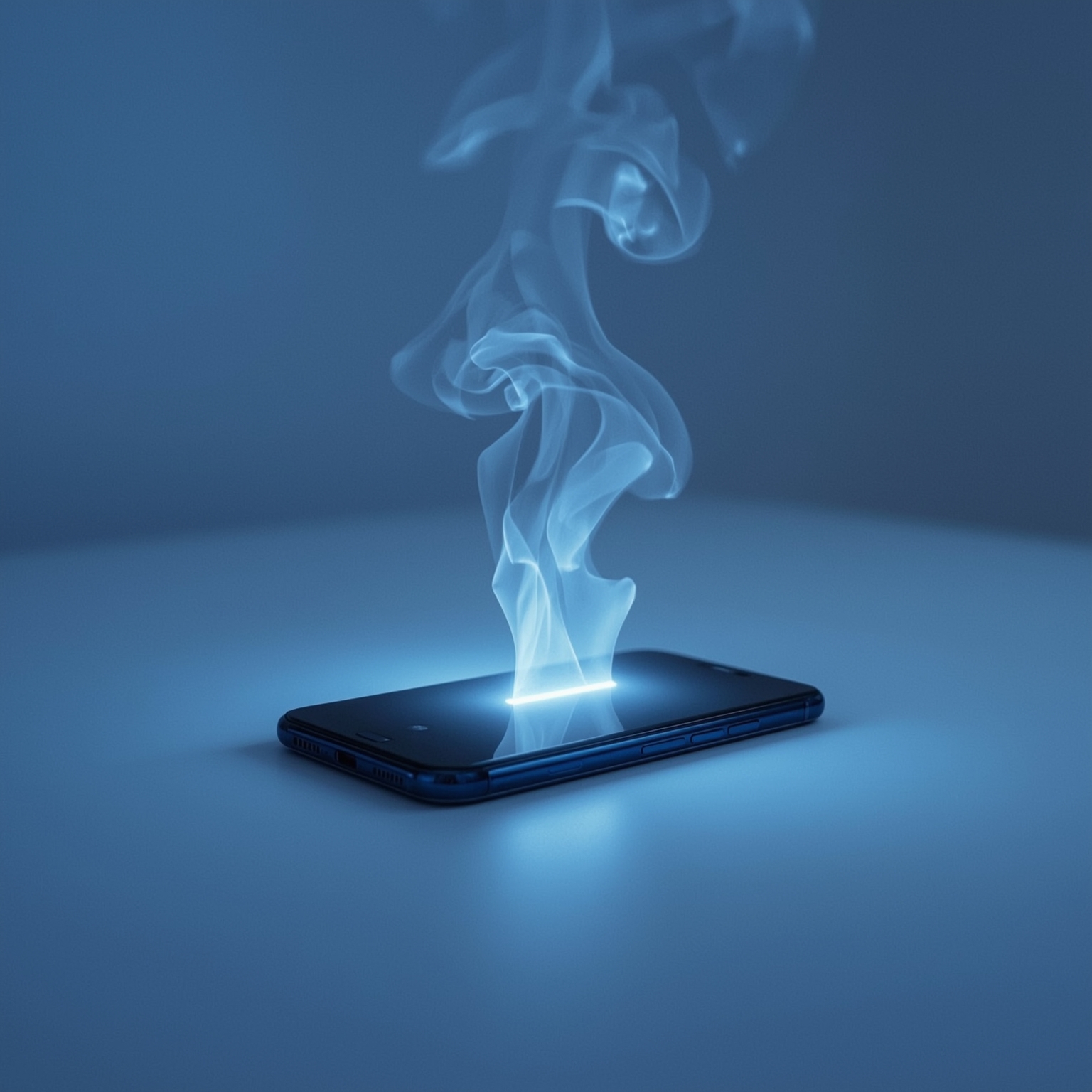
Google may be facing yet another instance of battery-related trouble, this time involving the company’s latest flagship foldable — the newly launched Pixel 10 Pro Fold. In a recent video released by YouTuber Zack Nelson, better known to millions as JerryRigEverything, the device underwent his notoriously demanding durability assessment. As part of his comprehensive testing routine, Nelson typically subjects smartphones to a sequence of extreme physical stresses designed to reveal their structural resilience and safety limits. However, in this particular case, when he attempted the bend test after already cracking open portions of the device, an alarming sequence unfolded: the phone’s internal battery began to expand dramatically, apparently overheated, released dense plumes of smoke substantial enough to trigger a nearby fire alarm, and ultimately transformed into a scorched, blackened heap of electronic debris on his workbench.
It is important to acknowledge that Nelson’s tests intentionally push devices beyond what any average consumer would experience. He commenced by exerting significant backward pressure on the phone while it was fully unfolded — a movement opposite to its intended hinge trajectory — forcibly breaking it open. Only after this structural failure did the battery begin to swell, and this occurred when Nelson continued manipulating the compromised portion of the chassis, effectively folding the display against itself. Such a scenario is extraordinarily unrealistic under normal usage conditions; no regular user would ever impose such extreme, destructive pressure on their device. Nevertheless, Nelson himself noted that even in the context of his controlled but punishing experiments, the Pixel 10 Pro Fold’s reaction was distinctly abnormal, unlike anything he had previously encountered.
Reflecting on the event, Nelson commented that, despite more than a decade of evaluating phones under severe conditions, he had never before witnessed a smartphone combust. The Pixel 10 Pro Fold, he emphasized, marked the first occurrence in which one of his tested devices literally erupted into smoke and flames. He conceded that his durability assessments represent an “extreme test,” yet underscored that he has subjected virtually every major smartphone launched over the last ten years to these same standardized procedures. For him, the fact that this was the only instance producing such a spectacular and catastrophic failure — one intense enough to activate a fire alarm — was remarkable.
When approached for clarification or comment regarding the incident, Google did not provide an immediate response. Still, this episode arrives at a time when battery performance issues have already placed the company under scrutiny. Earlier this year, Google had to roll out updates for multiple devices: a patch for the Pixel 6A aimed at addressing a potential overheating risk tied to its power cell, and another update for the Pixel 4A specifically intended to enhance the underlying stability and long-term reliability of its battery operation. These actions highlight that battery management has become a consistent challenge for the Pixel line.
Experts familiar with smartphone repair and diagnostics offered additional context. Elizabeth Chamberlain from iFixit explained to *The Verge* that as dramatic as a battery fire might appear, such occurrences do not automatically indicate a fundamental design flaw in Google’s new foldable. Instead, she emphasized that the phenomenon of “thermal runaway” is a well-known inherent hazard associated with lithium-ion batteries in general. Chamberlain noted that Nelson likely began disassembling the phone without first sufficiently discharging its battery — most new devices ship holding a charge level around sixty percent or higher — thereby increasing the chances of a short circuit under physical stress. She recommended, as standard technical practice, that batteries be drained below roughly twenty-five percent capacity before any disassembly, though given the extraordinary pressures Nelson applies during his tests, even that level might remain too high for absolute safety.
Expanding on the technical explanation, Chamberlain described thermal runaway as a localized electrical short within the cell — essentially what happens when the internal insulating barriers separating the multiple rolled layers of conductive materials inside a lithium-ion battery (often referred to as a “jelly roll” structure) are breached. Once that delicate separation collapses, intense heat can rapidly build, leading to uncontrolled chemical reactions and, in severe cases, fire. To deepen understanding of these hazards, she referenced informative materials already published by iFixit, including an article and video illustrating real-world scenarios where damaged batteries have ignited during repair or testing.
In addition to assessing the phone’s tolerance to bending and puncture, Nelson also examined its dust resistance — another stress point for foldable mechanisms. The Pixel 10 Pro Fold, which Google has proudly described as its “most durable foldable yet,” features an advanced gearless hinge that the company claims improves both mechanical stability and resistance to wear. To evaluate this claim, Nelson deliberately poured fine dust directly onto the hinge mechanism while repeatedly opening and closing the phone. The result was audibly unpleasant: grinding and cracking noises echoed as particles became lodged within the mechanism, suggesting that despite its official IP68 rating for dust resistance, the hinge might still be vulnerable under intense particulate exposure. Nelson himself candidly remarked that the outcome felt “embarrassing” for a device so heavily marketed for its engineering refinement.
Taken together, these events create a vivid portrait of the delicate balance engineers must maintain between innovation, durability, and safety in modern foldable smartphones. While no consumer is likely to recreate Nelson’s experiments in daily use, his findings once again draw attention to the essential unpredictability of lithium-ion battery behavior and the ongoing challenges of designing complex, foldable electronics that remain both elegant and resilient under stress.
Sourse: https://www.theverge.com/news/799561/google-pixel-10-pro-fold-jerryrigeverything-teardown-durability-bend-test-battery