This narrative originates from a heartfelt conversation with Julie Kelley, a 51-year-old media consultant residing in the serene and picturesque expanse of northeastern Vermont. Julie speaks with deep affection about her 10-year-old son, a boy whom she considers to be the very embodiment of empathy and emotional sensitivity. In her eyes, he uniquely perceives the hardships and needs of those around him, instinctively sensing when a classmate struggles—whether it’s the academic pressures of schoolwork or the physical demands of participating in a team sport such as soccer—and responds with genuine kindness. Rather than standing by, he actively and thoughtfully extends help, offering encouragement or support wherever it is needed. Julie often describes him as a true young gentleman, a child whose demeanor is guided by dignity, patience, and compassion.
She attributes these admirable qualities to the powerful influence of her elderly mother, an 81-year-old woman who has made her home with Julie’s family for the past seven years. Her son does not perceive his grandmother as fragile or defined by age. Instead, he views her affectionately as “Gram,” a figure who represents wisdom, inspiration, and mentorship. To him, she is a model of grace and strength rather than limitation. This intergenerational closeness—rich with shared experiences, storytelling, and daily companionship—has profoundly shaped the boy’s character and sense of empathy.
Julie reflects often on her parents, emphasizing how deeply she and her three older brothers valued the gifts they received growing up. They frequently remark that they “won the parents’ lottery,” a phrase that perfectly captures their appreciation for the nurturing, supportive, and ever-present love that guided them well into adulthood. Their upbringing instilled in each of them a strong desire to reciprocate that care—particularly as their parents grew older. “When you’ve been blessed with remarkable parents,” Julie says, “you feel an obligation born of love to give them the same devotion in return.”
That sentiment motivated a major family decision in 2017, when Julie and her then-husband relocated to Atlanta, Georgia, for career reasons. Without hesitation, her parents chose to follow them from their long-time home in Vermont. They easily made the transition south the following year, eager to remain close to their youngest grandchild. The Kelleys were fortunate to find a residence that included a 1,300-square-foot annex apartment attached to the main house but offering its own private entrance. This arrangement allowed the grandparents privacy while still keeping them closely integrated into the family’s daily life. Wherever Julie’s career in television news had taken her previously—from state to state, city to city—her parents had faithfully visited, always seeking to spend every spare moment with their grandson, who at that time was only three.
Although the couple loved all of their grandchildren deeply—five others who were approaching adulthood or already well into their twenties—their youngest grandson occupied a special place in their hearts. They wanted to be part of his formative years, to witness his growth and nurture a deep bond while he was still a child eager to share his world with them.
Julie describes her mother as the heart of the household. Her father, meanwhile, had been his grandson’s best companion, always ready to play, laugh, and share time together. Her mother often joked that when the boy ran into a room, he would skip right past her to jump into his grandfather’s embrace. Tragically, their joyful household changed forever when Julie’s father passed away in August 2018, only a few months after the family had settled in Atlanta. The loss was devastating for everyone, but Julie believes that the intertwined, multigenerational nature of their family provided her son with the emotional tools to help his grandmother through her grief. The genuine bond that had formed between the boy and his grandmother became a lifeline for both of them, giving renewed meaning and comforting stability in a time of pain.
For the two years following her husband’s passing, Julie’s mother remained in the annex apartment, continuing to play a central role in their lives. The family dynamic evolved, but the closeness only deepened. Julie recalls that whenever her son drew a family portrait at school, his grandmother occupied a prominent place in the picture—front and center—symbolizing her continued importance in their shared world. Photographs from this period, including cheerful snapshots of Judy Kelley celebrating Halloween with her young grandson, capture the deep affection between them.
In 2020, the family decided to return to Vermont, a move influenced in part by the disruptions of the COVID-19 pandemic and a longing for familiar surroundings. Julie, who had since become a single mother, found comfort and stability in sharing her home with her mother once again. The two women supported each other through every challenge, creating a nurturing environment for the young boy who continued to thrive under their dual care. Though Judy frequently visits her other sons—who live in Pennsylvania, Indianapolis, and Missouri—each of whom has prepared a comfortable guest room for her—her grandson misses her deeply whenever she is away and eagerly anticipates her homecoming.
The connection between grandmother and grandson extends beyond emotional closeness; it is also intellectual. Judy’s former profession as a history teacher has cultivated in her a lasting love of learning, and her grandson, a budding enthusiast of all things historical, shares her curiosity. Their conversations often wander from the age of dinosaurs to the complexities of medieval times or to thought-provoking articles from The New York Times that she reads aloud to him. Her intellectual vitality and commitment to knowledge have clearly influenced him, inspiring in the boy a similar love for discovery and discussion.
In June, the three of them embarked on a ten-day summer adventure across Montana and Wyoming, exploring the breathtaking landscapes of Yellowstone National Park. The trip served as both a vacation and an educational journey, blending recreation with reflection. At one point, they visited a dinosaur museum, where Judy’s deep understanding of prehistoric history allowed her to offer fascinating explanations that captivated her daughter and grandson alike. Some of Julie’s brothers thought it might have been overly optimistic to include their elderly mother in such an ambitious road trip. Yet, in retrospect, Julie is certain it was one of the most fulfilling and joyful family experiences they could have shared—a true illustration of what a multigenerational vacation can be. Although Judy couldn’t participate in every physical activity, her enthusiasm and love for travel enriched the experience for everyone.
Julie observes that, while many children might feel uncertain or uneasy around older adults, her son is the complete opposite. His awareness of his grandmother’s slower pace and physical limitations only encourages him to become more attentive and caring. He instinctively assists her when she walks to the car, gently retrieving her walker from the trunk and making sure she is steady on her feet. Watching the two of them together is a source of quiet delight for Julie. Sometimes, she discreetly records short videos on her phone, capturing candid exchanges—the laughter, the small acts of kindness, or even lively debates—that convey the essence of their unique bond. She treasures these moments as precious keepsakes, recognizing that both her son and her mother understand the finite nature of time and the importance of creating lasting memories.
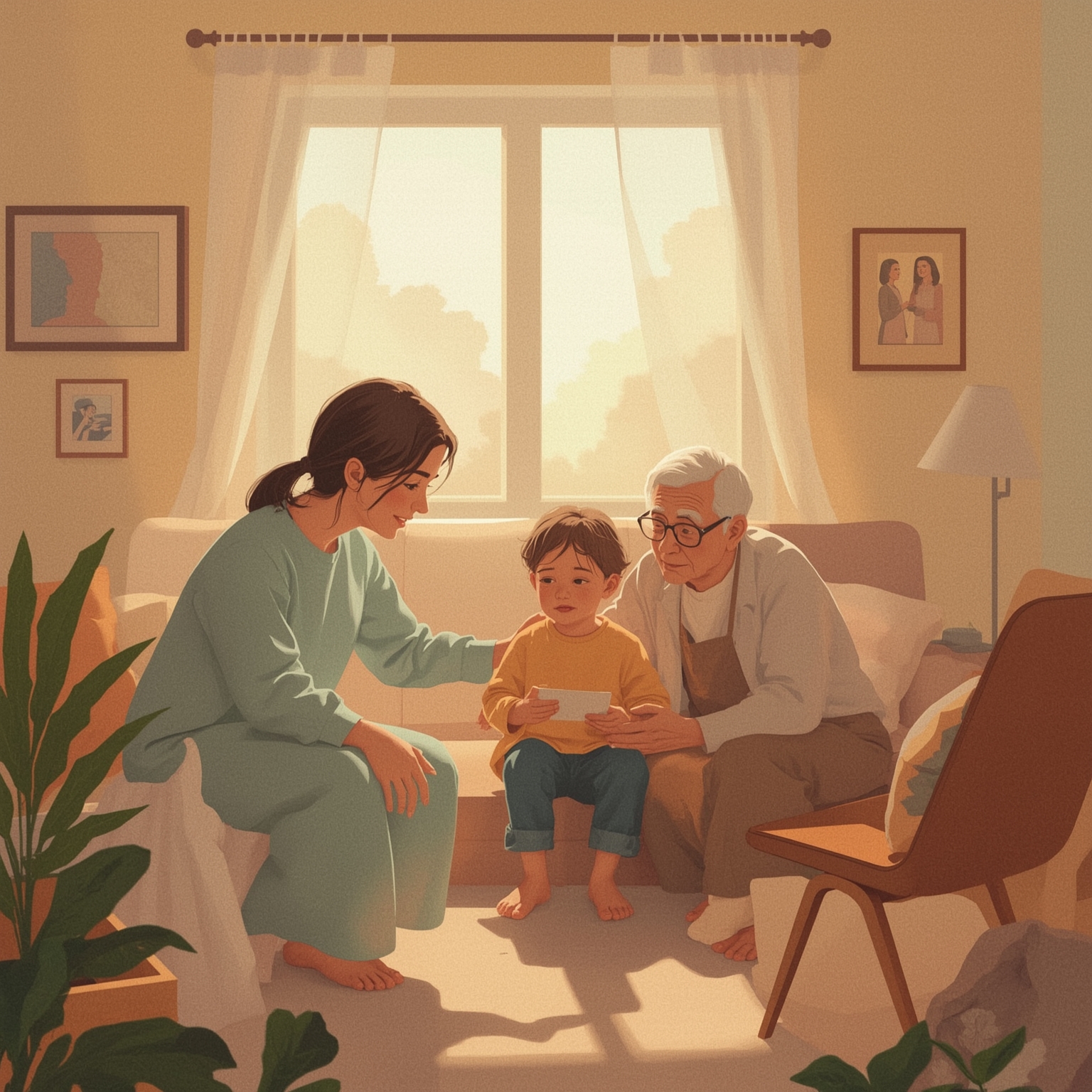
Julie takes immense pride in the empathy and emotional depth her son exhibits, qualities that she credits directly to the presence and influence of his grandmother. Spending long hours together each day has given him a firsthand education in patience, caregiving, and understanding. On more than one occasion, when Judy accidentally fell in her bedroom, the boy’s instinctive response was immediate—he would race upstairs, retrieve ice packs from the freezer, and comfort her with heartfelt gestures, even offering his favorite stuffed animals for reassurance. Such small but tender actions reveal his heightened sensitivity to the feelings of others.
Ultimately, Julie recognizes that her mother’s presence has shaped not just her household’s rhythm but also the moral and emotional foundation of her son’s life. Through daily acts of intergenerational love, he has learned lessons that no book or classroom could teach—the compassion that blooms from shared time, the patience forged in understanding another’s fragility, and the enduring power of family connection that bridges generations with gentleness and grace.
Sourse: https://www.businessinsider.com/multigenerational-living-taught-empathy-to-my-son-2025-10