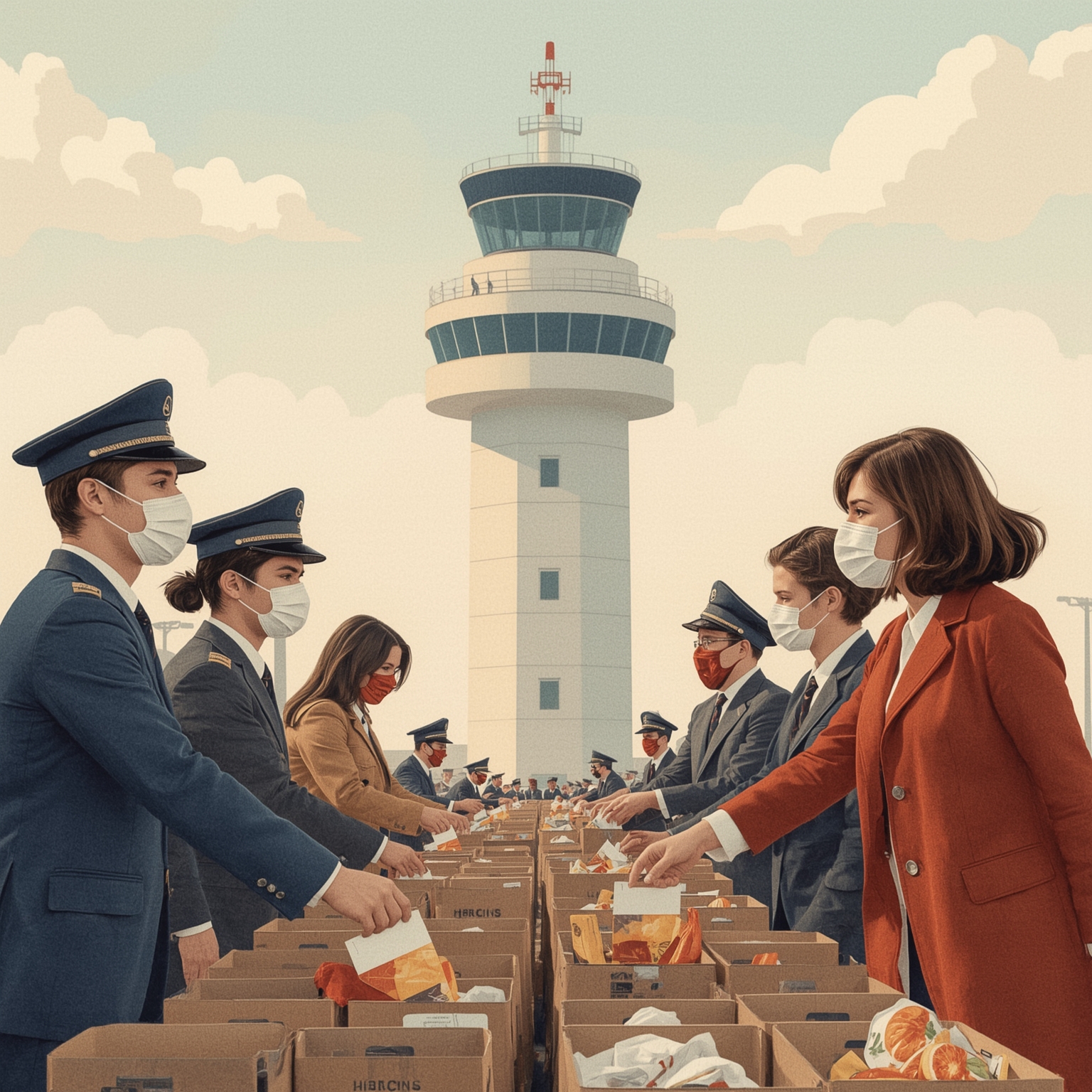
Across the nation’s airports, a remarkable expression of solidarity is unfolding high above the tarmac. Air traffic controllers, entrusted daily with maintaining the safety of the skies, are continuing to perform their critical duties despite receiving no consistent pay during the ongoing government shutdown. In recognition of their professionalism and unwavering commitment, airline pilots, flight attendants, and even aviation workers from neighboring Canada have begun sending meals—most often in the form of pizzas and other warm dishes—as tangible tokens of gratitude and unity within the industry.
Nick Daniels, president of the National Air Traffic Controllers Association, explained in an interview with Business Insider that members of the aviation community—ranging from pilots and cabin crews to their peers across the border—have been personally purchasing and delivering food to controllers whose livelihoods have been disrupted by the funding lapse. These gestures, he noted, are born out of both empathy and a shared understanding of the immense responsibility controllers shoulder. One such instance came to light in Washington, D.C., where Pete LeFevre, a union representative and active controller, described how his facility received multiple deliveries of fresh pizza courtesy of the Air Line Pilots Association (ALPA), a powerful labor union representing more than 80,000 professional aviators.
Upon inquiry, ALPA confirmed that this outreach was not an isolated event but rather part of an ongoing effort, describing the initiative as a nearly daily occurrence during the crisis. Social media channels soon reflected the magnitude of this campaign, showing, for example, Alaska Airlines pilots sending pizza to the control tower team at San Francisco International Airport, while Delta Air Lines aviators coordinated similar deliveries to towers and approach facilities across all of their major operational hubs. These seemingly small yet deeply symbolic actions serve as a morale boost for workers managing one of the world’s most stressful and high‑stakes professions.
The generosity has extended well beyond pilots alone. According to Daniels, the Association of Flight Attendants—which represents more than 50,000 crew members—has also stepped forward to participate. In a parallel show of solidarity, Teamsters Local 357, the union encompassing flight crews at Republic Airways, has been consistently delivering food to air traffic control centers in Indianapolis, near the company’s headquarters. As LeFevre put it, the aviation community has come together—with pilots, flight attendants, and companies all standing firmly behind the controllers who coordinate their every movement through the skies. He added poignantly that now the same rallying spirit is needed from the government to support those who, despite the shutdown, continue guiding aircraft safely.
Even across international borders, the fraternity of controllers endures: Canadian air traffic professionals have reportedly been sending meals in support of their American counterparts, echoing the mutual aid they extended during the 2019 federal shutdown. Adding to these public demonstrations of appreciation, U.S. Transportation Secretary Sean Duffy joined the effort earlier this month by personally providing pizzas to controllers at Newark Liberty International Airport during an official visit.
For many controllers, however, the kindness of these gestures highlights rather than resolves the financial severity of their situation. Since the shutdown’s onset on October 1, they have received only partial compensation and now anticipate pay stubs reading zero by the end of October. Although back pay may eventually be provided, the delay creates pressing difficulties—rent, mortgage installments, vehicle loans, childcare costs, and other immediate expenses do not pause for political gridlock. As LeFevre observed, while free meals are sincerely welcomed, they cannot replace the steady income required to maintain families and daily life.
In coping with this uncertainty, some controllers are turning to gig-economy work to cover essential costs. The so-called “side hustle” discussion has become a prevalent topic in break rooms, with controllers weighing whether their scarce days off should be spent driving for rideshare or food delivery platforms such as Uber, Uber Eats, or Instacart. As one of them remarked wryly, a babysitter does not accept an IOU, and every worker faces hard decisions about how to preserve financial stability until the government reopens.
Outside many U.S. airports, controllers have taken to distributing informational leaflets to passengers and the public, seeking to raise awareness of their predicament and the broader impact of the funding lapse on the aviation system. The prospect of extended financial hardship is particularly concerning for a workforce already known for its intensity: air traffic control ranks among the most demanding and stressful occupations in existence. One controller, who requested anonymity out of concern for professional repercussions, explained that fatigue-related sick leave is a genuine phenomenon. Their schedule, often composed of grueling rotations and overnight duties, can seriously degrade sleep patterns, weaken the immune system, and disrupt personal life—particularly for those managing family obligations alongside unpredictable shifts.
Controllers routinely work shifts that stretch up to ten hours, six days a week, with mandatory overtime frequently imposed to compensate for a nationwide staffing shortage. As a result, they complete the equivalent of a year and a half of labor within a single calendar year, all without the additional hours counting toward their retirement benefits. This imbalance places sustained physical and emotional strain on the individuals responsible for coordinating the nation’s densely trafficked airspace.
Aviation safety analyst Anthony Brickhouse offered cautious reassurance that, for now, these circumstances have not yet translated into immediate risks to flight safety. Nevertheless, he warned that if the shutdown persists, the ongoing pressure and fatigue could evolve into a serious hazard over time. Echoing that sentiment, the anonymous controller affirmed that while the public should remain confident in the short-term safety of air travel, citizens must also recognize the extraordinary amount of overtime—sometimes exceeding twenty extra hours each week—that controllers are logging to keep aircraft moving efficiently through the skies.
In essence, the ongoing story of air traffic controllers working without pay has become a powerful testament to professional dedication and industry-wide solidarity. It captures how, even in the face of economic uncertainty and exhaustion, the aviation community continues to prove that empathy can soar above adversity, keeping both spirits and aircraft aloft through an atmosphere defined by cooperation, gratitude, and mutual respect.
Sourse: https://www.businessinsider.com/atc-air-traffic-controllers-pilots-flight-attendants-sending-food-shutdown-2025-10