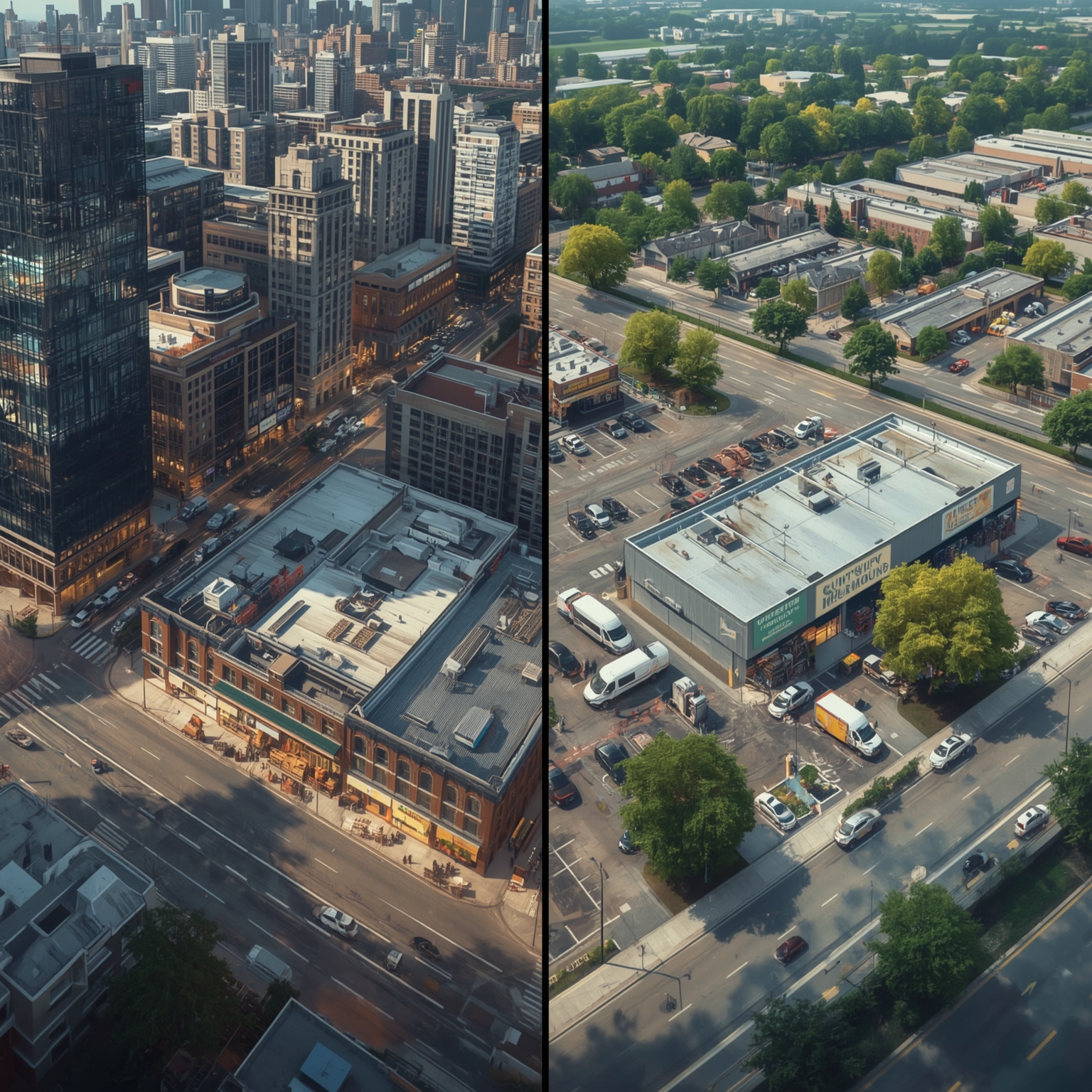
As someone who has spent years living amid the energy and constraints of New York City, I long resisted the idea of joining Costco. The appeal of a warehouse membership — a concept primarily associated with sprawling parking lots, suburban minivans, and bulk-sized grocery hauls — felt at odds with the space limitations and car-free lifestyle of Manhattan. Nonetheless, curiosity eventually overcame hesitation. Last year, I finally became a Costco member and embarked on an informal investigation to compare what the shopping experience genuinely feels like in the city versus in the suburbs. Although at first glance the two locations I visited shared nearly identical layouts and a recognizable brand atmosphere, deeper observation revealed striking and unexpected contrasts in everything from product availability to consumer behavior.
Growing up on Long Island, I was no stranger to wholesale clubs. My family shopped at BJ’s, a place that to my childhood eyes felt almost magical — massive aisles stacked to the ceiling, offering everything from electronics to snacks large enough to feed an army. The entire experience felt less like an errand and more like a weekend adventure where I could run alongside oversized carts under fluorescent lights. Later, while in college in New Orleans, I joined friends on trips to a local Costco, rediscovering that same sense of abundance and amusement. Yet, as adulthood in New York City redefined my routines, the practicality of bulk shopping felt elusive — where could I even store thirty rolls of paper towels in a one-bedroom apartment?
Still, by the summer of 2024, I found myself succumbing to the cultural momentum that had made Costco somewhat of an unexpected millennial phenomenon. According to CFO Gary Millerchip, nearly half of new memberships gained between June and August were from people under forty — a statistic he attributed to the ease of signing up online. In joining, I became one of millions of younger consumers drawn to what has humorously been dubbed the “hottest club” around. I initially assumed that as a city resident, I would use my membership mainly for online orders, perhaps taking advantage of shipping discounts or occasional household staples. That assumption quickly shifted once I learned a Costco had opened in Manhattan’s East Harlem — a scenario I could hardly conceptualize. The typical image of Costco involves shoppers unloading SUVs filled with bulk groceries. How, I wondered, did that translate to a dense urban neighborhood where most residents travel by foot, subway, or bus?
My curiosity demanded an answer. In September 2024, I planned parallel visits: the first to the East Harlem Costco in New York City, and the second to a suburban counterpart located in Westbury, roughly thirty-three miles east on Long Island. I wanted to explore not only whether their assortments mirrored one another but also how the surrounding environment influenced both the shopping atmosphere and the practical logistics of purchasing in bulk.
The Long Island visit came first. Westbury’s Costco was one of eight on the island, and even on an ordinary Tuesday, the parking lot teemed with vehicles, forcing me to park far from the entrance. This scene alone underscored the suburban lifestyle: convenience and accessibility defined by the car. A separate liquor store stood adjacent — necessary due to New York State’s restrictions on grocery stores selling hard alcohol — and a tire center operated within the same complex. Upon flashing my membership card, I stepped into a cavernous retail expanse reminiscent of an aircraft hangar. Despite the crowds, the sheer size prevented it from feeling oppressively busy.
Inside, the store opened with a display of electronics — gleaming laptops, tablets, and towering stacks of high-definition televisions. A hearing-aid center and pharmacy framed one side; on another, I glimpsed seasonal health services like flu shots. Rows of apparel stretched endlessly toward the center: sweaters, jackets, activewear, all without fitting rooms, forcing shoppers to rely on visual judgment. I noticed shelves of Costco-branded merchandise — sweatshirts, for example — and even indulged in buying a soft gray one priced at just under twenty dollars. Around it, furniture displays showcased sprawling couches and entertainment units, part of what dedicated Costco fans affectionately call its “treasure-hunt” shopping model, where floor layouts shift constantly so regular visitors keep discovering new deals.
The breadth of inventory felt almost astonishing. Gift cards for restaurants and entertainment venues were sold in generous bundles — AMC, Instacart, DoorDash, even a local Topgolf. Tables of discounted books offered everything from Pulitzer winners to popular romantic fantasies, despite recent reports that Costco would scale back book sales except during holidays. Seasonal transitions were already visible as well: huge bins of pumpkins, shelves of Halloween décor — including a seven-foot animatronic werewolf — and rows of early Christmas ornaments, artificial trees, and light strings that could ignite holiday spirit even in late summer.
As I moved toward the back of the building, the space transitioned from general merchandise to groceries: an extensive bakery producing golden rotisserie chickens, vast meat displays suited for large families, and walk-in coolers brimming with produce, eggs, and milk. Practically speaking, I realized how much suburban shopping revolves around storage and capacity. The deals were undeniable, but for a person living in a compact apartment, a single slab of pork shoulder or a crate of strawberries could easily surpass freezer space and expire before being consumed.
If transporting those purchases posed any challenge in suburbia, the solution was straightforward — load them into a trunk and drive home. Yet I could already imagine the impossibility of attempting the same in New York City, where grocery deliveries and small daily purchases fit urban life far better than hauling cases of bottled water up apartment stairs.
One week later, I embarked on the second stage of my comparison at the East Harlem Costco, one of just four in New York City. The store occupied space within East River Plaza, a multi-level mall that also houses an Aldi, Planet Fitness, and Bob’s Discount Furniture. Unlike the open suburban layout, this Costco required navigating through a shared parking garage — one that charged by the hour. Statistically, less than one-quarter of Manhattan households own cars, so it wasn’t surprising to see many shoppers arriving by public transit. I, too, took the bus, then walked over an avenue and a half carrying a reusable bag and quietly pondering how anyone managed bulky purchases without a vehicle.
Surprisingly, I noticed several locals pushing rolling metal carts designed specifically for urban grocery transport — a familiar sight to longtime residents. Entry procedures were also slightly different; members scanned cards physically through a turnstile rather than presenting them to an attendant. Otherwise, the aesthetic remained quintessential Costco — polished concrete floors, red signage, and the seamless sense of brand recognition that made walking in feel instantly familiar.
Layout-wise, East Harlem’s store mirrored Westbury’s: electronics at the entrance, followed by aisles stocked with household staples. There was an optical center for eye exams, a pharmacy counter, and prominently positioned gift cards, though several were distinctively local — for instance, cards from Mighty Quinn’s Barbecue, a renowned New York chain, alongside Subway and Crumbl cookie gift sets. Yet differences soon surfaced. The ceiling in this warehouse was notably lower, diminishing the sense of vastness inherent to most Costcos, and the assortment of certain items — especially those associated with suburban lifestyles — was visibly pared down.
The furniture selection, for example, consisted mostly of compact pieces suitable for apartment living. There were no oversized sectional sofas or patio fire pits here. The outdoor section contained little more than two types of folding chairs, reflecting the city’s scarcity of private lawns. The plant department had vanished entirely, replaced by a modest display of bouquets fit for gifting rather than gardening. Still, this store compensated with a touch of local flair: racks of Jets and Giants merchandise that catered to the metropolitan sports community.
Seasonal offerings were present but condensed. Halloween decorations featured similar characters to those in Long Island — Disney-themed pumpkins and Charlie Brown figures — but in smaller quantities and at slightly higher prices. Christmas merchandise, too, appeared, though the range of ornaments and décor was far less extensive than its suburban counterpart.
In the grocery area, familiar patterns reappeared: an enclosed produce room, a dairy section, and expansive bakery tables stacked high with signature Costco cakes and pastries. There was even a self-checkout zone — a convenience I hadn’t noticed in Westbury — reserved for shoppers with lighter baskets. The overall ambiance, however, communicated efficiency over abundance. Every square foot seemed optimized for turnover and accessibility rather than leisurely browsing.
Leaving the store, I reflected on how dramatically environment can shape consumer behavior. The East Harlem Costco preserved the chain’s standardized identity yet embodied an adaptation to its urban context: reduced inventory size, denser layout, and subtle acknowledgement of space-conscious living. By contrast, Westbury’s vast aisles and towering stockpiles reflected the luxury of suburban sprawl. Both fulfilled the corporate promise of value and variety, yet they delivered meaningfully different experiences tailored to their shoppers’ lifestyles.
For me, maintaining the membership now feels worthwhile primarily for shipping benefits rather than in-person hauls. The thrill of exploring Costco remains, but the practicality of bulk buying simply doesn’t translate to a Manhattan apartment. In the end, the juxtaposition of these two stores illustrates far more than differences in merchandise — it reveals how geography, accessibility, and lifestyle coalesce to redefine even the most uniform retail brand into distinct experiences across urban and suburban America.
Editor’s note: This story was originally published in October 2024 and updated in October 2025 to reflect current conditions and observations.
Sourse: https://www.businessinsider.com/costco-city-store-compared-to-suburbs-photos-differences