Before Robert “RJ” Scaringe became the visionary founder of Rivian—the electric vehicle company that transformed the notion of sustainable adventure—his creative ambitions were focused on something far smaller in form yet equally ambitious in spirit. Long before Rivian built its first rugged all‑electric truck or SUV, Scaringe’s imagination gravitated toward human‑powered innovation: compact, pedal‑driven vehicles that blended elements of bicycles and microcars into intriguing hybrid forms. These early explorations revolved around micro‑mobility concepts—machines combining minimal environmental impact with compact efficiency—three full years prior to Rivian’s formal inception and roughly thirteen years before the company would step into the public eye after its extended stealth phase. During that formative period, Scaringe carefully analyzed his prototype ideas and ultimately concluded that the market for such pedal‑powered microcars was too small, restricted largely to a small circle of passionate enthusiasts. With pragmatic clarity, he shelved the project even though he admitted, many years later, that the idea of a tiny Rivian‑branded adventure microcar would have been thrilling to bring to life.
Despite discarding the original concept, the impulse behind it never disappeared. The driving conviction—that sustainable mobility ought to come in a spectrum of scales, from massive electric trucks to agile, human‑powered vehicles—remained entrenched in Scaringe’s broader philosophy. About four years ago, still intrigued by the possibilities of ultra‑efficient mobility, Scaringe reached out to Chris Yu, then Chief Technology Officer of the renowned cycling company Specialized. His proposal was unconventional: create a small, experimental division—a skunkworks‑style incubator—dedicated to rethinking the future of pedal‑based transportation. That collaboration evolved into an entirely new company, aptly named Also, which has now emerged from stealth to reveal its first generation of pioneering products. Among them are a modular electric bicycle (dubbed the TM‑B), a versatile four‑wheeled pedal‑assist vehicle called the TM‑Q, and a safety‑focused helmet that promises to dramatically mitigate head injury risk using cutting‑edge rotational‑energy‑damping technology.
Rivian’s decision to venture into the e‑bike market arrives at a precarious moment. The company, well known for its adventure‑oriented electric vehicles, is confronting significant industry headwinds following the expiration of the U.S. federal EV tax credit worth $7,500. With a potential dip in electric‑vehicle sales looming and preparations underway for the crucial launch of its mid‑size R2 model next year, Rivian faces financial pressure and investor scrutiny. It has yet to record a profitable quarter, and analysts worry about its resilience in a tightening EV market. Against this backdrop, pursuing what may seem like a niche line of high‑end e‑bikes could appear risky. Nonetheless, Scaringe’s calculus suggests that Also—backed by a fresh $105 million funding round led by Eclipse Ventures—possesses ample financial independence and technical depth to justify the gamble. The startup has lured elite talent from industry titans like Apple, Google, Tesla, Uber, Specialized, and REI Co‑op. Moreover, by adopting a vertically integrated structure similar to Rivian’s, Also ensures control over design, production, and supply chains, providing both cost efficiency and creative freedom.
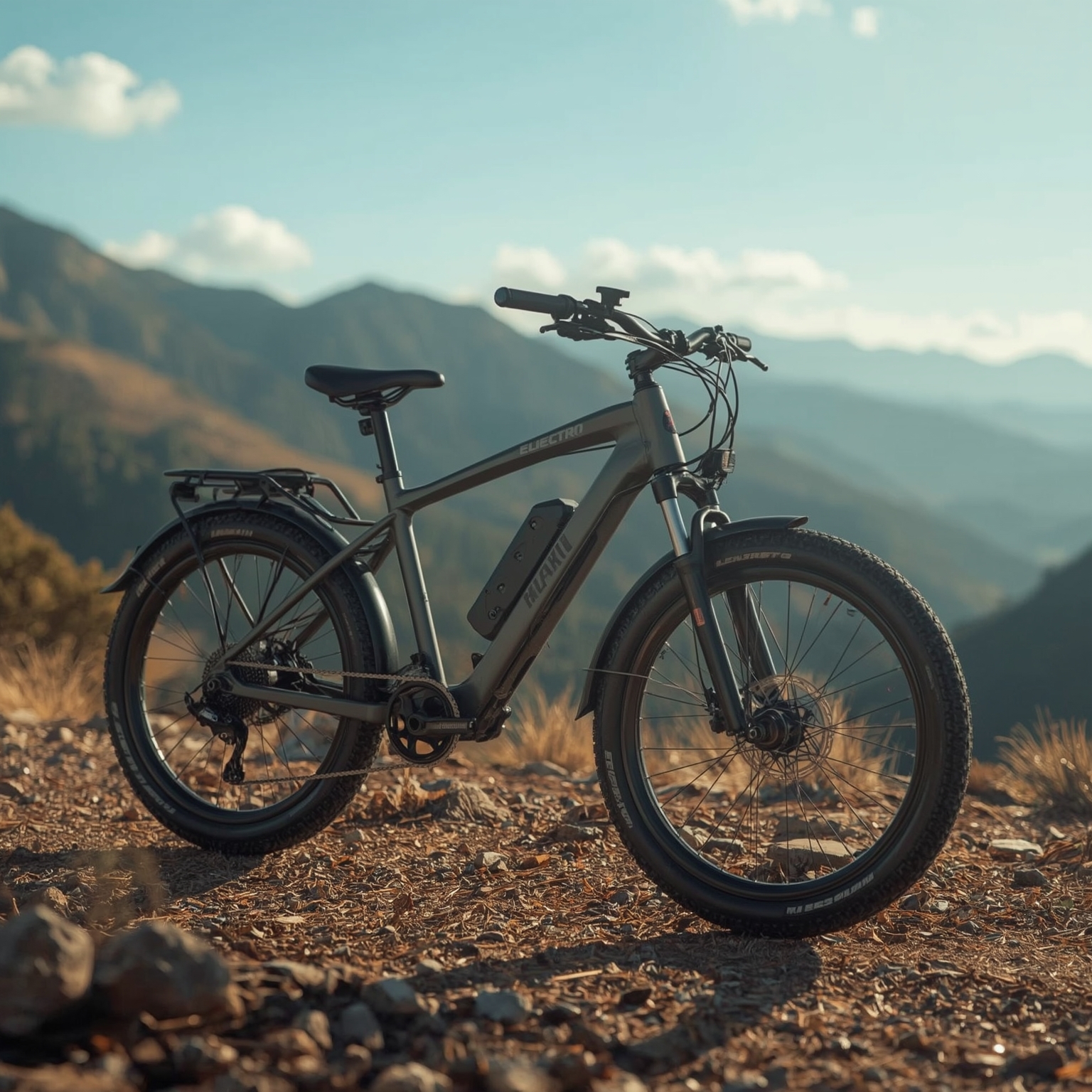
Scaringe articulates the company’s mission not as the birth of yet another bicycle manufacturer but as a redefinition of sub‑car mobility. He explains that Also’s engineers began with “first principles” thinking—dismantling preconceptions about what a bicycle should be—and conceived the TM‑B as a flexible platform capable of supporting different riding modes and future permutations. The TM‑B’s modular frame is central to this vision, allowing riders to reconfigure the top section and switch rapidly between a standard saddle, a utility version equipped with a rear cargo rack, or a bench seat emulating the feel of a lightweight motorcycle. The seat‑post itself is electrically secured, enabling effortless removal through the onboard touchscreen’s digital controls rather than with physical tools—a small but elegant example of thoughtful integration. Chris Yu, who has transitioned from Specialized to become president of Also, boasts that the frame can be swapped within three seconds, an engineering flourish that blends user convenience with mechanical ingenuity.
Beneath its futuristic housing, the TM‑B hides technology that seems lifted from retro sci‑fi imagination: a mid‑drive system alluringly named “Dream Ride.” Unlike conventional electric‑bike drivetrains, which link pedal force directly to the rear wheel through chains or belts, Dream Ride replaces every mechanical connection with electronics. In this architecture, the rider rotates a generator at the crank, sending electricity to recharge the battery while a dedicated traction motor at the rear wheel—connected by a sophisticated software interface and a quiet Gates carbon belt—delivers propulsion. This configuration revolutionizes a mechanism that has remained largely unchanged for over a century. The concept of “pedal‑by‑wire,” long discussed in engineering circles but rarely executed at scale, thus finds a credible home in the TM‑B, where it promises smoother responsiveness, simplified maintenance, and computer‑controlled torque precision.
Yu explains that the design philosophy behind Dream Ride involves sweeping away the remnants of outdated drivetrain complexity to create a machine that speaks equally to seasoned cyclists and first‑time e‑bike riders. The operational simplicity is striking: there are no physical gears to shift, no clunky derailleur noise—just adaptive software that automatically synchronizes assistance to maintain each rider’s ideal cadence. The user can fine‑tune resistance with intuitive “easy” or “hard” inputs. Where the majority of electric bikes boost a rider’s effort up to fourfold, Also’s system can amplify pedal power by an astonishing ten times, delivering 180 newton‑meters of torque—more strength than even the most muscular electric mountain bikes on the market. For urban commuters pulling groceries or adventurous riders tackling steep trails, that torque translates into exhilarating acceleration and confident performance across varied terrain.
The TM‑B’s software suite also allows riders to emulate the tactile feel of traditional gear ratios when desired. In special trail mode, digital algorithms simulate defined gears—say, ten, twelve, or twenty speeds—without the mechanical hiccups of missed shifts. Hill detection and automatic compensation make climbs effortless, while regenerative braking recaptures over ninety percent of deceleration energy, extending range and minimizing brake wear much like modern electric cars. In Yu’s words, the greatest challenge lay in programming the responsiveness so that the bike’s feedback feels utterly natural, precisely mirroring the sensation of pedaling a perfectly tuned mechanical drivetrain.
Complementing its advanced propulsion, the TM‑B employs removable batteries offered in two capacities. The standard 538‑watt‑hour pack affords up to sixty miles of travel and reaches eighty percent charge in two hours; an extended 808‑watt‑hour option stretches range to roughly one hundred miles with a marginally longer two‑and‑a‑half‑hour charge time. Both include dual USB‑C Power Delivery ports capable of 240‑watt bidirectional output—ideal for powering devices or even topping up another battery. An energy‑efficient E Ink display indicates state of charge without draining additional power. Also’s engineers have extended Rivian’s design DNA through the TM‑B’s digital ecosystem as well: the bike’s zonal electronic architecture enables interactions such as smartphone keyless access, automatic recognition of riders by name, personalized performance profiles linked to specific frame modules, and an integrated anti‑theft immobilization feature that locks the wheels when its authenticated user steps away.
On the cockpit side sits a five‑inch circular touchscreen—aptly named the Portal—displaying everything from navigation and ride metrics to remaining charge and assist levels. Riders can connect their smartphones via Bluetooth to listen to music or podcasts and use handlebar‑mounted tactile controls for safe, intuitive operation. Classified as a Category‑3 e‑bike, the TM‑B can propel riders to a top assisted speed of 28 miles per hour, or 20 mph via throttle in applicable jurisdictions. Full suspension, including an inverted front fork, ensures stability at speed and comfort even when encountering unexpected obstacles—Yi jokes that one could hit a deep pothole at twenty‑five miles per hour “with barely a jolt.”
Also’s debut lineup extends beyond the TM‑B. The company’s second product, the TM‑Q, brings pedal assistance to a four‑wheeled platform engineered for versatility. It arrives in two variants: a commercial cargo configuration reminiscent of the electric delivery trikes increasingly deployed by logistics giants like UPS and DHL, and a more recreational open‑air edition resembling a modernized golf cart. As municipal infrastructure in many U.S. towns begins to accommodate low‑speed neighborhood electric vehicles, Yu anticipates the TM‑Q will appeal to small businesses, delivery services, and eco‑minded communities seeking a lower‑cost, easier‑to‑use alternative to full‑size cargo bikes or compact EVs.
Rounding out the presentation, Also unveiled the Alpha Wave Helmet—a piece of protective equipment that embodies the company’s commitment to safety through intelligent design. Integrating a Release Layer System that dissipates rotational energy on impact, the helmet claims, based on independent research cited by Yu, to reduce potential traumatic brain injury risk by more than sixty percent. The product incorporates practical conveniences such as embedded lights for visibility and built‑in microphones and speakers to enable hands‑free phone calls or audio streaming, merging conscientious protection with connected functionality.
Taken together, Also’s carefully orchestrated debut showcases more than a novelty project born of Rivian’s curiosity; it represents a strategic experiment to prove that micromobility can be both commercially viable and technologically sophisticated. The TM‑B’s premium $4,500 launch edition, set to reach customers in spring 2026, will be followed by a slightly more affordable base model under the $4,000 mark later that year. Whether the crowded e‑bike industry, rife with bankrupt startups like VanMoof and Cake, can fully absorb another high‑end contender remains uncertain. Yet Scaringe views the effort not as a distraction but as a foundational step toward unifying what has long been a fragmented, small‑scale market into an enduring, well‑capitalized ecosystem. In his view, micromobility’s evolution requires the same dedication to design integrity and experiential cohesiveness that Rivian applied to its vehicles. He invites riders—many of whom may never have considered purchasing an e‑bike—to experience the completeness and refinement that Also promises, hoping they will feel, as he puts it, “I didn’t even know I wanted an e‑bike—until now.”
Sourse: https://www.theverge.com/transportation/804163/rivian-also-tm-b-ebike-specs-price