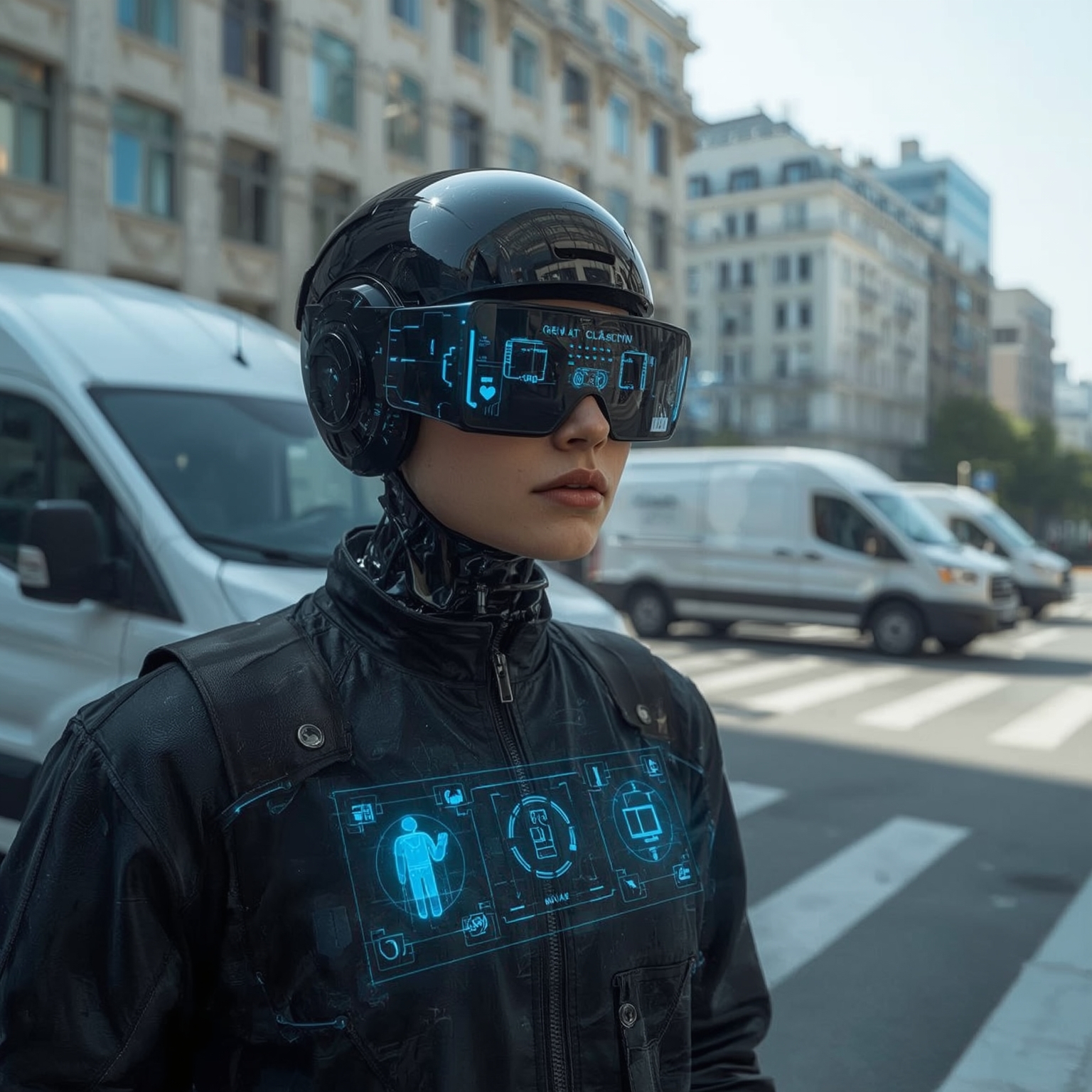
Amazon has officially introduced to the public its latest innovation in wearable technology — the “Amelia” smart glasses — a sophisticated pair of augmented eyewear designed specifically to enhance and streamline the work of its delivery drivers. These glasses are equipped with an integrated digital display and an always-active camera that work seamlessly together to guide drivers throughout their daily routes. By merging visual navigation assistance and intelligent package management into a single piece of wearable equipment, the Amelia glasses promise to transform how drivers locate packages inside their delivery vans, follow turn-by-turn directions to the correct destination, and capture photographic evidence of completed deliveries without relying on handheld devices. Instead of pausing to retrieve a smartphone for each proof‑of‑delivery photo — an experience many customers are familiar with when a driver asks them to wait before taking their package — operators can now simply trigger a hands‑free capture through the glasses.
According to Amazon’s demonstration and accompanying statement, these glasses are intended not only for convenience but for safety and precision as well. The company asserts that when drivers encounter potential obstacles or must navigate particularly intricate environments, such as large apartment complexes or labyrinthine neighborhoods, the Amelia glasses will provide step‑by‑step, context‑aware visual guidance to ensure they reach the correct address efficiently and securely. Amazon even presented conceptual footage that illustrates what a driver’s field of vision might look like while using the display, emphasizing the glasses’ utility in multifaceted real‑world conditions.
Photographs released by the company reveal that the Amelia eyewear does not function as a totally standalone device. Instead, it operates in coordination with a specialized vest outfitted with a replaceable battery pack, ensuring extended operational time for long delivery runs. On this vest is a prominent button that allows the driver to instantly capture confirmation photos upon successful delivery, surrounded by a control dial that may help manage additional interface options. Amazon’s documentation also mentions the inclusion of a dedicated emergency button — a safety measure that enables drivers to rapidly alert support teams in crisis situations. Although Amazon has yet to provide an exhaustive breakdown of the sensors embedded within the glasses, visual inspection of press images suggests that there may be two forward‑facing cameras integrated into the design to support enhanced image capture or depth perception.
The Amelia glasses also incorporate adaptive transition lenses, a feature that intelligently adjusts tint based on ambient lighting. This means that under bright sunlight, the lenses darken to shield the user’s eyes, while in dimmer indoor or nighttime conditions they become clearer for optimal visibility. For practical inclusivity, Amazon has confirmed that the glasses can accommodate prescription lenses, allowing drivers who rely on corrective eyewear to benefit from the technology without compromising comfort or vision quality.
While the corporation has not disclosed a precise rollout timeline or detailed which markets will first adopt the device, it has revealed that hundreds of delivery personnel have already participated in testing earlier prototypes. The company also indicated a clear intention to expand the system’s capabilities by integrating more advanced artificial‑intelligence‑driven features in upcoming versions. Amazon envisions that future iterations of Amelia will be able to detect errors and potential hazards in real time. For instance, the glasses could immediately notify a driver if a package appears to be left at an incorrect address, automatically identify suboptimal lighting conditions and adjust visibility accordingly, or alert the wearer to the presence of animals or other risks in the delivery area. Such functionality underscores Amazon’s ongoing commitment to refining operational efficiency and worker safety through a blend of AI and wearable technology.
In terms of physical design, the frames appear reasonably slim and modern, though they still reflect a utilitarian rather than fashion‑oriented aesthetic — more suited to enterprise use than for everyday consumer wear. Comparable to smart eyewear such as Meta’s Display models and other augmented‑reality glasses, the Amelia frames remain technical prototypes that prioritize functionality over style. Reports from various sources offer additional context: The Information disclosed in September that Amazon’s consumer‑oriented glasses project, codenamed “Jayhawk,” could reach the public market around 2026 or 2027, while Reuters first reported details about these delivery‑specific glasses under the codename “Amelia.” The images shared by Amazon today confirm that moniker, as the name appears in several of the released file labels.
Notably absent from Amazon’s official announcement is any in‑depth discussion of the ethical questions that such technology may raise. Issues concerning privacy, worker monitoring, and the continuous recording of delivery environments could provoke debate, particularly as these glasses oversee the so‑called “last mile” of the delivery process — the portion most directly connected to customer interaction. Nevertheless, Amazon’s unveiling of Amelia signals the company’s continuing effort to modernize and optimize its vast logistics network, harnessing wearable innovation to make delivery operations faster, safer, and more intelligent.
Sourse: https://www.theverge.com/news/804962/amazon-reveals-smart-delivery-glasses-that-guide-drivers-and-scan-packages