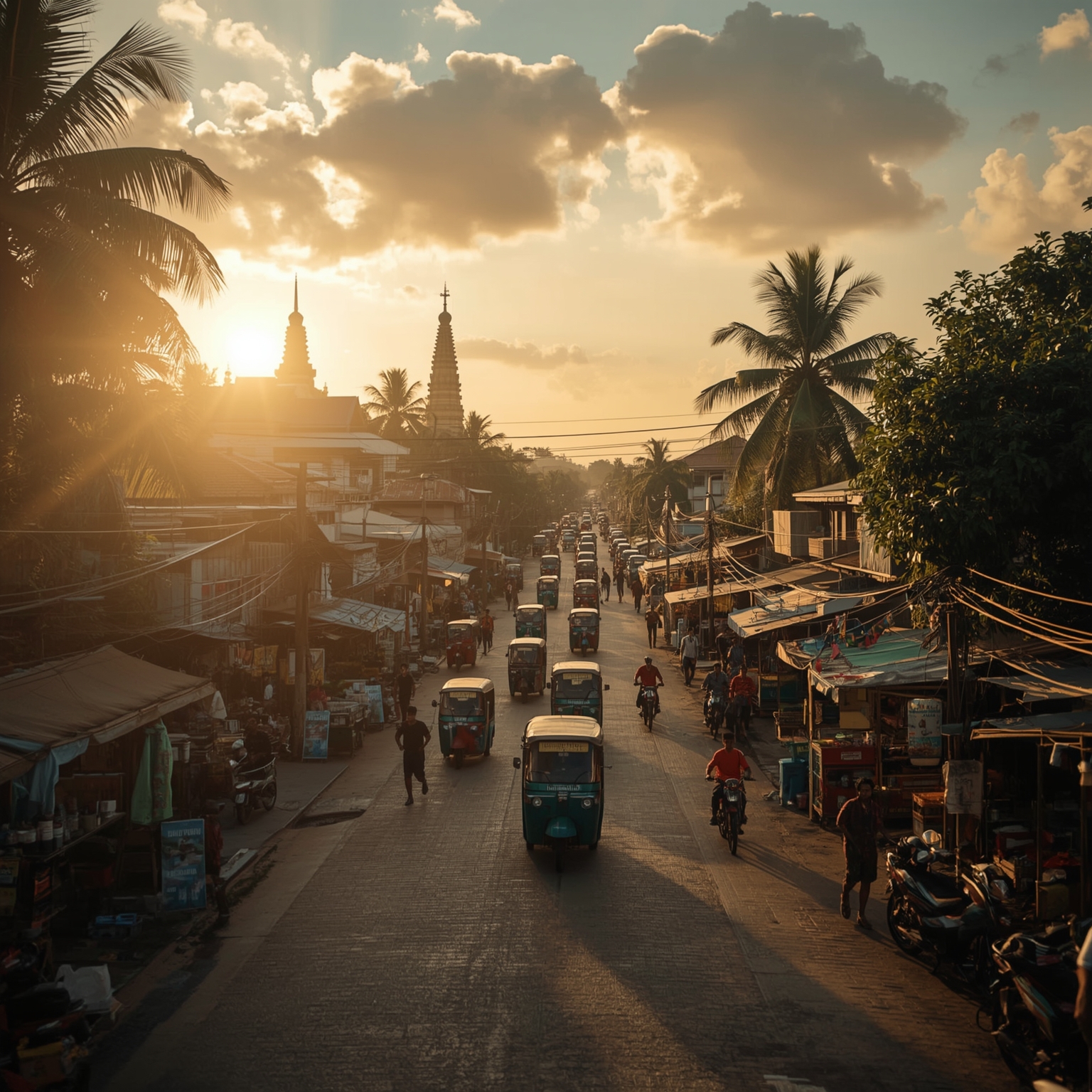
My inaugural journey to Southeast Asia in 2010 proved to be far more than a mere vacation — it was an awakening that reshaped my understanding of culture, connection, and the vastness of the world awaiting discovery. As a young South African just beginning to explore beyond familiar borders, I approached the region with wide-eyed curiosity. Yet the moment I immersed myself in the sensory tapestry of Thailand and Malaysia — the vivid colors of their markets, the melodic cadence of their languages, the warmth of their people — I realized that these nations possessed a magnetism unlike anywhere else I had encountered. The journey, rich with encounters and revelations, stirred something deep within me: an insatiable desire to travel not just as a pastime, but as a lifelong calling. Fifteen years later, with stamps from thirty-eight countries marking the pages of my passport, one conclusion remains unwavering — the intricate, intoxicating diversity of Southeast Asia stands alone in its brilliance. Over time, I returned again and again to its shores and cities, at first as a wanderer and later as a resident, ultimately making Thailand my home only last year.
Through countless solo adventures, I have learned that while every country offers splendor, only a few destinations truly imprint themselves on one’s soul. Some cities evolve into lifelong loves, while others, however dazzling at first, eventually lose their allure. Drawing on these many years of experience, I now share three cities that have become deeply meaningful to me — each offering something singular to the solitary traveler — and one that, with regret, has dimmed over time.
Phuket, Thailand: My refuge for serenity and exhilaration
Although Bangkok proudly claims the title of the world’s most visited city, Phuket to me embodies the pure essence of Thailand — the island’s blend of unspoiled nature, joyful exuberance, and layered history distills the very heart of the nation. It was in fact the first place I ever visited in Asia, a destination that initiated a lifelong love affair and eventually inspired me to settle here permanently. Despite its international reputation as a premier tourist magnet, Phuket has never ceased to renew itself in my eyes. For a solo traveler, its charm lies in its multifaceted character: tranquil, vibrant, and unpredictable in perfect measure. One can find solitude among the mist-covered hills and quiet jungle paths of Kamala, then surrender to the electric rhythm of Patong’s nightlife, or wander through the evocative Sino-Portuguese shophouses of Old Phuket Town, where pastel façades whisper tales of colonial trade and cosmopolitan heritage. For those craving the sea, it takes only a short journey to reach the pristine islands of Koh Phi Phi, where turquoise waters frame scenes of near-mythical beauty.
Over the years, Phuket evolved beyond a destination — it became my sanctuary, a personal retreat during moments of uncertainty and transition. When the global pandemic ebbed and my well-being faltered, this island offered exactly the renewal I needed. It was here that I rediscovered calm, balance, and a sense of belonging, all while remaining surrounded by the sensory pleasures of Thai life — from flavorful curries and cascading laughter in seaside cafés to sunsets that transform the horizon into a glowing mural of gold and coral.
Luang Prabang, Laos: A serene and spiritual interlude
For years, Luang Prabang had lingered on my travel wish list, and when I finally arrived, it greeted me with a quiet majesty that exceeded every hope. Nestled at the confluence of the Mekong and Nam Khan rivers, this UNESCO World Heritage town radiates harmony — a place where spiritual devotion, architectural grace, and natural wonder converge. It provided me — a weary solo traveler — the respite I had unknowingly sought after months in frenetic capitals. With its charming cafés and tranquil lanes filled with the aroma of freshly brewed Lao coffee, Luang Prabang proved ideal for reflection and remote work alike, drawing a community of digital nomads who value serenity over speed.
Among my most enduring memories was floating down the Mekong on a slow boat, observing fishermen, orange-clad monks, and children playing on the riverbanks. One morning in 2018, I rose long before sunrise to witness the Alms Giving Ceremony — an ancient ritual that defines the rhythm of the town’s dawn. Hundreds of monks, robed in saffron, moved in silent procession through the misty streets, receiving offerings of rice and fruit from kneeling locals. The act, considered a pathway to spiritual merit and positive karma, filled the air with reverence. Yet, nothing compared to the crystalline tranquility of Kuang Si Falls, a breathtaking cascade hidden within dense jungle. Its turquoise pools, layered like liquid terraces, shimmered beneath the filtered sunlight — a natural sanctuary that left me humbled by its ethereal beauty.
Ho Chi Minh City, Vietnam: The pulse of urban energy
As travel across Asia has evolved, Vietnam has risen rapidly to the forefront of global tourism, even drawing more visitors than Thailand from key markets such as China. At the center of this phenomenon stands Ho Chi Minh City — a metropolis that embodies both chaos and charisma. My first encounter with the city was an instant love affair. Despite its cacophony of scooter horns, neon lights, and ceaseless movement, I never once felt isolated; in fact, as a solo traveler, I felt remarkably connected amid the crowds.
On my inaugural visit, I joined a street-food walking tour that quickly became an unforgettable feast for both the palate and the spirit. At bustling stalls, I participated in the preparation of local favorites, learning to make bánh xèo, the iconic Vietnamese crispy pancake filled with shrimp or pork and delicate bean sprouts, wrapped in fragrant herbs. Beyond its culinary temptations, Ho Chi Minh City revealed itself as a haven for long-term travelers seeking practical comfort. I discovered that healthcare here was exemplary — clean, efficient, and remarkably affordable. Dental work, consultations with specialists, and even cosmetic treatments such as Botox could all be done at a fraction of Western prices without sacrificing quality. It was yet another reminder that the city’s vitality extended far beyond its streets; its ingenuity and accessibility make it a thriving modern hub.
Kuala Lumpur, Malaysia: A city dimmed by time
When I first stepped into Kuala Lumpur during that formative 2010 trip to Southeast Asia, the city struck me as irresistibly magnetic — a paradoxical blend of gritty authenticity and polished extravagance. I explored its neighborhoods on foot, shopped incessantly in glittering malls, and partied until sunrise, nearly missing my departing flight. Its vivacity felt boundless. However, when I returned in 2023, I found myself standing in a place that looked familiar yet felt strangely hollow. The Kuala Lumpur I had loved seemed to have shed its spark, its once-vibrant energy subdued by shifting cultural winds.
In recent years, Malaysia has embraced a more conservative approach shaped by social and religious priorities. Regulations have tightened, particularly concerning concerts and nightlife — events now frequently restricted, with certain international performances canceled altogether. Bars face earlier closing times and stricter rules around serving alcohol, transforming the city’s once effervescent evenings into quieter affairs. While I remain deeply respectful of local tradition and faith, I could not deny my surprise at the extent of this transformation. Having spent half a decade living in the Middle East, I was astonished to find Kuala Lumpur, once my symbol of liberated urbanism, now more regulated than even Dubai or Abu Dhabi.
The once-lively gay clubs I remembered had disappeared, their spaces either shuttered or transformed. I eventually located a single drag bar, yet the mood there felt muted, the defiant sparkle replaced by an air of resignation. Venturing out alone through the city’s streets, I felt a disconnection difficult to articulate — as though I had been transported to an entirely different place under the same name. Although I will always cherish the memories of my first encounters with Kuala Lumpur — that youthful city of unrestrained nights and open laughter — I must now accept that the pulse that once enchanted me has faded. It remains a chapter I am grateful to have lived, but one I no longer wish to revisit soon.
Do you have a story about life or travel in Asia? Reach out to the editor at akarplus@businessinsider.com — your experiences may illuminate the next great journey.
Sourse: https://www.businessinsider.com/travel-southeast-asia-worst-best-cities-thailand-laos-vietnam-malaysia-2025-10


