For millennials—and, increasingly, everyone who came of age amid the golden years of microbreweries—there is yet another sobering update on the realities of aging and shifting taste. The era of the self-proclaimed craft-beer connoisseur, that archetypal IPA devotee whose weekend revolved around brewery tastings and discussions about floral hops and cacao undertones, has largely faded into the rearview mirror. Craft beer sales are wilting, and the once-ubiquitous fascination with the precise number of hops per ounce or the delicate hints of honey and espresso in a dark stout has evaporated. If those details ever truly mattered to most drinkers, they decidedly do not now. The quintessential millennial beer enthusiast has matured—often quite literally—into a middle-aged parent who can no longer afford a hangover when their children’s soccer game kicks off at 8 a.m.
The broader beer landscape is undergoing a quiet but significant recalibration. The nation’s prevailing tastes have swung away from excess and experimentation toward minimalism. America’s most popular beer, surprisingly or not, is Michelob Ultra—a light lager often described as neutral to the point of flavorlessness, yet cloaked in a faint aura of health and activity. Meanwhile, one of the few bright developments in the field is the modest success of Garage Beer, a stripped-down, working-class brew with backing from NFL brothers Jason and Travis Kelce. The 2024 “drink of the summer” similarly reflected this no-frills sensibility: the so-called Spaghett, a playful “hobo Negroni” created by adding a splash of Aperol to a bottle of the unpretentious Miller High Life. Even the advertising that surrounds beer has lost its sparkle, a change hastened by the backlash to Bud Light’s controversial 2023 microcampaign—which sent shockwaves through an already-cautious industry. In summary, beer has grown simple again, perhaps even deliberately dull.
Industry veterans acknowledge this tonal shift. “Beer just doesn’t hold the same luster it once had,” observes Dave Williams, an analyst who studies alcohol markets. “Companies realize that and are now scrambling to make beer feel enjoyable again.” Yet their challenge is immense. Sales are stagnating as consumers take a more health-driven approach, moderating or even abandoning alcohol. When Americans do choose to drink, they are gravitating toward canned cocktails, seltzers, and THC-infused alternatives—options perceived as fresher or more convenient. According to the Brewers Association, the U.S. beer market contracted by 1.2 percent in production volume in 2024, and the craft segment fared worse, shrinking by about 4 percent. Williams notes that while cut-rate beers outperform premium products in relative terms, neither group is experiencing true growth.
The reasons for this malaise span economics and psychology. After years of unbridled expansion, the craft beer market is now bloated. Its shelves and tap lists brim with endless permutations of fruity IPAs, imperial stouts, and tongue-in-cheek labels, overwhelming even adventurous drinkers. Meanwhile, American households—facing widespread financial pressure—are “trading down,” choosing cheaper staples in every consumption category, beer included. As Andrew Heritage, chief economist at the Beer Institute, explains, the so-called “below-premium” segment—represented by names like Busch Light and Miller High Life—is outperforming the broader market. Consumers are buying in bulk from warehouse retailers such as Costco and Sam’s Club, signaling a pragmatic turn toward value. Smaller packaging choices reinforce the same logic: people are opting for a six-pack rather than a twelve, reflecting moderation both financially and behaviorally.
But the transformation is not purely a matter of cost. Palates themselves are evolving. During the 2000s and 2010s, craft beer thrived on novelty—high alcohol content, experimental infusions, and artistic branding that made each product feel like a discovery. Yet this hyper-creativity eventually turned into glut. As analyst Garrett Nelson notes, the industry has entered a stage of oversaturation, with brewery closures now outnumbering openings. Similarly, the broader “foodie” aesthetic that once glorified gourmet experience has become ordinary. Taking pride in being a taster of complex brews now feels less like cultural capital and more like nostalgia—a distinctly millennial marker, and therefore, to emerging generations, a symbol of dated cool.
Even within craft circles, the creative exhaustion is apparent. IPAs, the category’s flagship, now come in endless varieties—hazy, double, juicy, dry-hopped—but they share two drawbacks: high bitterness and strong alcohol content. Few people can spend an afternoon watching football while nursing multiple double IPAs without consequence. And many simply don’t enjoy such aggressive flavors. As writer Dave Infante explains, American drinkers are shifting not necessarily toward blandness, but toward straightforwardness. The appeal of beverages like White Claw or High Noon—canned, fruit-flavored, and predictably light—lies in their clarity. Michelob Ultra encapsulates that ethos: low in calories, marketed as part of an aspirational fitness lifestyle, and successful precisely because it doesn’t overpromise on taste. In fact, its subdued profile and health-conscious branding have made it the nation’s best-selling beer, surpassing even Modelo. Competitors have taken notice; Miller Lite famously jabbed at Ultra in a campaign claiming to have “more flavor for just one more calorie.”
Smaller brewers, watching these trends, are pragmatically adapting. Many are pivoting toward accessible styles—pilsners, lagers, and lighter ales—to broaden their customer base. These simpler offerings better align with new priorities: affordability, predictability, and ease of drinking. Consumers who feel financially and culturally overstretched find comfort in uncomplicated, familiar flavors that promise little risk.
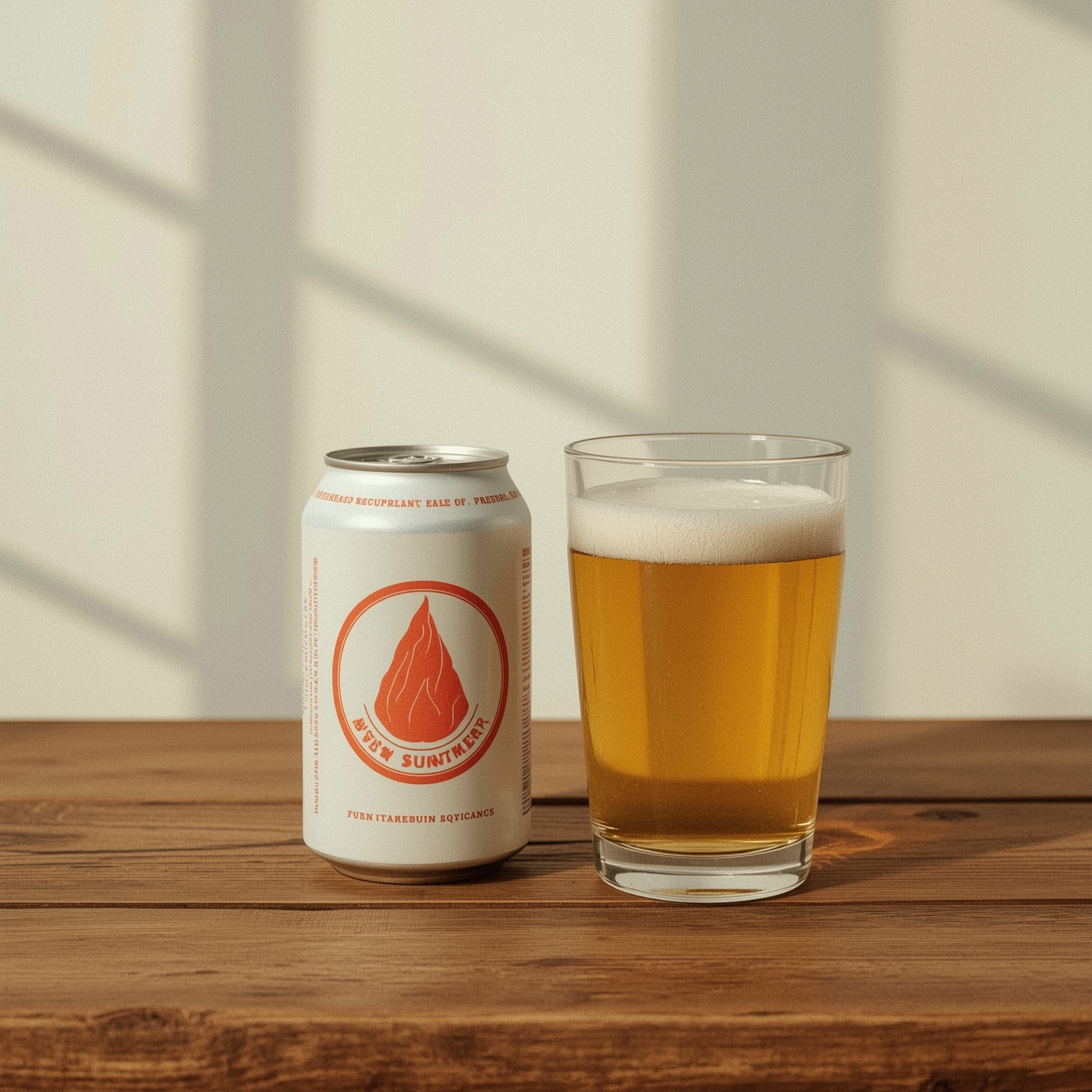
Garage Beer’s story is perhaps the clearest emblem of this return to basics. Originating from a modest Midwestern craft operation, it now functions as an independent brand that leans into simplicity. Its aesthetic is intentionally banal: a white can, a single word logo, two flavor options—regular and lime—and a mild 4% ABV. In tone and attitude, Garage Beer aims for unpolished authenticity, positioning itself as the drink for ordinary people and everyday spaces—the backyard, the driveway, the neighborhood barbecue. Backed by the Kelce brothers, its marketing embraces humor verging on self-parody, featuring spoof kung fu scenes and wrestling cameos. It appeals to nostalgia for a time when beer was uncomplicated and unserious. That self-awareness, ironically, has become its marketing genius, helping the brand reach a valuation near $200 million. CEO Andy Sauer explains the mission succinctly: “We’re just trying to bring people back to beer. We don’t take ourselves seriously—we’re proud to be the dumbest beer on the internet.”
Other brands have joined the movement, fusing retro aesthetics with easy drinkability. Montucky Cold Snacks and Easy Rider trade on Americana nostalgia and carefree vibes, pairing simple lagers with intentionally lowbrow humor. As Infante notes, “the liquid inside the can is ordinary—it’s the image, the sense of identity, that sells.” Marketing, rather than product innovation, has become the principal differentiator in a crowded market.
Behind these lighter trends lurks a serious dilemma. The beer industry must court younger consumers at a time when many are skeptical of alcohol altogether. Even minor marketing missteps can provoke cultural uproar. Bud Light’s 2023 attempt to partner with a transgender influencer illustrated this; what was meant as a gesture of inclusivity triggered a backlash that rattled the entire sector. In this atmosphere, major companies find themselves paralyzed between the need for relevance and the fear of backlash. As advertising scholar Gary Wilcox points out, beer marketing has entered a peculiar phase: global competition is intensifying even as overall consumption slows, turning growth into a zero-sum fight over market share.
Advertising itself has grown notably restrained. Gone are the days of over-the-top sexist humor or bikini-laden commercials. Today’s campaigns are measured, even dull—built around safe themes of Americana, backyard leisure, or togetherness. Bud Light’s latest Super Bowl spot, featuring celebrities like Post Malone and Peyton Manning lounging on porches and cracking jokes, epitomizes this middle-of-the-road approach. Miller Lite’s 50th anniversary ad likewise celebrated its status as a “backyard beer,” hearkening back to tradition rather than novelty. As analyst Kate Bernot observes, beer advertising has never been more boring, bereft of the cultural spark that once produced iconic imagery like the Budweiser Clydesdales or Corona’s eternal “find your beach” message. Coors still insists on being synonymous with “cold,” but beyond these clichés, few brands are sparking conversation. “We haven’t seen beer lead the cultural conversation in years,” Bernot notes.
Ultimately, what we are witnessing is less a collapse than a reversion—a slow drift back toward beer’s original simplicity. For decades, American drinkers elevated complexity and experimentation; now they crave familiarity. The pendulum, it seems, is swinging away from discovery and back to comfort. Just as earlier generations preferred their Budweiser uncomplicated and cold, today’s consumers are gravitating toward beverages that require no explanation. The marketing, reflective of this mood, strives not to stand out but to reassure. The era of adventurous beer culture, for now, appears to have given way to something quieter: a beverage industry determined not to offend, not to confuse, and perhaps as a result, not to thrill. In reclaiming its old-fashioned normalcy, beer may have reacquired its mass appeal—but it risks losing the playful spirit that once made it an emblem of fun itself.
Sourse: https://www.businessinsider.com/america-buying-more-cheap-simple-beer-expensive-craft-brewry-bust-2025-10


