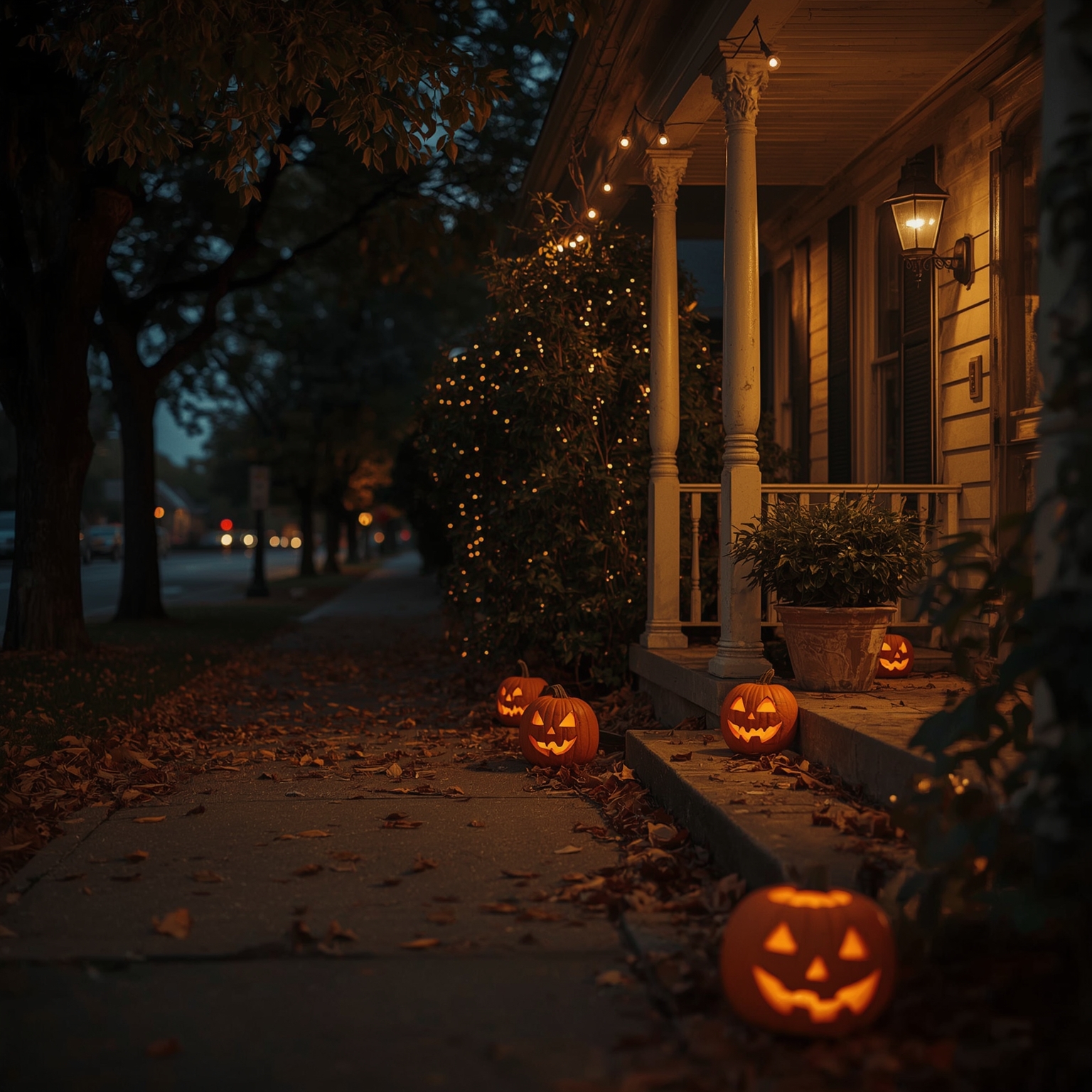
The old expression “The days are long but the years are short” has never struck me with more truth than when I find myself reflecting on the many Halloweens that have come and gone. Before motherhood reshaped the rhythm of my fall evenings, I used to spend Halloween nights perched on our front porch, a bowl of candy balanced on my knees, waiting for the joyful procession of neighborhood children. My Navy husband was often far away on deployment, so it was usually just me beneath the amber glow of the porch light. I would cheerfully admire each little ghost, princess, or superhero, letting out enthusiastic ‘oohs’ and ‘ahhs’ as they came bounding up the steps, while sympathetically smiling at their weary parents who trailed behind, juggling strollers and candy bags. Of course, at the time, I was blissfully unaware of the Herculean task that went into convincing a toddler to wear a scratchy costume they adored only in theory, or the marathon that is managing an exhausted preschooler two hours past bedtime and buzzing from pure sugar-fueled adrenaline. I thought I understood, but I truly had no idea—until, inevitably, I did.
Once our own children arrived, Halloween transformed from a quiet evening of observation into a whirlwind of costumed chaos and joy. My first Halloween as a mother came when my oldest son was only ten months old. I dressed him in a soft, plush Tigger outfit—complete with bouncing tail—and he humored me for about an hour before deciding that the festivities were quite enough. The following year, however, the holiday came alive in technicolor. My toddler proudly donned his lion costume, and his 8-week-old baby brother joined the fun swaddled up as the sweetest little peapod one could imagine. Our outing was short, ending well before sunset, but the photographs from that night still radiate delight. My husband and I, with a wink and a shared grin, instituted our own tradition: the “candy tax.” Since the boys were far too young for sweets, we dutifully took their candy haul off their miniature hands—as all responsible parents do, of course.
By the time they were school-aged, Halloween had blossomed into an event of almost mythical stature in their imaginations. For weeks, they strategized about costumes and spoke dreamily of candy bags so immense they might need wagons to carry them. Reality, naturally, proved a bit different—little legs tire long before the ideal candy quota is met. More often than not, my husband ended up carrying one sleepy child on his hip while I followed behind, juggling discarded costume pieces, melted chocolate wrappers, and bulging candy pails. It was as endearing as it was exhausting.
Those middle-grade years, however, truly were the golden age of trick-or-treating. The boys had developed enough stamina and independence to choose their own costumes and make it through an entire night of candy-collecting without collapsing in tears or needing to be carried. Admittedly, the costumes lost a bit of their earlier sweetness—no more cuddly kittens or roaring lions—but in their place came imaginative, spirited choices like Star Wars heroes and Minecraft adventurers. I loved watching them take pride in personal creativity and newfound autonomy. The joy in their faces as they darted from one doorstep to the next was worth every cold night and every aching foot. And while my husband and I still secretly maintained our candy-tax tradition, the boys were now savvy enough to protest its fairness with dramatic flair.
As time pressed forward, the landscape of our family Halloweens shifted once again. The pandemic interrupted one, fragmenting a rhythm that had been our autumn constant. By 2021, my oldest son, on the cusp of adolescence at almost twelve, declared he was ready to retire his candy bag. My younger one—ten at the time—remained eager, proudly embodying Harry Potter with round glasses and a lightning scar everyone swore suited him perfectly. In the years that followed, he still embraced Halloween’s spirit, though his costumes evolved into humorous, improvised ensembles fashioned from everyday household items. One year, he parodied a contestant from *The Great British Bake Off*, complete with an apron, a loaf of bread, and a dusting of flour in his hair; another year, he became a Starbucks barista, armed with an apron, a headset, and a to-go cup. Those outfits, whimsical and clever, marked the slow transition from childhood wonder to adolescent irony—and this year, even he has decided he’s finished with trick-or-treating.
And so, for the first time in fifteen years, I will once again find myself seated on my porch, handing out candy instead of trailing behind my own children as they rush joyfully from house to house. The thought feels beautifully bittersweet—equal parts pride and longing. I know I’ll be tempted to console myself with an embarrassing number of fun-sized chocolate bars, because farewell-ing a tradition that defined a decade and a half of our lives is not as easy as I once imagined. Trick-or-treating, like so many rituals of childhood—waking at dawn to tear into Christmas presents or scattering pastel eggs through the yard for an Easter morning hunt—blur the line between work and delight. When those moments fade, when no one needs help fastening a cape or counting candy, what remains are the snapshots and the memories, tucked carefully away but visited often.
Even though my children have closed this particular chapter, I find myself reluctant to turn the page. Perhaps, with a little luck and the bribe of a few Reese’s Peanut Butter Cups, I can coax my teenagers to join me on the porch, handing out treats and reminiscing about their favorite Halloweens of the past. After all, some deals never truly expire—the candy tax may always come due—but this year, I’ll pay it happily for one more shared evening, one more conversation beneath the October moon, and one more chance to feel the sweetness of those all-too-short years once again.
Sourse: https://www.businessinsider.com/halloween-kids-outgrew-trick-or-treating-i-miss-it-2025-10


