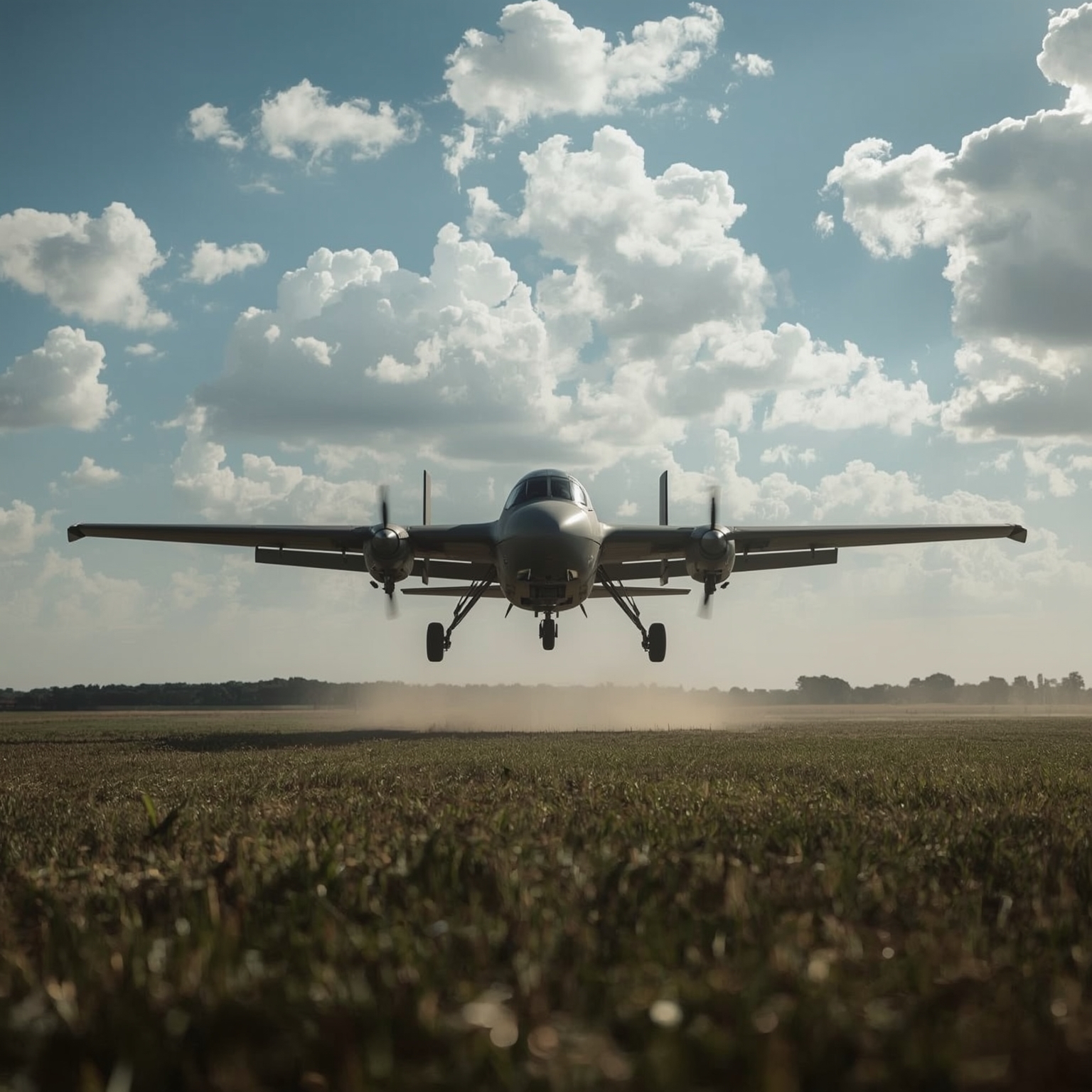
Late on Thursday afternoon, a United States Air Force aircraft went down in a rural field in Oklahoma, drawing widespread attention both because of the fortunate absence of casualties and the nature of the aircraft itself. The plane involved was the newly introduced OA‑1K Skyraider II—a modern light attack aircraft designed for special operations missions—and it represented one of the Air Force’s most recent additions to its specialized fleet, having only been officially received earlier in the year. This model embodies a fascinating marriage between agricultural aviation and military innovation: it is a specially militarized adaptation of the widely recognized Air Tractor AT‑802, a civilian workhorse typically employed for tasks such as crop dusting or for aerial distribution of fertilizers and pesticides across large stretches of farmland.
Unlike its agricultural predecessor, the OA‑1K Skyraider II has been extensively modified and equipped to support combat‑related functions, including close air support (CAS) operations, armed intelligence gathering, surveillance, and reconnaissance missions (collectively known as ISR). Its purpose is to perform with precision in demanding conditions and to deliver ground support or overwatch for troops in dynamic environments. According to officials from the Oklahoma Air National Guard, the accident occurred in the southeastern reaches of Oklahoma City. The aircraft had been assigned to the 492nd Special Operations Wing based at Will Rogers Air National Guard Base, a unit tasked with operating and testing aircraft designed for agile and flexible tactical missions. Fortunately, no injuries were sustained by either of the two individuals on board—one civilian and one active‑duty airman—who were engaged in a routine training flight at the time of the incident. An inquiry has since been initiated to determine the specific cause of the crash.
Preliminary statements issued by the Oklahoma City Fire Department to local media suggested that the aircraft may have experienced an engine malfunction shortly before impact. The crew, demonstrating composure and professionalism, apparently sought to steer the failing aircraft toward an open space to minimize potential harm or property damage, ultimately bringing it down safely in a field. Their swift actions ensured that what might have been a catastrophic event resulted instead in a controlled emergency landing.
The OA‑1K Skyraider II, which draws its name and inspiration from the venerable A‑1 Skyraider—an aircraft that served with distinction during both the Korean and Vietnam Wars—was publicly presented for the first time in early May during SOF Week 2025 in Tampa, Florida. That unveiling marked its formal introduction to both military analysts and aviation enthusiasts. Shortly before that event, the first combat‑ready Skyraider II had been delivered to Air Force Special Operations Command (AFSOC), underscoring its growing operational significance within the broader U.S. Air Force framework.
While the agricultural heritage of the aircraft might appear unconventional for a military platform, the OA‑1K represents a deliberate evolution of design intended to meet modern battlefield needs. L3Harris, the aerospace company responsible for adapting and producing the aircraft, integrated substantial enhancements—ranging from advanced modular electronics to hardpoints for weapons payloads—that allow the Skyraider II to handle a variety of specialized missions. According to Air Force assessments, the aircraft distinguishes itself as an exceptionally versatile asset, particularly because of its manageable maintenance requirements and low operating costs, which reportedly amount to under $1,000 per flight hour—significantly more economical than many other AFSOC aircraft currently in service.
The platform was primarily engineered for reconnaissance, armed overwatch, and light attack roles within permissive airspace—scenarios in which hostile anti‑air capabilities are limited. Company representatives have emphasized one of its defining strengths: an extraordinary ability to operate from minimal infrastructure. The Skyraider II can take off and land on a variety of surfaces—from rugged dirt airstrips in remote regions to sections of highway—thereby extending the operational reach of units that may be deployed far from established bases. This flexibility aligns with evolving Air Force doctrine, which increasingly values aircraft that are capable of sustaining operations from dispersed, austere environments. In potential conflicts against technologically advanced adversaries such as China or Russia, where fixed installations could quickly become prime targets for enemy missile strikes, aircraft that can relocate easily and function independently of major airfields are viewed as vital components of resilient warfare strategy.
In essence, the incident in Oklahoma serves as an early and dramatic reminder of the dual narrative surrounding the OA‑1K Skyraider II: while still in its early phase of operational introduction, it exemplifies the Air Force’s shift toward adaptable, cost‑effective systems that can respond swiftly to the demands of modern combat. The safe outcome of the crash underscores both the professionalism of its crew and the promise—and inevitable risks—of pioneering new aircraft intended to redefine how air power can be deployed in flexible, decentralized ways.
Sourse: https://www.businessinsider.com/oklahoma-crash-crop-duster-converted-special-ops-aircraft-2025-10


