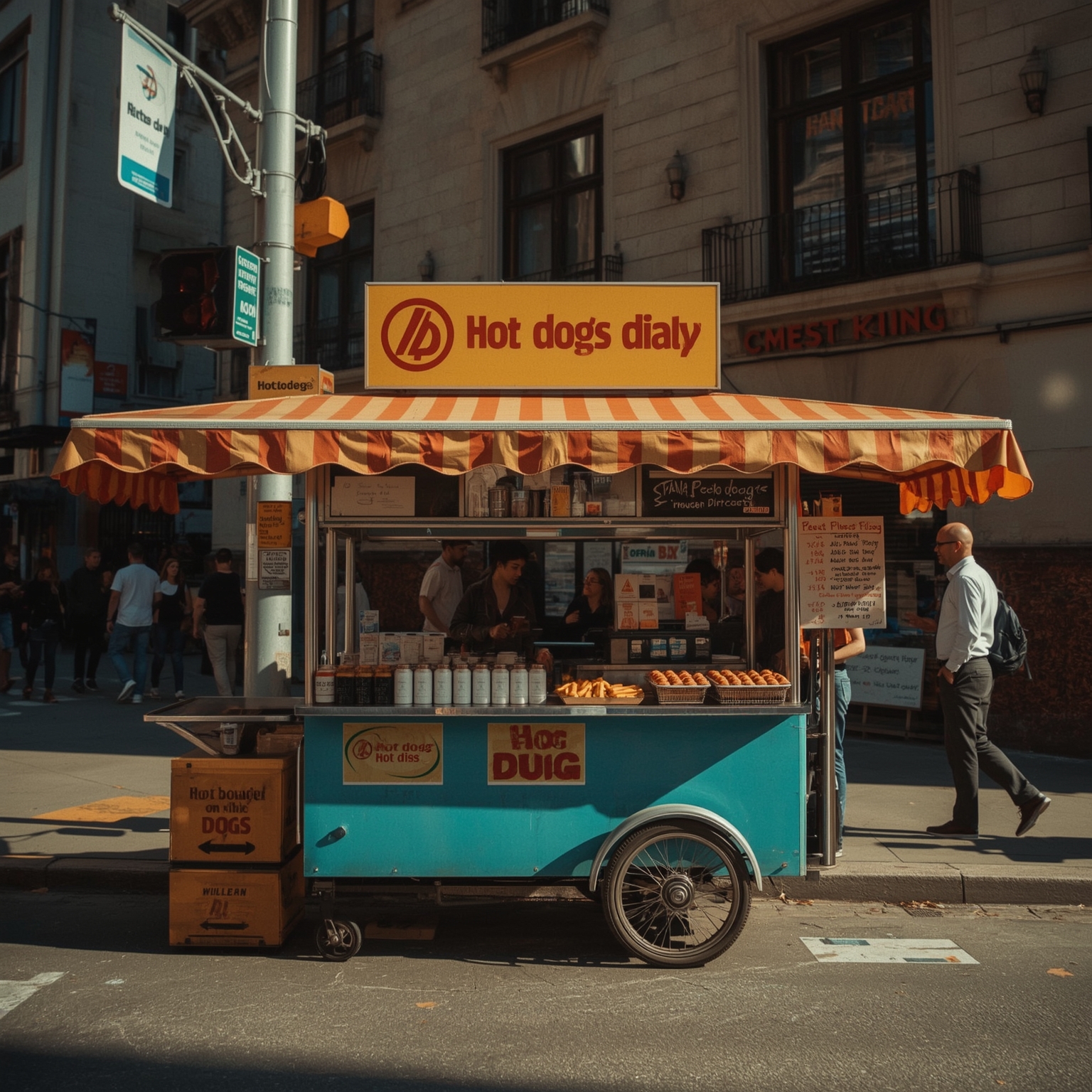
As hundreds of thousands of federal employees suddenly found themselves without active duties due to the government shutdown, one individual chose to transform that unanticipated pause in his professional life into a vibrant display of creativity and entrepreneurial spirit. Among the many furloughed workers, Isaac Stein, a 31‑year‑old attorney employed by the Internal Revenue Service, decided to channel his unexpected free time into a project far removed from the world of tax codes and complex legal frameworks — he began selling hot dogs from a street cart in Washington, D.C. For him, the venture was more than just a temporary pastime; it was an exercise in self‑expression and light‑hearted artistry. Speaking from his stand in the city’s lively NoMa neighborhood, Stein explained that his small business, aptly named “Shyster’s Dogs,” was his way of transforming a difficult period into something imaginative, playful, and fulfilling.
Before the shutdown ever took effect, Stein had already envisioned his hot dog venture as a side business to complement his full‑time position with the IRS. For the past three years, his professional focus had been on interpreting and applying tax regulations that govern employee benefits — a role that required precision and attention to detail, but rarely allowed space for whimsical experimentation. Back in June, months before the furlough began, he made the firm decision to create his own food stand, although the bureaucratic process of acquiring permits, certifications, and equipment took considerable time and financial commitment. By his own estimate, Stein invested a significant five‑figure amount to purchase the required items: the cart, storage equipment, and supplies that would meet city health and safety standards and withstand daily use.
When all the administrative steps were completed and operations could finally commence, it was already September. Stein initially planned to run his stand sparingly — specifically during evenings on Thursdays and Fridays as well as weekends — with the intent of balancing his culinary experiment alongside his demanding legal career. However, he soon discovered that the schedule he had imagined was almost impossible to sustain while maintaining optimal performance at his day job. As he put it with some amusement, attempting to operate a food business late into the night only to report to the IRS office early the next morning left little room for rest or focus. His ambitious plan required adjustment, but the unanticipated furlough that began on October 8 changed everything. Suspended from his government position until further notice, Stein suddenly had entire days open — and he took the opportunity to embrace this pause wholeheartedly, devoting his weekdays from noon until about five in the afternoon to his stand on the busy corner of First and M Streets NE.
The name of his enterprise, “Shyster’s Dogs,” encapsulates his tongue‑in‑cheek sense of humor. The word “shyster,” historically a slang term for an unscrupulous lawyer, might at first seem self‑deprecating or provocative, but Stein explained that the title was deliberately chosen to amuse those familiar with the legal field. Through irony and wit, he sought to bring a smile to his colleagues and customers, simultaneously parodying and celebrating his own profession. As he described to reporters, the project involved multiple layers of irony: though his business name referenced a dishonest attorney, in practice he was meticulous about operating with complete legality. Every permit was secured, every regulation followed, and all taxes duly paid. By adhering strictly to the rules, he found a way to turn a stereotype on its head, illustrating that humor and integrity can indeed coexist within the same enterprise.
Stein’s menu echoed his playful approach. While the offerings were straightforward in culinary terms, they were cleverly named and priced to reinforce his personal philosophy and comedic flair. The featured item, humorously called “The Only Choice,” consisted of a classic hot dog served with mustard and sauerkraut for ten dollars — a faithful homage to traditional street fare. Yet for customers whose taste buds demanded ketchup or other non‑traditional condiments, he devised an ironically punitive option: “Hot Dog with the Wrong Toppings,” which came with such additions at an increased price of eleven dollars. His reasoning was half‑practical, half‑philosophical; since childhood, he explained, he had been mystified by the pairing of ketchup and hot dogs, viewing it almost as a culinary misstep deserving of gentle correction. Nevertheless, he acknowledged the realities of customer preference and commercial viability, noting that to remain inclusive he must cater to all tastes — even those he finds questionable. For him, the price difference illustrated a humorous form of behavioral economics: providing both freedom of choice and a subtle incentive for people to conform to what he considered the ‘proper’ way to enjoy the dish.
Adding to the comic spirit of his brand, Stein even introduced a high‑priced novelty item: the “SHIRT OFF MY BACK,” listed for an exorbitant one thousand dollars. Though few, if any, have ordered it, the existence of such an item highlights Stein’s instinct for satire and his eagerness to blur the line between performance art and small‑business entrepreneurship. Every aspect of “Shyster’s Dogs” thus reflected his overall mission: to use the humble hot dog stand not merely as a means of income but as an outlet for creativity, humor, and human connection.
Financially, Stein reported that the endeavor has been surprisingly rewarding. On an average day, he serves between forty and fifty customers, earning a profit of around two to three hundred dollars. More importantly, the experience has allowed him to feel more integrated into the city community that he typically experiences only from behind an office desk. Regular customers, he observed with pride, often return with specific, personalized orders, creating a sense of familiarity and shared routine. This social aspect — engaging directly with locals, exchanging stories, and brightening their day through food and laughter — has given Stein a profound sense of satisfaction that differs from his professional achievements but is equally meaningful. As he reflected, the greatest reward of his current chapter may not be monetary gain but the joy of making a simple, tangible contribution to the daily lives of others.
Despite the success and enjoyment he has found in his unconventional interim career, Stein remains grounded in his identity as a lawyer and looks forward to returning to his government role when the shutdown concludes. He emphasized that most public‑sector tax attorneys are driven not by high salaries but by a genuine commitment to their work and the institutions they serve. The temporary closure of federal operations has affected countless dedicated professionals, and Stein, like many of his colleagues, expressed eagerness for normalcy to resume. Nevertheless, through his inventive detour into the world of street food, he has demonstrated that even disruption and uncertainty can serve as catalysts for self‑expression, humor, and personal growth. His story stands as a testament to adaptability — showing that when circumstances force an unexpected break, a creative mind can transform idle time into both art and livelihood.
Sourse: https://www.businessinsider.com/irs-lawyer-shysters-hot-dog-stand-isaac-stein-2025-10


