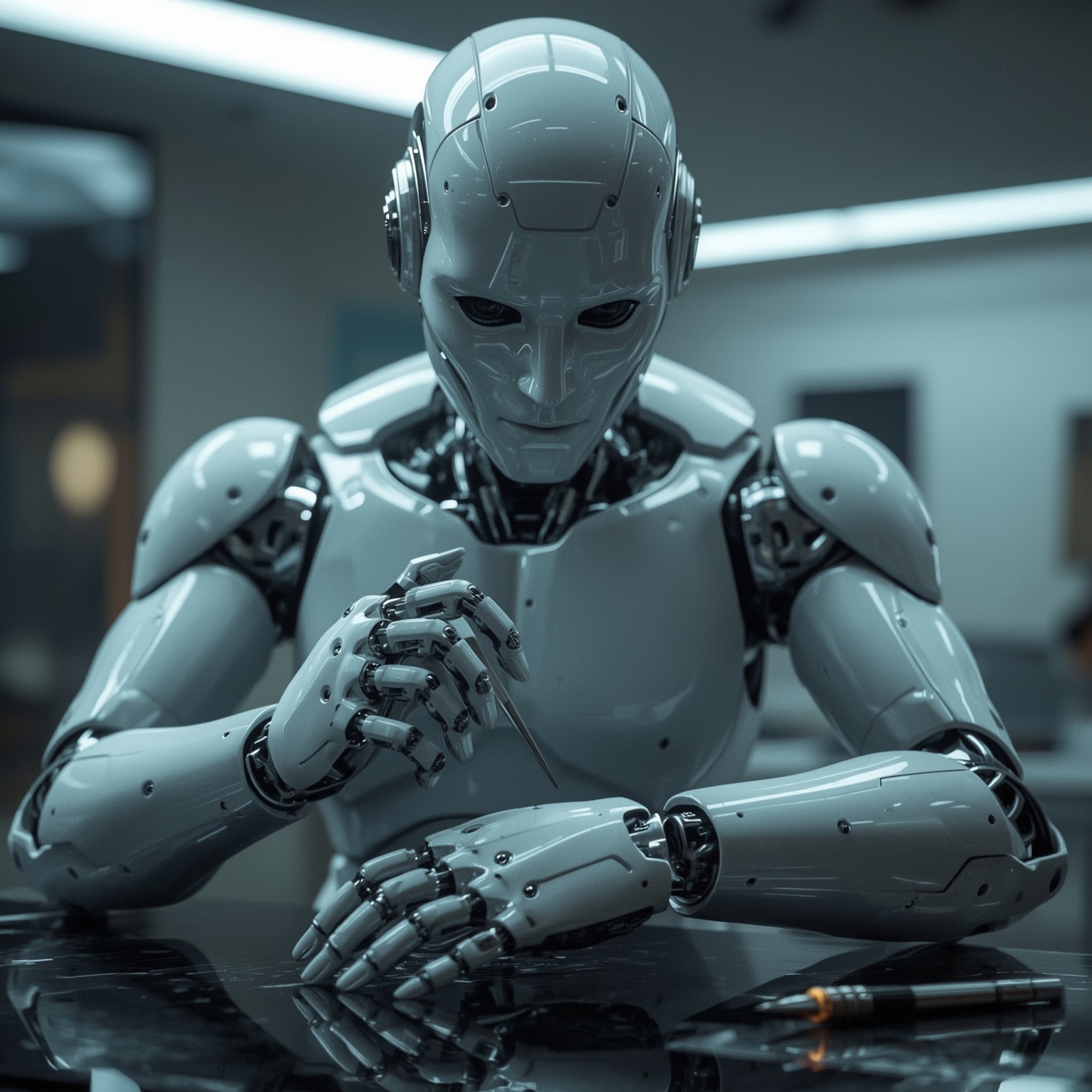
In the ever-accelerating field of humanoid robotics, engineers have achieved remarkable progress in developing machines capable of replicating many aspects of human movement and perception. Robots can now walk with fluid stability, maintain dynamic balance, and visually interpret their surroundings with an accuracy that continues to astonish both experts and observers. Yet, amid these extraordinary accomplishments, one profound and persistent challenge still stands in the way of fully realizing human-like capabilities: the mastery of the hands. The intricate complexity of human hands—with their astonishing range of motion, sensory feedback, and precision control—remains the ultimate frontier in robotics, a domain where even the most advanced systems continue to fall short of natural dexterity.
The ability to grasp, manipulate, and interact delicately with the physical world is not simply a matter of mechanical movement; it represents the synthesis of perception, responsiveness, and fine motor coordination. Every fingertip in the human hand contains a dense network of sensory receptors that relay tactile information in real time, allowing us to detect texture, pressure, weight, and temperature. Replicating this level of sensitivity through artificial means demands not only sophisticated hardware design but also revolutionary advances in software and artificial intelligence. For instance, a robot capable of gently holding a fragile glass or performing intricate surgical procedures must possess near-instant feedback loops and adaptive algorithms that rival human perception.
Researchers across academia and industry are, at this very moment, pushing the boundaries of what robotic hands can achieve. They are experimenting with flexible materials that mimic the subtle elasticity of skin, developing micro-actuators to reproduce the nuanced movements of muscles, and designing neural networks that interpret sensor data with unprecedented accuracy. Each of these advancements brings the dream of human-level dexterity one step closer to reality. The implications of success are vast: in manufacturing, robots could assemble components with delicate precision; in healthcare, robotic systems could assist surgeons with unmatched steadiness and reliability; and in ordinary daily life, humanoid assistants could seamlessly handle objects designed for human use.
Ultimately, the development of true robotic hands signifies far more than an engineering milestone—it represents the culmination of an age-old human aspiration to create machines that mirror our own physical and cognitive abilities. Once the intricate problem of the hand is solved, the field of robotics stands poised for a transformation that will redefine industries, extend human reach, and reshape the boundaries between the organic and the artificial. The future of touch, dexterity, and interaction is approaching faster than we might imagine, and when it arrives, the humanoid revolution will be complete.
Sourse: https://www.wsj.com/tech/the-hands-problem-holding-back-the-humanoid-revolution-c1aa6123?mod=rss_Technology


