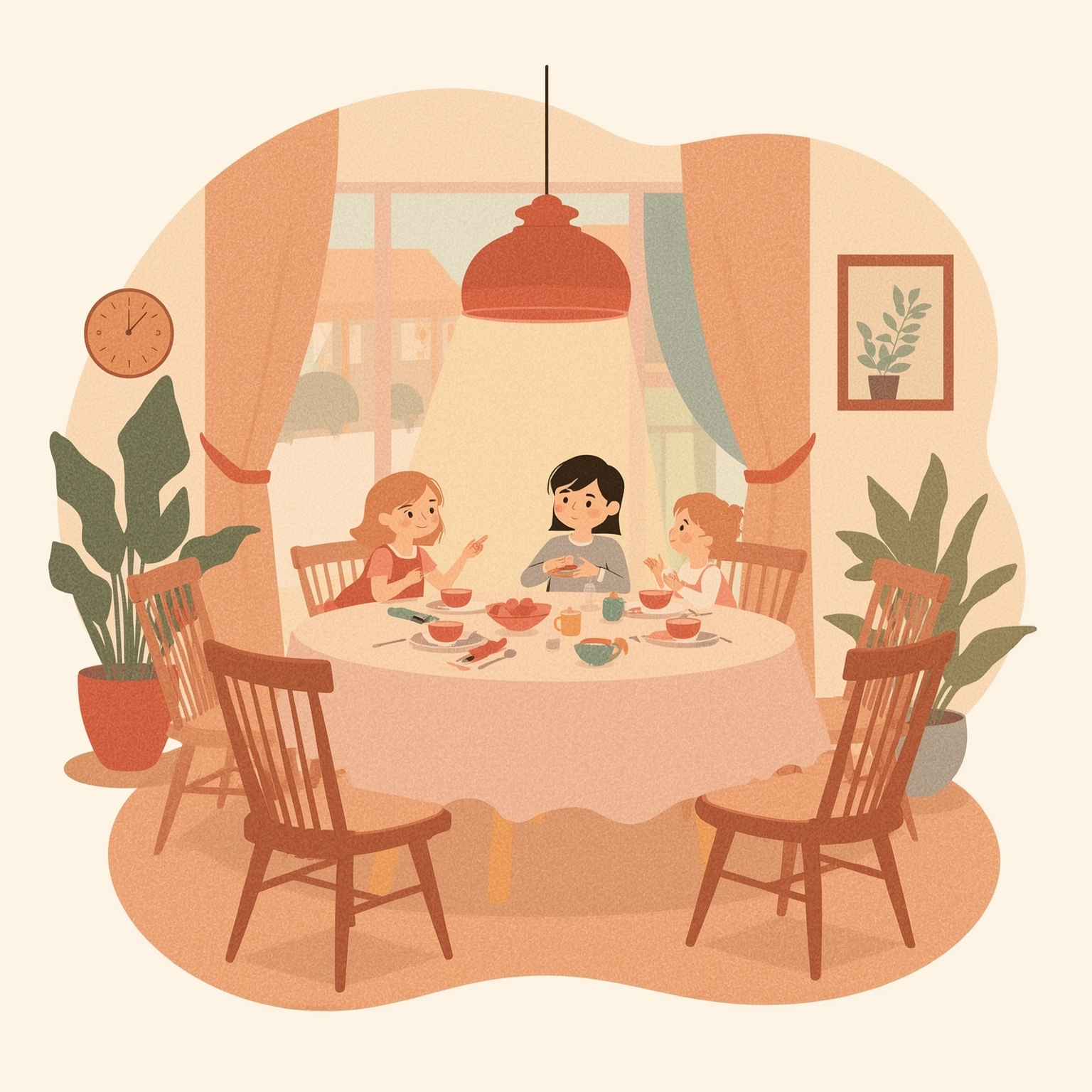
Earlier this year, it dawned on me that dinnertime in our household had spiraled far beyond the point of relaxation or joy. What should have been a period of calm connection had gradually devolved into an hourlong session of bickering and cross complaints. Each of the five individuals who make up our family seemed, without fail, to devote half of every shared meal to criticizing another’s dining behavior. My teenagers, brimming with adolescent self-awareness, frequently voiced their irritation over their younger siblings’ tendency to interrupt conversations mid-sentence or to chew noisily, oblivious to the social discomfort they caused. Every critique found its way onto the table, adding tension where warmth was supposed to be.
Spending a full hour or more preparing a lovely meal, only to have that effort culminate in conflict, left me feeling dispirited. There was no sense of gratitude or enjoyment, just a cloud of mutual frustration. It became unmistakably clear that what we needed was not another lecture or momentary scolding but a complete reset—a deliberate, family-wide recalibration of how we approached mealtime interaction. Collectively, we could all see that something fundamental had gone awry. Not a single one of us—children or adults—was demonstrating what our grandparents might have simply called “good manners.”
To address this imbalance, I conceived a modest but practical solution: creating a handwritten poster of straightforward, digestible rules to hang in the kitchen where everyone could see it. My strategy was to start small, implementing just two simple rules at first, and then, depending on how smoothly the family adapted, adding one or two new guidelines each week. The underlying idea was to maintain balance—to ensure that no one felt scolded or overwhelmed by a barrage of expectations. Our aim was to build positive habits gradually, allowing practice and repetition to root them firmly in behavior over time.
The poster itself was of no artistic significance—crafted on an ordinary sheet of paper with a few bold markers—but it proved to be a surprisingly effective anchor. Displayed within full view of our dining table, it became a subtle reminder of what we were trying to achieve. It also gave my husband and me a tangible point of reference to gently redirect conversation whenever manners began to lapse—say, in the midst of passing the butter or reaching impulsively across the table.
Once the poster was up, something unexpected happened. The rules provided a framework that transformed vague complaints into focused self-regulation. Instead of aimless tattling or generalized accusations of bad behavior, the children began to refer specifically to the agreed-upon guidelines. Our first two rules—“Stay in your seat” and “Chew with your mouth closed”—quickly became part of the family vocabulary. The kids, immersed in the new system, took these rules seriously, even going so far as to remind one another (and sometimes us parents, too) whenever anyone broke a rule. Their vigilance was relentless but oddly encouraging—it showed that the rules had taken hold.
As time passed and they began to internalize these first steps, we expanded the list. We added “Do not interrupt when someone is speaking,” “Place your napkin on your lap,” and “Avoid taking jumbo-sized bites of food.” Each new rule tackled a specific challenge, promoting both courtesy and mindfulness. Predictably, some rules required more reinforcement than others. The instruction against oversized bites, for instance, demanded a surprising amount of practical training—cutting food into manageable pieces, pacing each bite, and resisting the temptation to rush. But repetition slowly did its work.
To maintain motivation, we paired this learning process with an attainable reward. Rather than expecting flawless behavior overnight, we established a collective goal: once the family could consistently demonstrate all of the outlined table manners, we would celebrate with a trip to our favorite ice cream parlor in town. This incentive wasn’t about bribery—it was about associating progress with positivity, anchoring improvement in shared enjoyment rather than punishment. It took nearly two months to reach that level of consistency, but when we did, the shared sense of accomplishment made the ice cream taste even sweeter.
Alongside enforcing the rules, we devoted considerable time to discussing their purpose. We explained that good manners extend beyond the home, shaping how we interact with others in the broader world—whether dining with friends, attending school events, or sharing public spaces. For example, remaining seated at the table is not just a family preference; it mirrors expectations in restaurants and formal gatherings. Likewise, learning not to shovel food hurriedly or speak with one’s mouth full shows basic respect for those we share meals with and keeps shared spaces comfortable. We talked, too, about how leaving the table repeatedly or dominating conversations disrupts the experience for everyone.
One of the most enlightening threads of this entire experiment involved how we communicated corrections. We emphasized that constant tattling or issuing barked orders does not constitute effective dialogue. Instead, we practiced delivering and receiving gentle reminders—small verbal cues spoken kindly yet clearly. This, as it turned out, was one of the hardest adjustments to make. After all, mealtime coincides with the exhaustion that comes at the end of a long day, when patience runs thin. Yet, it was in those moments of fatigue that we had to dig deepest to model empathy and restraint.
As a parent, I’ve always believed that positive reinforcement cultivates far stronger habits than relentless reprimand. Working toward a pleasant goal—like that long-anticipated family ice cream outing—proves infinitely more motivating than enduring another exasperated lecture. Are our manners now picture-perfect? Certainly not. But what we have achieved is far more enduring: a foundation of mutual respect and awareness that makes the time we share at the table genuinely gratifying. And should our habits ever slip again, we know we can always bring out the poster as a friendly reminder of the civility and connection we worked so hard to create.
Sourse: https://www.businessinsider.com/teach-kids-teens-table-manners-dinnertime-rules-2025-10


