When Stephanie Falk watched her three children head off to college, an entirely new chapter of her life began to unfold. The once-bustling family home in Westchester County grew quiet, and with that stillness came a longing she had not felt in decades — the desire to return to the energy, culture, and convenience of New York City. In her twenties, she had called the city home, reveling in its constant rhythm, its walkable neighborhoods, and its unmistakable sense of vibrancy. Now, with the nest empty, the notion of moving back to Manhattan began to take root in her imagination, representing not only nostalgia but also a rekindling of independence and connection to an urban lifestyle she had once loved.
Her husband, Andrew, however, saw things rather differently. After nearly thirty years living in their leafy village roughly twenty miles north of the city, he had grown deeply attached to the expansive greenery and the comforting sense of space surrounding their century-old home in Edgemont, New York. The peaceful suburban setting, with its privacy, gardens, and familiar community ties, had defined their family’s daily life for decades. Trading that environment for the density and pace of New York City felt, to him, like relinquishing something irreplaceable — not only physical space, but a whole way of life that symbolized stability and comfort.
Recognizing their differing priorities, the couple decided to strike a balance — a thoughtful compromise that would embrace both the coziness of suburbia and the dynamism of city life. They agreed to sell their long-cherished 100-year-old residence and search for a more urban-style town within the same county. Their ideal destination would be a community that offered accessibility to restaurants, cultural venues, and scenic water views — whether along the Hudson River or the Long Island Sound. Equally important was the desire for walkability, a feature that would allow them to enjoy daily life without dependence on cars, inviting a renewed sense of activity and connection with their surroundings.
In the spring of 2024, while playing a casual round of golf with their close friends Judy and Steven Cooperman, the Falks found that their lives were running in a strikingly parallel direction. During the game, conversation turned to their respective plans for the future. The Coopermans, who were also approaching the empty-nest stage, had recently decided it was time to move on from the spacious family home where they had raised their children. Like the Falks, they were seeking a new home that was not necessarily smaller but easier to maintain, more conveniently located, and part of a lively social environment.
Judy and Steven mentioned that they had been exploring a promising new development called Edge-on-Hudson, rising along the shores of the Hudson River in the historic village of Sleepy Hollow. The concept of a partially completed, mixed-use community — combining residential townhomes, parks, and commercial space — instantly caught the Falks’ attention. Only a few days later, Judy offered to show them around, and as they toured the area together, it became evident that this development met nearly every item on both couples’ wish lists. The four-bedroom townhouses were large enough to comfortably accommodate visits from all their adult children and partners, yet designed with modern conveniences, such as private elevators to accommodate aging relatives. The proximity to both the waterfront and a pedestrian-friendly town center promised a style of living that blended practicality with enjoyment.
What appealed to them most, however, was not only the architecture or location but the sense of community that the development seemed to promote. With homes clustered thoughtfully together and shared amenities — including green spaces, walking paths, a park, and even a communal pool — the environment appeared carefully designed to foster social interaction among residents. For Stephanie, who built her professional life around mindfulness and human connection through her company, Pause to be Present, that sense of belonging was essential. “I’ve always believed deeply in the power of community,” she explained later. “As we grow older, staying engaged and surrounded by people who share our values and energy becomes profoundly beneficial — emotionally, socially, and even physically.”
Both couples, now in their mid to late fifties, were still fully immersed in professional life and had no intention of retiring anytime soon. Stephanie continued to run her mindfulness enterprise, Judy managed administrative operations for a law firm remotely, and their husbands maintained active careers — one in real estate and the other in law, commuting regularly into Manhattan. They weren’t ready to renounce professional ambition or vibrant living for quiet retirement; instead, they sought an environment that could evolve with them.
While many people equate downsizing with giving up comfort, the Falks and the Coopermans adopted a different philosophy — what they described as “rightsizing.” Their goal wasn’t to reduce their living area drastically but to reconfigure it in a way that better matched their phase of life. Both families sold their long-owned suburban homes for slightly more than the cost of their new townhouses, which started around $1.6 million, making the transition financially balanced. The new residences offered modern layouts, accessibility features, and a lock-and-leave convenience that would allow more freedom for travel and leisure.
Their decision reflects a growing trend among Generation X and baby boomers who are not prepared to transition into conventional retirement settings but are equally uninterested in maintaining oversized properties. As Judy put it, people like them are “itching for the next step” — looking for homes and lifestyles that balance autonomy, comfort, and lively engagement. In a region where housing demand and prices remain high, these couples managed to carve out what feels like an ideal middle ground: communities that are vibrant yet manageable, modern yet substantial.
“We’re right-sizing — not downsizing,” Stephanie affirmed. Although their new home’s square footage roughly mirrors their old one, she emphasized that the lifestyle shift is what truly matters. The new setting offers more alignment with their values: accessibility, social connection, and low-maintenance living — a blend that feels perfectly suited to who they are today.
The development itself, still under construction, represents the beginning of an ambitious transformation. Once complete, Edge-on-Hudson will encompass nearly 1,200 residences, including townhomes, condominiums, and apartments, integrated with a hotel, grocery store, and ample green spaces across seventy acres that once served as a General Motors assembly site. The project aims to transform an industrial landscape into a thriving, walkable community offering both privacy and interaction.
By late July, the Falks and Coopermans moved into temporary rental units within the same development while awaiting the completion of their permanent townhomes. Interestingly, their decision has already begun to ripple outward — several other couples they know have expressed serious interest in joining them, with five pairs of friends meeting developers to explore potential purchases. What started as a pragmatic move has evolved into the foundation of a new, interconnected social network.
Both women express a shared enthusiasm about this new stage of life. The Coopermans, in simplifying their possessions by selling or donating much of their old furniture, described the process as surprisingly liberating. The physical act of letting go mirrored their emotional shift toward a lighter, freer existence. Now, rather than scheduling occasional golf or tennis outings, Stephanie and Judy find themselves spending impromptu time together — a spontaneous walk by the river or casual conversation in the park. “It’s so easy now to just say, ‘Hey, want to go for a walk?’” Judy remarked, highlighting how proximity naturally nurtures connection.
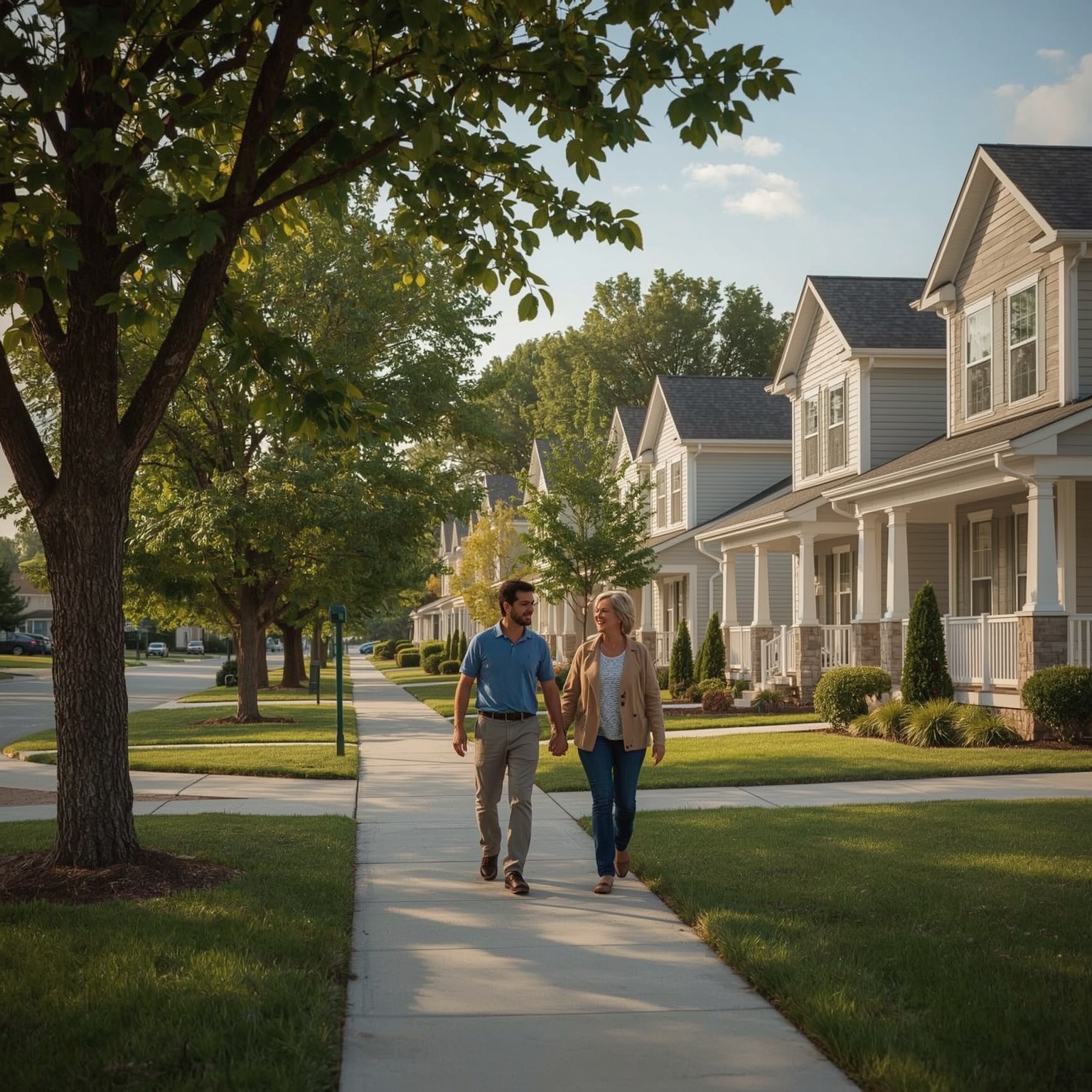
Equally gratifying has been the experience of meeting new neighbors. The atmosphere of Edge-on-Hudson seems to invite friendliness — residents are often out walking, chatting, and building new bonds. Judy captured the feeling perfectly: “It’s kind of like going to college your freshman year — everyone’s eager to meet people.” For the Falks and Coopermans, this transition isn’t merely about moving houses; it’s about rediscovering community, vitality, and purpose at a time in life when many seek precisely that renewed sense of belonging.
Sourse: https://www.businessinsider.com/2-empty-nest-gen-x-couples-sold-homes-rightsize-neighbors-2025-10


