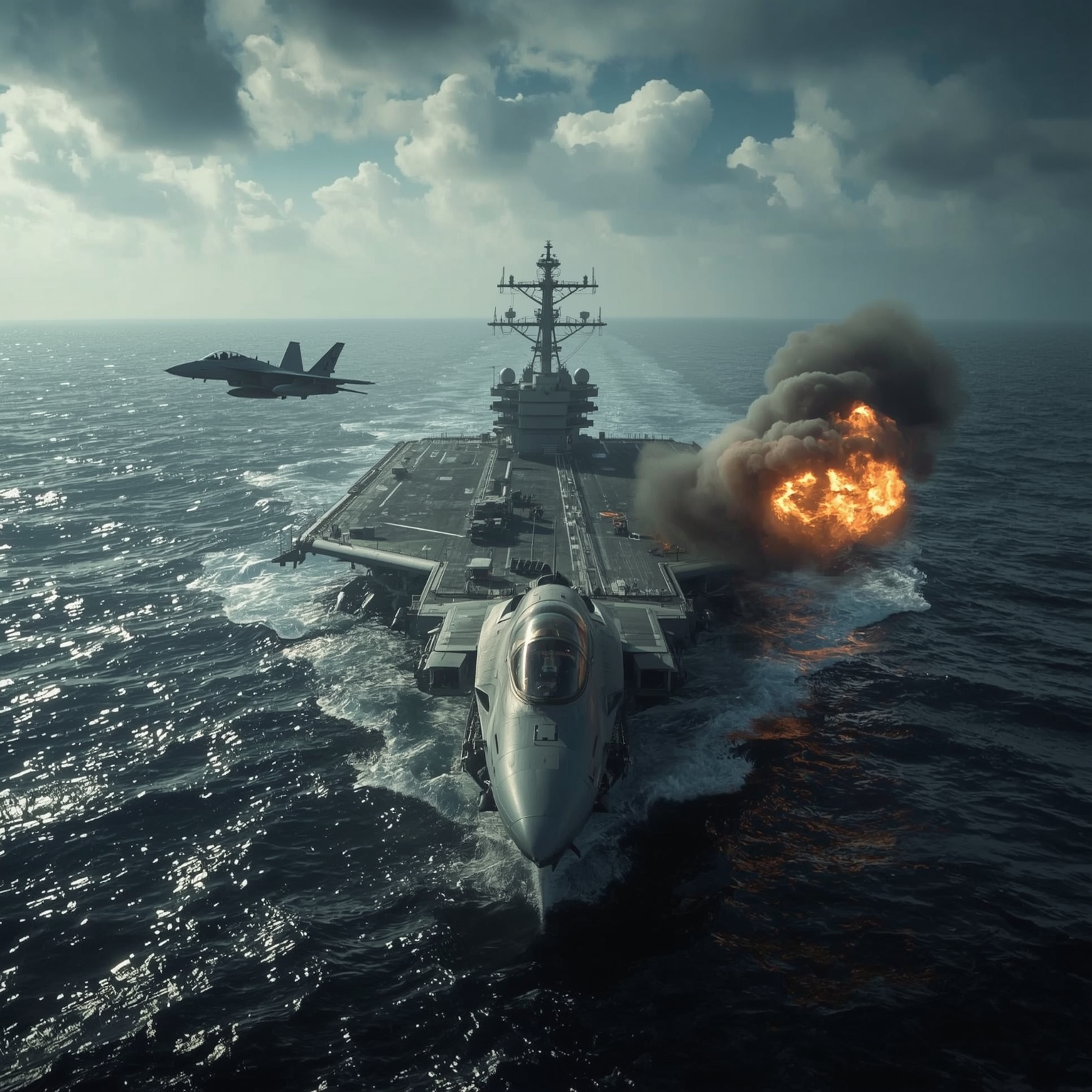
On Sunday, the U.S. Navy confirmed that two separate aviation mishaps had occurred in rapid succession, involving aircraft that were both deployed from the same carrier, the USS Nimitz, during a routine mission in the South China Sea. According to details released by the U.S. Pacific Fleet, an MH-60R Sea Hawk helicopter and an F/A-18F Super Hornet fighter jet each went down in distinct incidents that unfolded only about thirty minutes apart, drawing attention to the inherent complexity and risk involved in continuous carrier-based operations at sea.
The Navy’s statement explained that the first event took place at approximately 2:45 p.m. local time, when the Sea Hawk—part of Helicopter Maritime Strike Squadron 73, known by the call sign “Battle Cats”—experienced difficulties that ultimately resulted in its crash. Prompt rescue operations were launched, and all three personnel aboard the helicopter were safely recovered. Roughly half an hour later, at 3:15 p.m., the second aircraft, a Super Hornet fighter assigned to Strike Fighter Squadron 22, also referred to as the “Fighting Redcocks,” was reported to have crashed. The two aviators on board were able to eject successfully from the jet just moments before impact, and both were later confirmed to be safe and in stable condition.
In its official communication, the Navy emphasized that while both incidents occurred under unrelated circumstances, comprehensive investigations have been initiated to determine the underlying causes and to assess whether any operational or mechanical factors might have contributed. Military aviation investigations of this kind typically involve in-depth technical analysis, examination of flight data, and interviews with the crew and support personnel involved. As of the latest update, no additional information regarding the exact nature of the failures had been released.
These closely timed accidents coincided with broader geopolitical developments, as the events occurred during a period in which then-President Donald Trump was conducting a high-profile diplomatic tour of Asia. His itinerary included multiple stops and critical trade discussions, beginning with meetings in Malaysia and expected to culminate in talks in China with President Xi Jinping. The timing of the aircraft losses inevitably drew heightened attention due to the regional context, given that tensions in the South China Sea and ongoing negotiations over trade and tariffs had already been shaping the strategic narrative between Washington and Beijing.
Although the two aircraft crashes were unrelated to any direct conflict, they underscored the intense pace of operations and the demanding conditions under which U.S. naval personnel serve. The South China Sea remains one of the most strategically vital and heavily contested maritime regions in the world, frequented by commercial shipping and navies from several nations. Operating there necessitates constant vigilance and preparedness. The Navy reiterated that all individuals involved were accounted for and receiving appropriate care, while investigators continue their work to ensure that future flights uphold the highest standards of safety and readiness. This story continues to develop as new findings emerge, and further updates will be provided once official reports are released.
Sourse: https://www.businessinsider.com/us-navy-super-hornet-sea-hawk-south-china-sea-crash-2025-10


