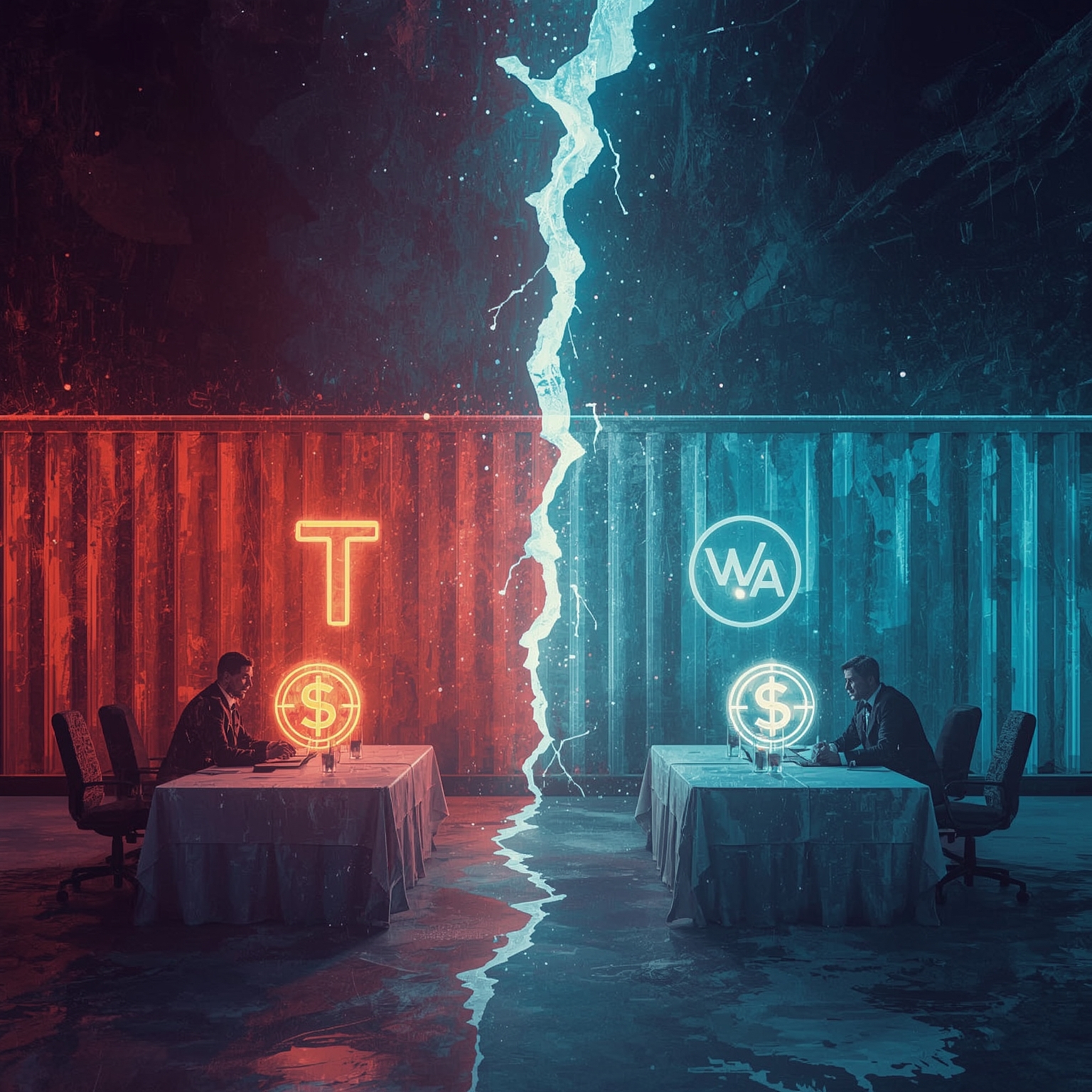
What initially appeared to be a routine promotional initiative designed to strengthen Canada’s position in the American marketplace swiftly evolved into a full-scale diplomatic and economic confrontation between two of the world’s closest allies. Within a mere forty-eight hours, a television advertisement originating in Ontario — one that invoked the late President Ronald Reagan’s cautionary remarks about the destructive consequences of tariffs — transformed from a regional campaign into the epicenter of an international trade quarrel. The ad’s message, which sought to highlight the mutual harm of protectionist measures, provoked a dramatic response from U.S. President Donald Trump, who accused Canada of outright fraud and retaliated by imposing a fresh wave of tariffs. By the end of that turbulent week, previously steady trade negotiations between Washington and Ottawa had ground to a halt, and the diplomatic goodwill that typically characterized their relationship gave way to open hostility. Both governments began exchanging sharp statements and barbed commentary across the digital and broadcast spheres, turning social media platforms and cable news networks into arenas for rhetorical warfare.
The sequence of events began on Thursday, October 16, 2025, at precisely 12:06 p.m. Eastern Time, when Ontario Premier Doug Ford publicly unveiled the start of a new advertising effort aimed directly at audiences in the United States. Announcing the initiative via X, Ford triumphantly declared, “It’s official: Ontario’s new advertising campaign in the U.S. has launched.” He further insisted that the province would persistently employ every available means to argue against the imposition of American tariffs on Canadian goods, emphasizing that enduring prosperity could only be achieved through mutual collaboration rather than economic antagonism. The centerpiece of the campaign — a one-minute television commercial — prominently featured archival footage of former U.S. President Ronald Reagan, who, in solemn tones, warned Americans that tariffs not only undermined domestic employment and consumer welfare but also inevitably provoked damaging retaliatory actions from foreign nations. The advertisement was broadcast across several major U.S. television networks and scheduled for high-visibility airings during the first two games of the World Series, ensuring that millions of American viewers would encounter its message.
Only eight days later, in the pre-dawn hours of Thursday, October 23, 2025, the situation escalated dramatically. At approximately 4:15 a.m. Eastern Time, President Trump took to his preferred platform, Truth Social, with a furious denunciation. He accused Canada of falsifying Reagan’s remarks, declaring that the advertisement had been fraudulently constructed and had misrepresented the late president’s stance on tariffs. Trump claimed that the Ronald Reagan Presidential Foundation and Institute had confirmed this deception, announcing in a blunt post that “Canada has fraudulently used an advertisement” that was “FAKE.” As a consequence, he proclaimed that all ongoing trade discussions with Canada were to be “terminated immediately.” His online reaction was prompted by an official statement issued by the Reagan Foundation itself, which asserted that the Government of Ontario had mischaracterized Reagan’s historic 1987 “Radio Address to the Nation on Free and Fair Trade.” The Foundation stressed that Ontario had neither sought nor received authorization to use or modify the former president’s words, further revealing that it was exploring legal recourse for this apparent violation of intellectual property and historical integrity.
Later that same day, at 7:27 p.m. Eastern Time, Premier Doug Ford attempted to quell the worsening diplomatic storm. In an extended post on X, he appealed for calm and reiterated that the intent behind Ontario’s campaign had never been to provoke but to encourage thoughtful discussion about the future of North American economic cooperation. “Our intention was always to initiate a conversation about the kind of economy that Americans want to build and the impact of tariffs on workers and businesses,” Ford wrote. He disclosed that, after consultation with Canadian Prime Minister Mark Carney, Ontario would temporarily suspend the U.S. advertising campaign effective Monday, a gesture meant to foster goodwill and enable trade talks to resume in a more constructive environment. Reaffirming that Canada and the United States remained “neighbors, friends, and allies,” Ford urged both nations to work together to “build Fortress Am-Can,” a metaphor for an integrated, resilient North American economy grounded in unity rather than division.
Yet the brief lull in hostilities did not last. On Saturday, October 25, 2025, at approximately 9:30 p.m., President Trump reignited the controversy with another pointed Truth Social post. He accused Canadian officials of intentionally rebroadcasting the so-called fraudulent ad during the World Series — a particularly provocative act, given that the championship featured the Los Angeles Dodgers facing off against Canada’s own Toronto Blue Jays. Following this accusation, Trump revealed a new punitive measure: an additional ten percent tariff on all Canadian imports. He alleged that Canada’s goal in airing the disputed advertisement was to manipulate American opinion and ultimately appeal to the U.S. Supreme Court for relief on tariff policy. “Because of their serious misrepresentation of the facts and hostile act,” Trump declared, “I am increasing the Tariff on Canada by 10% over and above what they are paying now.” He further asserted, in an ahistorical claim, that President Reagan had actually “loved tariffs” when implemented for reasons of national security and economic survival.
During the same weekend, specifically between Friday, October 24, and Saturday, October 25, the controversy took an even more visible turn. Despite Trump’s expanded tariff order, the disputed Reagan advertisement aired twice more during the World Series broadcasts, ensuring continued public exposure. The games, held at Toronto’s Rogers Centre and televised across North America, provided a massive audience for both the sporting event and the surrounding political drama. The Toronto Blue Jays began the series with an emphatic 11–4 victory in the opening game, followed by a decisive comeback from the Los Angeles Dodgers, who triumphed 5–1 in the second match. While baseball fans debated plays and strategies, international commentators noted the symbolic irony of a diplomatic crisis unfolding during an event meant to celebrate cross-border unity and friendly competition.
By Sunday, October 26, 2025, the controversy had fully permeated American public discourse, dominating major weekend political talk shows. U.S. Treasury Secretary Scott Bessent appeared on CNBC’s “Meet the Press,” where he lambasted Ontario’s commercial as a deliberate psychological operation — “propaganda,” he said — aimed at influencing American citizens and distorting the political conversation about trade policy. He argued that such tactics had already inflicted measurable harm on the historically stable relationship between the United States and its northern neighbor. On CBS’s “Face the Nation” later that day, Bessent reiterated his criticism, describing the advertisement as a direct interference in U.S. sovereign affairs. He lamented that the episode had “clearly damaged” the trust and collaboration that had long underpinned the alliance between Washington and Ottawa.
In less than two weeks, what began as an advertising effort advocating for cooperative trade practices had spiraled into a striking example of how political messaging, when amplified across borders and historical symbols, can precipitate enormous diplomatic and economic consequences. The incident served as a potent reminder of the fragility of international partnerships in an era defined by instantaneous communication, intensified nationalism, and the ever-present capacity for words — even those spoken decades earlier — to reshape the global landscape.
Sourse: https://www.businessinsider.com/trump-canada-feud-ronald-reagan-ad-trade-tariff-war-timeline-2025-10


