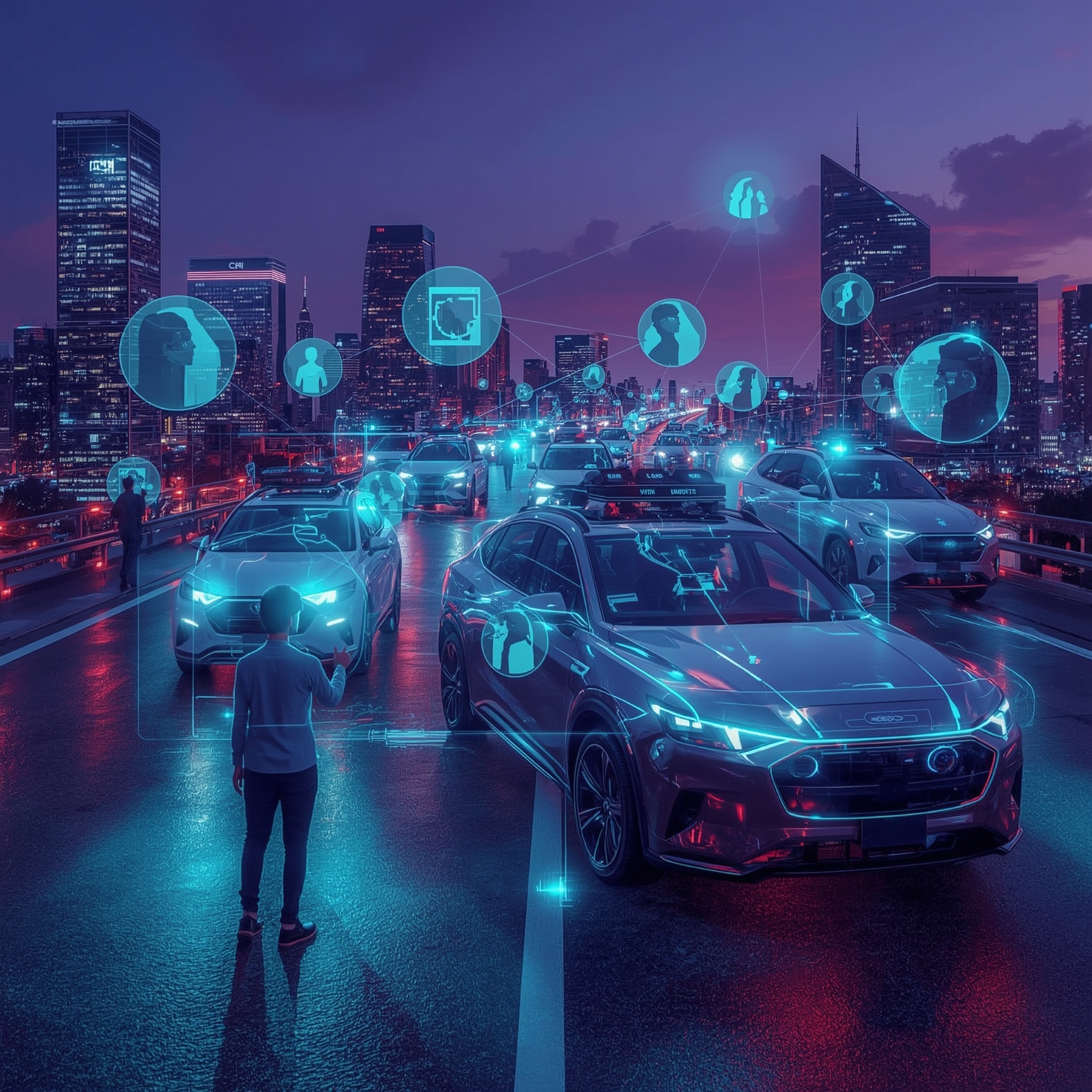
According to Jeremy Bird, Lyft’s executive vice president of driver experience, the individuals who currently earn their living as ride-hailing drivers might one day transition into the role of robotaxi owners. In Bird’s view, the rapid evolution of self-driving technology could fundamentally reshape the ride-hailing economy, granting today’s drivers new opportunities to become small-scale entrepreneurs rather than simply service providers. While autonomous vehicles are beginning to appear in a growing number of American cities, the long-term question of who will ultimately own, operate, and profit from these vehicles remains unanswered. For now, drivers working with platforms such as Lyft are responsible for managing their own cars, maintaining them, and covering associated costs, effectively acting as one-person transportation businesses.
As self-driving vehicles become more affordable, reliable, and widespread, Bird suggests that ride-hailing professionals may find themselves participating in a hybrid economic model—one that bridges traditional driving with automation. In this envisioned future, drivers would no longer be limited to physically operating vehicles; instead, they could become proprietors of autonomous fleets that generate income independently, functioning semi-passively through the Lyft platform. Bird described this future scenario as a world where “the driver is the owner of the vehicle that they are able to put on the platform,” emphasizing that economic empowerment could evolve in tandem with technological progress.
Lyft has already initiated strategic partnerships designed to explore this transformation. Earlier this month, the company announced a collaboration with Tensor, a young startup working on democratizing access to self-driving technology. The partnership focuses on enabling everyday consumers—not just corporations—to list their autonomous vehicles on the Lyft app. Tensor claims that such vehicles could effectively operate continuously, offering rides at any time of day or night, thereby generating income around the clock for their owners. This approach hints at a potential redefinition of what it means to “drive” for a living, shifting from active labor to intelligent asset management.
However, this technological optimism is tempered by genuine concerns within the driving community. Many current drivers worry that the widespread adoption of self-driving cars will threaten their livelihoods by shrinking demand for human drivers. Uber’s CEO, Dara Khosrowshahi, has publicly acknowledged that such displacement represents a serious and pressing challenge, predicting that within a decade or so, the shortage of driving jobs could become a reality. Uber, like Lyft, is conducting pilot tests involving robotaxis, including those developed through a collaboration with Alphabet’s autonomous driving division, Waymo.
Bird, in contrast, refrains from making specific predictions regarding when, or to what extent, robotaxis might begin edging human drivers out of the market. He stresses that there will likely always be scenarios requiring human presence—tasks that machines, regardless of their sophistication, are ill-suited to handle. For example, a professional driver can assist travelers carrying multiple heavy suitcases or provide personal support to elderly passengers—small but meaningful gestures that technology cannot replicate. Recognizing this, Lyft has been organizing surveys and listening sessions with its active drivers to ensure that their voices guide future updates to the platform as the company gradually integrates autonomous vehicles.
Alongside its investments in automation, Lyft continues to improve its driver-focused tools and policies. The company recently unveiled an enhanced version of its driver app, introducing features designed to make the experience fairer and more flexible. Notably, drivers will now be compensated for the time they spend waiting at pick-up locations—a longstanding issue among gig workers. Additionally, drivers can choose whether to accept specific categories of rides, such as the premium Lyft Black service, allowing greater control over their schedules and preferences. Bird emphasized that this kind of iterative improvement is part of Lyft’s philosophy: “Every year we’re looking at what we can do to improve the platform for drivers and riders alike.”
Beyond the direct impact on individual drivers, Bird envisions that the emergence of robotaxis will generate a variety of new employment opportunities in sectors supporting the autonomous fleet ecosystem. Each self-driving car will require regular maintenance, cleaning, charging, and software updates, tasks that will sustain jobs at centralized vehicle depots. “There’ll be more opportunities,” he explained, “because those sites will have more cars, more hours, and consequently more work.” Lyft already operates similar support infrastructure through its Flexdrive program, which allows drivers to rent vehicles from the company instead of owning them outright. Managing this fleet of human-driven cars involves a range of specialized workers—from mechanic teams to customer service personnel—demonstrating how new mobility systems can stimulate secondary forms of employment.
For some entrepreneurial drivers, the coming changes are viewed less as a threat and more as a gateway to future investment. Walter Strobel, a Bay Area Lyft driver and former delivery business owner, expressed optimism that he could one day take out a loan to purchase autonomous vehicles, placing them on Lyft’s platform as income-generating assets. Strobel believes that, although thousands of robotaxis would eventually be required to scale Lyft’s vision, creating space for large financial institutions to play a role, there should still be meaningful opportunities for smaller independent owners. “If you have the credit,” he observed, “you can go out and buy five vehicles.” His perspective embodies a growing sentiment among forward-thinking gig workers—one that frames automation not solely as competition, but as a potential instrument of economic mobility.
This evolving landscape, as described by Bird and echoed by drivers like Strobel, suggests that the future of ride-hailing will not simply replace humans with machines, but rather reconfigure the relationship between labor, ownership, and technology. Through strategic partnerships, gradual policy adjustments, and open communication with the driver community, Lyft is positioning itself at the forefront of this transition, striving to ensure that the shift toward self-driving vehicles remains inclusive, profitable, and socially sustainable.
Sourse: https://www.businessinsider.com/how-robotaxis-could-create-job-opportunities-gig-workers-lyft-exec-2025-10


