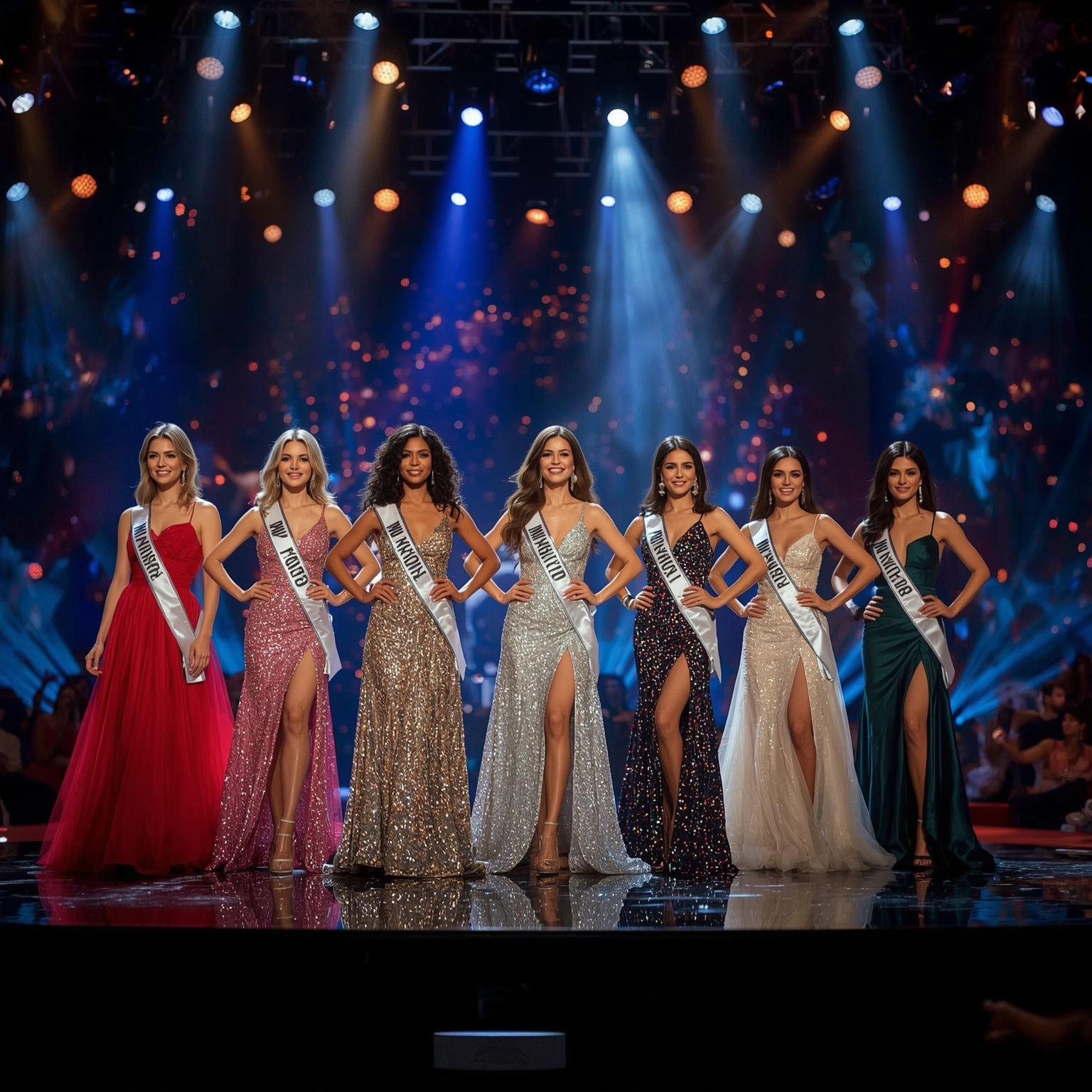
The Miss USA 2025 pageant, held on a glittering Friday evening in Reno, Nevada, became far more than a routine competition of elegance and poise—it evolved into a historical milestone that redefined inclusion, representation, and the very essence of modern pageantry. Each segment of the event, from the opening introductions to the crowning moment, unfolded as a vibrant narrative of transformation. The year 2025 will be remembered as a period when contestants from diverse backgrounds, life stages, and belief systems came together to fundamentally expand the meaning of what it means to embody the Miss USA title.
Among the groundbreaking participants was Miss Nevada, Mary Sickler, whose courageous decision to appear on the national stage as the first contestant with a publicly acknowledged alopecia diagnosis brought a new dimension of authenticity and awareness to the beauty industry. By proudly representing those living with hair loss, she used her platform to foster understanding about a condition often hidden from public discourse. During the preliminary competition, Sickler made an especially memorable statement by replacing her wig with a beautiful bejeweled cap, transforming what might once have been perceived as a limitation into a striking symbol of strength. Her onstage partnership with Miss New Hampshire, MonaLesa Brackett, who competed in a hijab and burkini, underscored the pageant’s broader commitment to celebrating individuality and cultural expression rather than conformity.
The 74th edition of Miss USA also witnessed an unprecedented expansion of eligibility. For the first time, mothers and contestants older than twenty-eight reached the distinguished ranks of the top twenty finalists—an achievement that would have been unimaginable only a few years before. This progress was made possible when the Miss Universe Organization, which oversees the national competition, lifted its long-standing age restrictions in September 2023. This ruling not only opened the door for women of varying life experiences but also signified a formal recognition that ambition, talent, and beauty endure well beyond traditional age thresholds. The change bore immediate fruit: among the contestants were several remarkable women in their thirties and forties whose participation deeply enriched the narrative of the event.
One of the most prominent figures exemplifying this evolution was Miss Delaware, Tetra Shockley. At forty-four, she became the oldest contender in Miss USA history, a distinction made even more remarkable by her additional achievements as a licensed attorney, ordained minister, devoted wife, and mother of two. Her grace, eloquence, and life experience radiated throughout the competition, culminating in her selection as this year’s Miss Congeniality—a recognition bestowed by her peers for warmth, generosity, and positivity. Shockley’s journey illustrated how maturity and resilience bring new depth to the art of pageantry, affirming that beauty and confidence are strengthened, not diminished, with age.
The inclusivity of Miss USA 2025 also extended behind the scenes. Following a period of administrative upheaval, the organization—under the new leadership of CEO Thom Brodeur—implemented an unprecedented open casting process to fill eight state titles left vacant by resignations and restructuring. This initiative, launched in September, democratized participation and brought fresh energy to the competition, allowing aspirants from across the nation to step into roles that had once been limited to state-crowned delegates. Astonishingly, four of the women selected through this open call advanced to the top twenty within just weeks of preparation, demonstrating both the talent pool’s depth and the organization’s renewed adaptability.
The diversity of finalists was equally remarkable in their life stories. Jenny Crawford, representing Idaho, not only secured a spot among the top twenty but also became one of the first mothers to achieve such recognition. Known for her vibrant career as a former professional dancer for both the Los Angeles Lakers and the San Diego Chargers, Crawford’s charisma and humor shone when she shared an endearing anecdote about her two-year-old child, promising to enjoy a classic peanut butter and jelly sandwich with him someday—her first ever. Her genuine personality resonated with audiences nationwide, earning her the People’s Choice Award. Similarly, Miss Oregon, Chantea McIntyre, a mother of four, advanced all the way to second runner-up. Her multifaceted identity as an author, model, and entrepreneur lent a powerful narrative to her pageant journey, highlighting how motherhood and professional success can intersect harmoniously.
Equally poignant was Miss New Hampshire, MonaLesa Brackett’s historic appearance in a hijab and burkini. Her confident presence challenged stereotypical expectations of what pageant swimwear should represent. Brackett proudly expressed in earlier interviews that her confidence and vitality transcended her attire—her posture, stride, and presence radiated fitness and grace. Her inclusion expanded the cultural dialogue of Miss USA, transforming the stage into a place where respect for religious expression could coexist with the celebration of physical beauty and individuality.
These collective milestones—the inclusion of older contestants, mothers, women of faith, and those living with visible medical conditions—converged to define Miss USA 2025 as one of the most progressive competitions in its seventy-four-year history. What once stood as merely a showcase of glamour has matured into a diverse platform of empowerment, resilience, and representation. This year’s pageant was not only about crowns and sashes but about rewriting the narrative of what it means to stand confidently before the world: a union of intellect, conviction, and humanity that extends the legacy of Miss USA into a new era of inclusivity and depth.
Sourse: https://www.businessinsider.com/miss-usa-pageant-contestants-who-made-history-2025-10


