When a federal judge made the consequential determination to permit an extensive, multifaceted class-action lawsuit against OpenAI to proceed, he did so only after examining a striking piece of evidence—fan-created fiction inspired by the epic television and literary universe of “Game of Thrones.” In a ruling issued on Monday, U.S. District Judge Sidney Stein, presiding from Manhattan’s federal court, pointed out that a concept generated by ChatGPT for an imagined installment in the still-unfinished “A Song of Ice and Fire” series by renowned author George R.R. Martin might constitute a potential infringement of the writer’s original copyright. According to the judge’s reasoning, set forth in an 18-page opinion, there is sufficient basis for a reasonable jury to conclude that the outputs allegedly produced by ChatGPT could bear substantial and legally significant similarities to the copyrighted works authored by the plaintiffs.
This judicial determination emerged from a case that brought together, under one consolidated legal action, several class-action lawsuits initiated by a number of acclaimed writers. Among these plaintiffs are esteemed literary figures such as George R.R. Martin, the legendary architect of Westeros; Pulitzer Prize–winning novelist Michael Chabon; celebrated essayist and author Ta-Nehisi Coates; cultural critic Jia Tolentino; and entertainer and author Sarah Silverman, among others. Collectively, these authors contend that OpenAI, alongside its major technological partner Microsoft, engaged in the unlicensed use of their copyrighted materials. They claim that the companies copied and utilized their creative works—effectively their intellectual property—as data to train powerful large language models without consent, thereby enabling the models to generate new “outputs” bearing distinct resemblances to the authors’ legally protected texts, storylines, or stylistic choices.
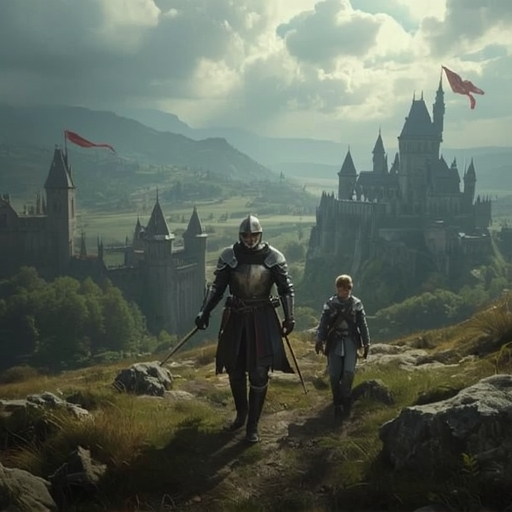
In his detailed ruling, Judge Stein focused on a specific instance presented by the authors’ attorneys to illustrate their claim. The example involved a prompt entered into ChatGPT that instructed the artificial intelligence system to “write a detailed outline for a sequel to ‘A Clash of Kings’ that differs from ‘A Storm of Swords’ and takes the narrative in an alternative direction.” In response to this command, the chatbot—emulating the tone and world-building techniques characteristic of George R.R. Martin’s narrative voice—replied with enthusiasm: “Absolutely! Let’s imagine an alternative sequel to ‘A Clash of Kings,’ diverging from the events of ‘A Storm of Swords.’ We’ll call this sequel ‘A Dance with Shadows.’” From there, ChatGPT proceeded to generate several intricate plot developments, weaving together imaginative elements that included the discovery of a previously unknown form of ancient, dragon-related magic, a storyline concerning new and rival claims to the Iron Throne by a distant Targaryen relative named Lady Elara, and the reemergence of a mysterious faction described as a rogue sect of the Children of the Forest.
Judge Stein determined that the richness of these generated details, echoing established characters, mythologies, and plot dynamics from Martin’s canon, was sufficient to warrant moving the class-action lawsuit forward on the grounds of potential copyright infringement. The substance of ChatGPT’s creative response, he implied, exemplifies how algorithmically produced content might mirror the expressive essence of an author’s original creation to an extent that could raise legitimate legal questions about the limits of fair use and the definition of originality in a machine-learning context.
At the time of the ruling, representatives for both OpenAI and Microsoft declined to provide immediate public comment regarding the decision or its broader implications for the future of AI-generated content and intellectual property law. Judge Stein clarified, however, that while the lawsuit may proceed, questions pertaining to whether the defendants could ultimately invoke the “fair use” doctrine as a defense would be considered later in the judicial process, after further examination of the facts and the nature of the alleged infringements.
This unfolding legal battle forms part of a wider national — and indeed global — debate concerning how copyright law should adapt to the transformative capabilities of artificial intelligence. Notably, earlier in the same year, a parallel lawsuit in San Francisco involved the AI firm Anthropic, which faced similar allegations of using copyrighted books as training data for its large language models. In that instance, a federal judge ruled that Anthropic’s conduct fell under the protection of fair use, though the company eventually opted to settle the matter, agreeing to compensate affected authors with a payment of $1.5 billion for the unauthorized use of their works.
The developments surrounding Judge Stein’s decision mark a pivotal moment in the evolving intersection of law, technology, and artistic creation. They underscore both the unprecedented opportunities and the profound ethical challenges posed by artificial intelligence systems capable of generating human-like literary and artistic expressions. The progression of this case will likely influence how courts, policymakers, and creators navigate the fine boundary between technological innovation and the enduring principles of creative ownership.
Sourse: https://www.businessinsider.com/open-ai-chatgpt-microsoft-copyright-infringement-lawsuit-authors-rr-martin-2025-10