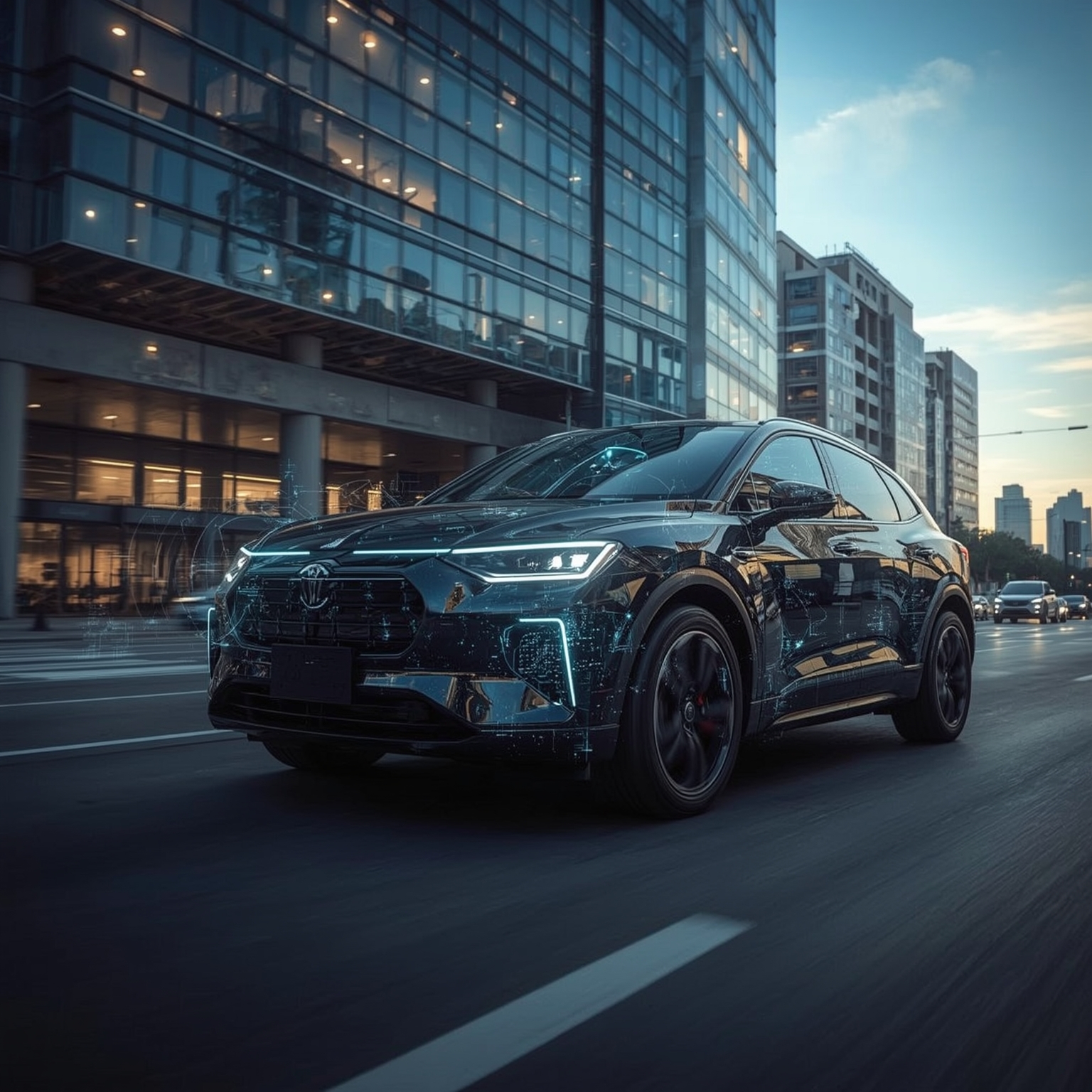
Uber has at last selected the city where it will introduce its much‑anticipated robotaxi initiative, developed in collaboration with Lucid Motors and Nuro. Unsurprisingly, that city is San Francisco—a metropolis long celebrated for its deep connection to technological innovation and its ongoing role as a testing ground for the next generation of mobility systems. In choosing the Bay Area, Uber is aligning itself with an ecosystem that continually embraces experimentation, from early electric car projects to some of the world’s first autonomous vehicle trials.
Following the recent arrival of their first specially adapted vehicle—a Lucid Gravity SUV painstakingly enhanced with Nuro’s advanced self‑driving software—the trio of companies has already initiated limited on‑road evaluations. These early tests are intended to fine‑tune performance, confirm system safety, and assess real‑world interactions with urban traffic. However, before Uber and its partners can make these vehicles available to fare‑paying passengers, they must still navigate an intricate regulatory landscape. Specifically, they are required to obtain a set of essential driverless operation permits from California’s Department of Motor Vehicles, in addition to ride‑hailing authorizations from the state’s Public Utilities Commission. Both agencies play a crucial role in ensuring that autonomous vehicles meet stringent safety and consumer protection standards. According to the companies, they have maintained transparent and ongoing communication with policymakers and regulators “at every level,” offering frequent progress updates to align their development with state guidelines.
Earlier in the year, Lucid, Uber, and Nuro publicly confirmed an expansive multi‑year partnership that envisions the large‑scale deployment of twenty thousand autonomous vehicles across the United States within a six‑year timeframe. This project represents one of the most ambitious efforts so far in the self‑driving transportation sector. The operational fleet will be owned either directly by Uber or managed through one of its third‑party fleet management partners, ensuring flexibility in scaling deployment and maintenance processes.
In commenting on the launch location, Sachin Kansal, Uber’s Chief Product Officer, emphasized the symbolic significance of beginning in the Bay Area. He described the region as a perpetual cradle of revolutionary technological movements, asserting that it is “only fitting” for Uber’s newest generation of robotaxi technology, built jointly with Lucid and Nuro, to take its first steps there. The company anticipates opening the service to the public next year, marking what could become a watershed moment for the urban transportation landscape.
Lucid, for its part, has recently delivered a series of precision‑engineered prototypes to Nuro. Several of these vehicles have already been fully outfitted with the array of sensors, processors, and redundant driving systems required for safe autonomous navigation. The consortium expects to grow its engineering and testing fleet to over one hundred robotaxis in the coming months. Nuro will assume primary responsibility for the rigorous evaluation process, encompassing high‑fidelity simulation work, controlled testing environments, and carefully monitored public‑road trials featuring human safety operators behind the wheel to oversee performance.
From a strategic perspective, this initiative also signals Uber’s renewed ambition to challenge its rivals—most notably Waymo, the autonomous driving subsidiary of Alphabet—from which Uber had previously ceded some market ground. Waymo’s decision to eliminate its waitlist and open its robotaxi service to the general public in 2024 significantly broadened its user base in San Francisco. In effect, Uber’s move can be seen as an attempt to reclaim a competitive foothold within a rapidly maturing sector of the mobility market.
Recent analyses based on anonymized credit‑card transaction data have suggested that by December 2024, Waymo’s share of San Francisco’s ride‑hailing market equaled that of Lyft, but only within the geographic areas where Waymo’s autonomous vehicles currently operate. That finding underscores not only Waymo’s growing strength but also the confined nature of current robotaxi deployment zones.
Interestingly, while rivalry is intensifying in San Francisco, Uber and Waymo continue to cooperate in other cities, such as Austin and Atlanta, where Waymo’s driverless vehicles are available for booking exclusively through the Uber app. Observers are watching closely to see how this partnership evolves—whether it deepens into a model of pragmatic collaboration between competitors or becomes strained as the two companies increasingly vie for dominance in overlapping markets. What remains clear is that the next stage of autonomous ridesharing will be defined by strategic maneuvering, regulatory negotiation, and relentless technical progress, much of which is now centered in the city that has long symbolized the cutting edge of innovation: San Francisco.
Sourse: https://www.theverge.com/news/808743/uber-lucid-nuro-robotaxi-san-francisco-2026


