Imagine scrolling through the latest stream of news headlines, curiosity piqued by a simple yet specific question: when exactly was the East Wing of the White House built? Perhaps you decide to turn to ChatGPT for a quick, conversational response, or maybe you instinctively open a search engine like Google to look it up. Either avenue would yield a useful answer, yet the specifics might differ slightly. For instance, Google’s AI-enhanced search snippets often extract factual data directly from publicly available sources like Wikipedia, noting that the East Wing was first constructed in 1902. ChatGPT, however, may reference the reconstruction completed in 1942, when the current two-story addition took form. The nuance between these two answers underscores a subtle but important reality of today’s information ecosystem: accurate knowledge can be retrieved instantly from secondary sources without the need to actually visit the originating site.
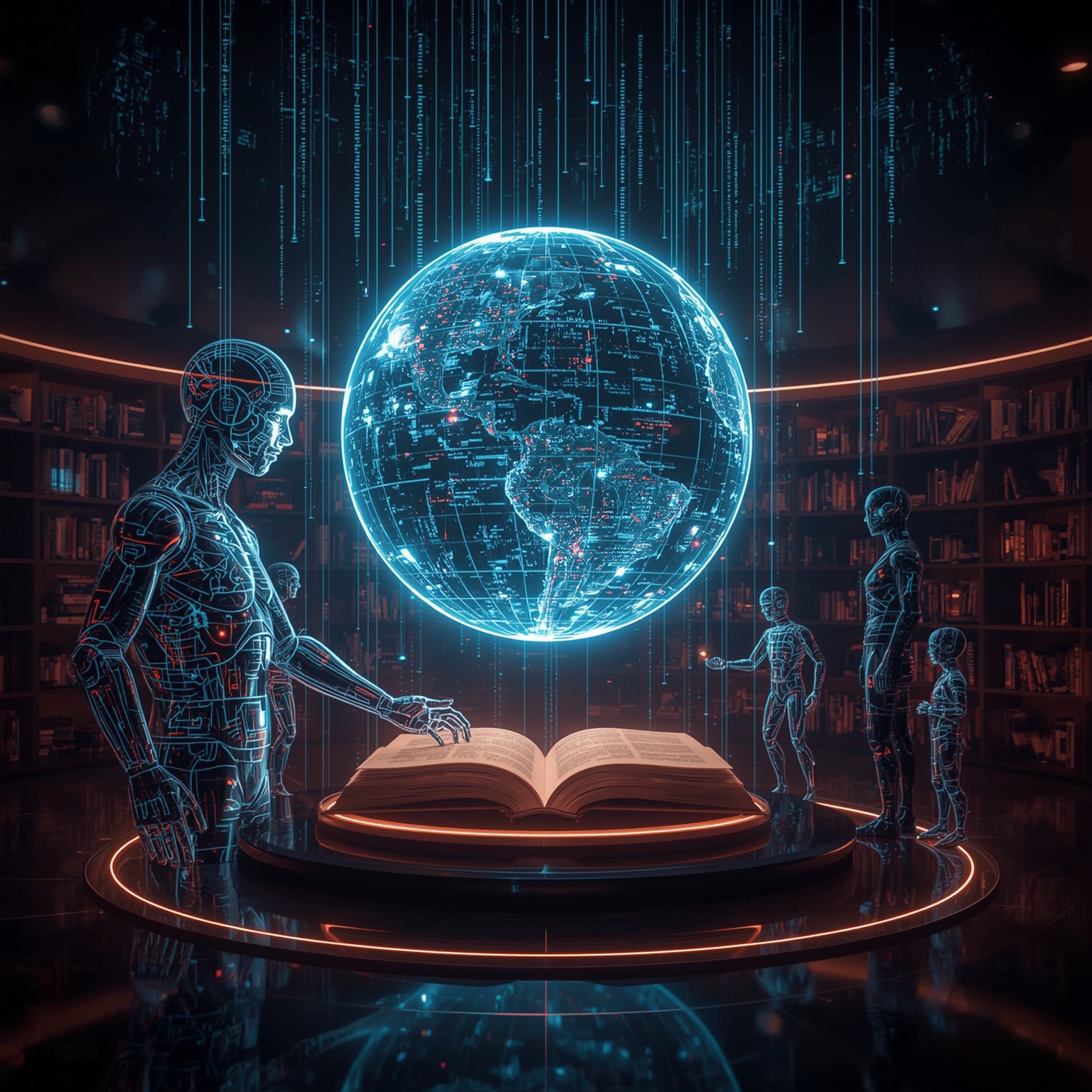
This seemingly harmless convenience has become an increasingly serious concern for those who steward Wikipedia’s vast repository of human-curated knowledge. The nonprofit Wikimedia Foundation, through its institutional blog Diff, recently reported a troubling statistic — an 8% reduction in web traffic over the past few months compared with the same period a year earlier. Much of this decline appears to stem from the growing ubiquity of AI-driven interfaces that synthesize and present knowledge drawn from Wikipedia’s open-access corpus, while simultaneously bypassing the site itself. In effect, the same information that Wikipedia freely provides to the world is being repackaged by large language models that depend on it as an indispensable backbone of their training data.
At first glance, one might wonder whether this trend truly deserves alarm. Wikipedia, after all, feels deeply embedded in the very architecture of the internet — a cornerstone of collective intelligence seemingly too essential to be seriously imperiled. Yet the question lingers: could an institution so thoroughly woven into the web’s informational fabric actually falter if its user engagement continues to ebb? To explore that possibility, I spoke with Marshall Miller, Wikimedia’s senior director of product, who offered a nuanced perspective. Miller emphasized that, indeed, artificial intelligence technologies fundamentally rely on Wikipedia’s content as one of the most robust, meticulously curated, and universally trusted datasets available. In his words, the foundation’s mission has always been to “spread free knowledge,” and from that viewpoint, any mechanism — whether AI assistants, search algorithms, or social platforms — that facilitates access to reliable, neutral information should be welcomed. The underlying goal, after all, is not to hoard information but to empower its global dissemination.
Nevertheless, Miller acknowledged an inherent tension: while AI systems visibly benefit from Wikipedia’s depth and accuracy, the flow of reciprocal value back to Wikipedia itself is far less direct. When users no longer visit the website, they deprive its ecosystem of the lifeblood that sustains it — new contributors, editors, and, critically, donors. Unlike for-profit media outlets that rely on advertisements or subscription-based revenue models, Wikipedia’s operational health depends overwhelmingly on voluntary financial contributions from readers. A decline in site traffic therefore directly threatens its ability to fund the infrastructure and community that keep the platform vibrant and trustworthy.
To appreciate the gravity of this issue, it helps to contrast Wikipedia’s nonprofit model with those of conventional publishers such as Business Insider or The Wall Street Journal. When their page views drop, the economic effect is felt primarily in ad impressions or subscription renewals. When Wikipedia’s readership falls, however, the consequences ripple through more existential channels. Fewer visitors translate not only to reduced donation conversions but also to a smaller pool of potential collaborators who write, edit, and maintain the encyclopedic content itself. While Miller’s team recognizes this vulnerability, some observers believe that dedicated Wikipedia editors represent a unique, passionate subset of internet users — people who contribute out of conviction rather than casual curiosity. For them, AI summaries are unlikely to replace the intrinsic satisfaction of shaping human knowledge firsthand.
At the same time, Diff’s analysis confirms that artificial intelligence is only part of a larger, multifaceted pattern. Shifts in digital behavior—especially among younger audiences—are transforming how people consume information. Increasingly, knowledge seekers skip search engines altogether in favor of video-oriented platforms, short-form explainers, or influencer-driven educational media. This generational pivot compounds the challenge: even if AI chatbots were perfectly transparent about their sources, the very manner in which users discover and engage with knowledge is evolving beyond traditional text-based browsing.
And just as technological shifts pose one kind of threat, political scrutiny introduces another. In recent months, Republican lawmakers have initiated a formal inquiry into what they describe as a pervasive left-leaning bias across Wikimedia’s editorial practices. Prominent figures such as Elon Musk have publicly criticized the site’s perceived ideological slant, going so far as to launch Grokipedia — a would-be alternative positioned as ideologically neutral or at least oppositional in tone. These developments have not yet destabilized Wikipedia’s standing, but they highlight the increasingly complex social and ideological context in which open-source knowledge must now defend its legitimacy.
Despite these headwinds, all is not bleak for the world’s most-referenced encyclopedia. Wikipedia and its affiliated sites still attract over ten billion views every month, and the Wikimedia Foundation’s latest fiscal report shows $170.5 million in annual donations — evidence of continuing global goodwill. Furthermore, a framework already exists to ensure more equitable relationships between Wikimedia and the technology companies leveraging its data. Through Wikimedia Enterprise, an API-based subscription service, major organizations can legally and efficiently license high-quality datasets from Wikipedia. Though many AI developers have already ingested much of this data freely under open-content licenses, the potential for new partnership models remains substantial. OpenAI’s recent agreements with prominent media companies, including Axel Springer (Business Insider’s parent), suggest a precedent that could equally benefit Wikipedia.
As Miller succinctly put it, “Generative AI depends on Wikipedia’s human-created knowledge.” Empirical studies support this claim, showing that language models trained without Wikipedia’s contributions consistently produce less accurate, less comprehensive outputs. This interdependence illuminates a paradox: while AI appears to siphon users away from Wikipedia, it simultaneously validates the platform’s enduring importance as the keystone of trustworthy, human-curated knowledge.
Reflecting more personally on this coexistence, it’s interesting to consider how differently users experience Wikipedia’s material through AI intermediaries versus direct exploration. When someone asks ChatGPT, “What caused the Thirty Years’ War?” they receive a tidy, digestible summary — often distilled from Wikipedia itself. That function serves efficiency, particularly for students, researchers, or curious readers seeking a concise factual response. Yet anyone who visits the actual Wikipedia page on the Thirty Years’ War will encounter a far richer landscape: hundreds of interlinked “blue words” leading to maps, biographies, primary sources, and conceptual tangents capable of occupying one’s curiosity for hours or even days.
This difference in user experience captures the essence of Wikipedia’s unique value proposition. The AI-generated answer is akin to microwaving a quick meal — nourishing but transient — while reading Wikipedia directly resembles enjoying a full-course dinner at a restaurant, full of unexpected flavors and discoveries. Both forms of engagement can coexist and even complement each other. After all, sometimes one simply craves the convenience of rapid knowledge retrieval; other times, the delight lies in falling down a serendipitous “Wikipedia rabbit hole.” It is within that immersive exploration — where people learn things they never knew to search for — that Wikipedia’s human-centered spirit truly thrives. And ultimately, that experience continues to inspire the very contributors, editors, and donors whose collective effort sustains this indispensable wellspring of global knowledge.
Sourse: https://www.businessinsider.com/wikipedia-traffic-down-ai-answers-elon-musk-grokipedia-wikimedia-2025-10


