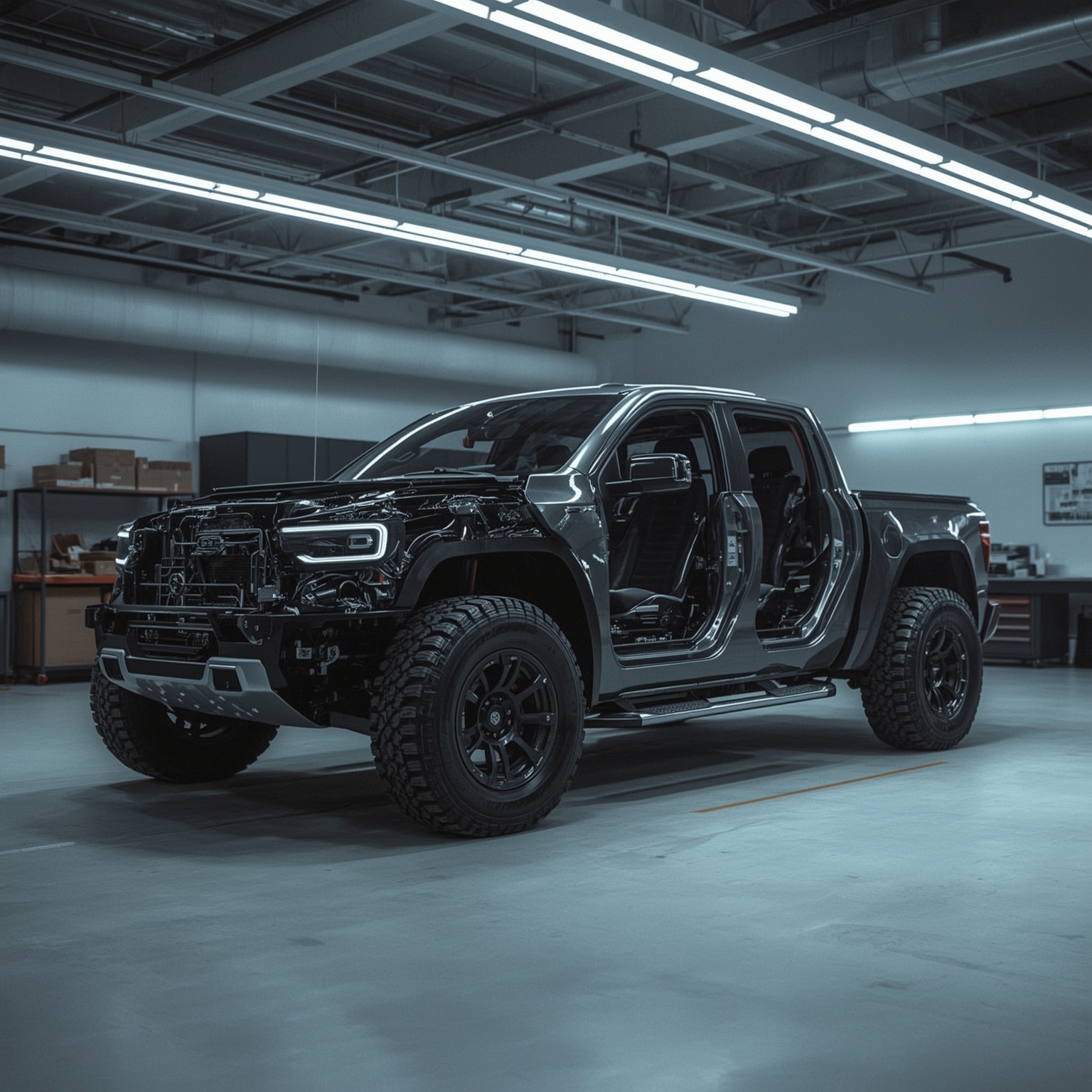
Tesla has long been regarded as one of the most ambitious and forward‑thinking companies in the modern automotive landscape, frequently celebrated for its engineering ingenuity, its contributions to the electric vehicle revolution, and its unrelenting drive to redefine transportation technology. Yet, despite the impressive metrics that testify to its success, the company continues to face a surprisingly persistent and somewhat ironic obstacle: its trouble with glue. In particular, Tesla’s challenges stem from the adhesives used to hold together the various components of its most polarizing and controversial creation to date, the Cybertruck — a vehicle that has drawn both fascination and widespread ridicule since its unveiling.
Earlier in the year, it came to light through a detailed report published by *Wired* that nearly every Cybertruck already out in the world needed to be recalled. The problem, astonishingly, was not rooted in software glitches or advanced hardware malfunctions, but in something as mundane and foundational as the type of glue used to secure the vehicle’s stainless‑steel body panels. These angular metal plates, designed to serve as the truck’s defining aesthetic and functional feature, had been attached using the incorrect adhesive. As a result, there was an alarming possibility that the panels might detach while the vehicle was in motion, posing serious dangers not only to the driver and passengers but also to other motorists sharing the road.
Now, only a few months later, Tesla appears to have encountered yet another adhesive‑related dilemma. According to a newly released regulatory filing submitted by the company, approximately 6,197 additional Cybertrucks must be recalled, this time because an optional accessory — the off‑road light bar installed by certain service centers — might not remain securely attached. The report, first brought to public attention by *Business Insider*, specifies that this optional light bar may have been improperly affixed to the vehicle’s windshield using an incorrect surface primer, rather than the proper adhesive that ensures long‑term durability and safety. Essentially, a small but crucial procedural error could cause the entire light bar assembly to dislodge while the vehicle is being driven.
The regulatory document further elaborates on the potential hazards involved. It warns that if the light bar were to detach from a moving Cybertruck, it could become a projectile on the roadway, posing a serious hazard to nearby vehicles. An airborne piece of equipment, particularly one made of metal and designed for durability, could easily damage other cars or even trigger a traffic collision. Understandably, no driver wants to face the risk of being struck by an errant light bar launched from a vehicle ahead. Tesla’s filing notes that the company intends to remedy the issue by installing a redesigned component, which will be anchored more securely to the truck’s frame through a bracket system and optionally supported by adhesive tape. This new method contrasts sharply with the previous installation, which relied on a potentially unsuitable primer — an oversight that now underscores how even minor procedural inconsistencies can have significant safety and reputational consequences.
Despite the seriousness of the recall, Tesla maintains that the defect has not yet resulted in any known accidents, injuries, or fatalities. The company has reported identifying only 619 warranty claims and a single field report possibly connected to the problem — numbers that, while relatively small, still highlight the importance of rigorous quality control in a company whose brand rests on the promise of precision engineering and cutting‑edge innovation.
Beyond the immediate technical issue, the continuing saga of the Cybertruck serves as a vivid symbol of Tesla’s broader struggles with production consistency and public perception. The Cybertruck, with its geometric design and stainless‑steel exoskeleton, was supposed to represent the future of automotive design — a radical break from convention. However, since its delayed release, it has been met with widespread criticism and even mockery. Many commentators and industry analysts have derided it as an aesthetic and functional misstep, labeling it an overhyped experiment that failed to meet the lofty expectations promised by its creator. Industry estimates indicate that while Tesla once spoke confidently of producing roughly 250,000 Cybertrucks annually, actual sales fell far short of that target, with fewer than 40,000 units sold last year according to data from Cox Automotive. Since then, demand has remained tepid, and the vehicle’s practical shortcomings — such as its weight, limited utility for traditional pickup buyers, and now its adhesive failures — have only compounded the negative press.
The Cybertruck’s reputation has deteriorated to such an extent that even the U.S. Air Force reportedly found an unconventional use for it earlier this year: target practice. The anecdote, though humorous, encapsulates the perception that the vehicle represents more of a conceptual experiment than a functional success story.
This recurring pattern also shines an unflattering light on Elon Musk himself. While Musk frequently presents himself as an inventive visionary intent on tackling humanity’s grandest challenges — such as colonizing Mars, transforming humans into a multiplanetary species, and defending civilization from various existential and cultural threats — the company’s recent adhesive woes underscore a humbler but essential truth. Before achieving his self‑proclaimed mission of reshaping the cosmos, Musk and his engineering teams must first master the fundamental, earthbound disciplines of craftsmanship and material science — including, quite literally, perfecting the glue that keeps their innovations from falling apart.
In the end, Tesla’s ongoing adhesive failures serve as a peculiar but poignant metaphor: even a company at the cutting edge of technological progress cannot afford to overlook the simplest elements of good engineering. Visionary ambition must be fused, both figuratively and literally, with a reliable grasp of the basics. Until Tesla perfects that balance — the union between dream and practicality — even the most futuristic machines will remain at risk of coming unstuck.
Sourse: https://gizmodo.com/tesla-recalls-thousands-more-cybertrucks-is-bad-at-gluing-things-2000679767


