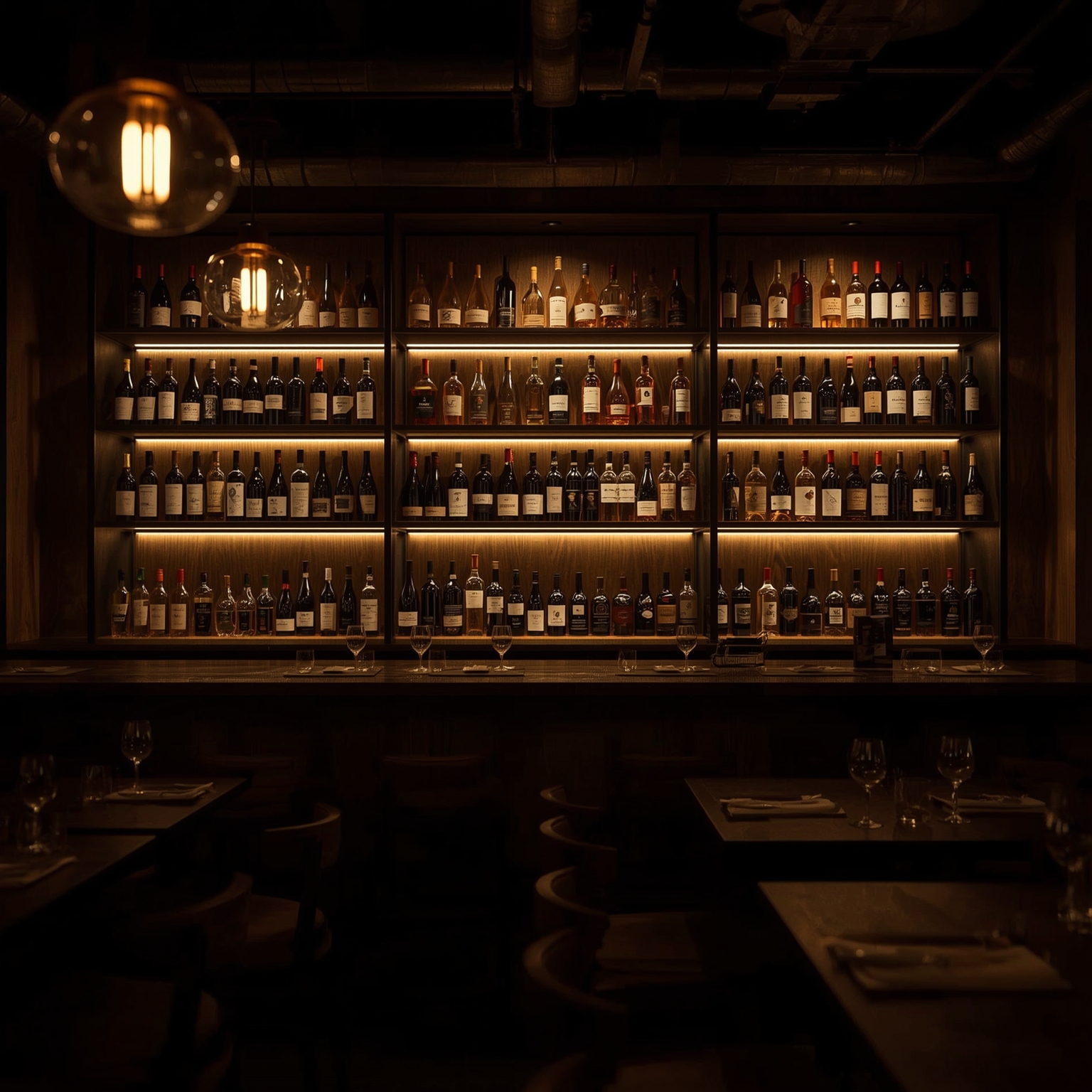
This as-told-to narrative originates from an in-depth conversation with Zach Negin, age forty-six, the thoughtful and hands-on owner of Tabula Rasa Bar, an intimate neighborhood establishment in Los Angeles. The piece below has been carefully edited for both brevity and clarity, distilling his insights while preserving the tone and texture of his perspective.
I operate a small bar that serves as a welcoming gathering place for our local community, and, while we do offer a variety of beverages, wine comprises the heart of our business and the majority of our sales. When we first opened our doors nine years ago, Los Angeles did not yet boast many dedicated wine bars. The concept felt fresh, even a bit experimental, and we needed to carve out a distinctive niche. In those early weeks and months, our primary challenge was to orient ourselves within the neighborhood—to meet local residents, develop relationships with nearby businesses, and build trust. We wanted to be more than just another establishment; we hoped to become genuine stewards of the neighborhood, a place that reflected its spirit and served it well.
Just as we were finding our stride and had settled into a rhythm, the COVID-19 pandemic completely altered the landscape. Mandatory closures abruptly halted our operations, and when we were finally able to reopen—nearly a year and a half later—it was as if we were relaunching the entire business from scratch. Now, several years later, that familiar sensation of starting over has returned yet again, brought on by a confluence of economic pressures and policy changes.
Tariffs, in particular, have exerted a noticeable strain on the wine industry. Our approach to curating a wine list has always been grounded in diversity, storytelling, and authenticity. We pride ourselves on carrying wines from many distinct regions, because wine, by its very nature, is inseparable from its place of origin—the soil, the local culture, and the traditions of production all inform the final experience in the glass. That connection forms much of the magic, the history, and the romance of wine. When tariffs increase the cost of importing from certain regions, our access to those unique bottles diminishes, effectively contracting the range of options we can afford to offer. This means fewer opportunities to share the global narrative of winemaking with our guests.
As a father of young children, I have tried to achieve a work-life rhythm that allows me to focus on the management and strategic growth of the business, rather than spending every evening behind the bar. Economic realities, however, often require adaptation. Recently, it has become necessary for me to return to more hands-on work, which, though not ideal for my family life, is essential to keeping our business resilient. It is not a point of complaint—merely a reflection of the realities of ownership. In the end, this establishment is mine, and caring for it sometimes requires personal sacrifice.
Owning and operating a small business now feels more complex and demanding than ever before, though in a distinctly different way from previous challenges. The last time tariffs of this magnitude posed an issue was during the most recent administration under President Trump. At that time, there was at least a limited flexibility built into the system: wines with an alcohol content of fourteen percent or higher were largely spared from tariffs. Many of our small-business distributors and the independent winemakers they represent responded collaboratively to the situation. They divided the financial burden among producer, distributor, and retailer, each accepting part of the cost increase while raising prices only modestly to cushion the blow.
This time, however, the situation has evolved much more rapidly. New tariffs have been implemented with little warning, leaving both importers and distributors uncertain about their longevity or future structure. Some distributors still had shipments that arrived before the tariffs took effect, allowing us temporary access to unaffected stock. But as those inventories dwindle, the newly imported wines come in with markedly higher price tags. Distributors frequently contact us with unavoidable notices: prices must rise. The result is that wines we previously purchased at stable rates now cost two to five dollars more per bottle, sometimes equating to a thirty-percent increase. Such price shifts force us to reconsider which wines we can carry and how to price them for our customers without alienating the very community we serve.
The wines that define our identity—small-production, low-intervention selections emphasizing conscientious farming—are now harder to procure at sustainable costs. To illustrate, consider one bottle we regularly purchased at twenty-three dollars; after tariffs, its cost rose to twenty-four dollars and fifty cents. That modest-sounding increase required us to adjust our retail price from eighty-one to eighty-six dollars per bottle. Each incremental rise ripples throughout our pricing structure, compelling us to reassess our profit margins, source alternative labels that offer similar quality, and occasionally absorb part of the loss ourselves rather than passing it entirely on to customers.
Our wine selection spans a wide geographic range—from local Californian vineyards, including a few producers based near Los Angeles, to renowned regions across the United States and abroad. Yet buying domestically has not necessarily become a cheaper solution. Domestic wines already reflect the higher costs of labor and land in the United States, and even many of the physical materials—bottle glass, corks, and labels—are sourced internationally, meaning tariffs reverberate through the entire supply chain. Wine, after all, is not merely fermented grapes; it is a collaboration of resources gathered from multiple corners of the world.
Unfortunately, while our expenses continue to rise, the only metric moving downward is sales. Since March, our revenue has dropped by approximately twenty-six percent, a substantial contraction for a business of our scale. Tariffs are part of the explanation, but not the whole story. Broader economic conditions and the general rise in the cost of living have also influenced consumer patterns. Many Angelenos are going out less frequently, partly because nearly everything—from groceries to entertainment—costs more than it did a year ago. The entertainment industry, such a vital part of Los Angeles’s economy, has endured its own period of instability, leaving many of our regular patrons with fewer evenings out or tighter budgets.
Despite these headwinds, we are striving to adapt responsibly. Our team has chosen to meet customers where they are by exploring ways to lower our prices or prevent them from escalating further, even as expenses climb. That is extraordinarily difficult in Southern California, where the costs of rent, labor, insurance, and goods continue to rise in tandem. To maintain affordability for our guests, we have sought new suppliers and carefully selected alternative wines that remain true to our values while offering better price points. By reducing our profit margins and absorbing part of the tariff-related increases, we attempt to maintain a sense of approachability and fairness. For example, we still offer a nine-dollar glass of wine and a six-dollar draft beer during happy hour—the kinds of prices that encourage community and accessibility.
Equally important, we are doing everything possible to protect our staff. Layoffs would contradict the ethos of care and camaraderie that defines our business. Instead, we have adjusted employee shift structures—shortening certain hours or consolidating overlapping positions—to sustain payroll without cutting people loose. Because most of our team’s income derives from gratuities, we have worked collaboratively to ensure that these changes do not destabilize individual earnings. When absences occur or staff members take vacations, we adapt by running leaner for the night or stepping in ourselves—either my manager or I will cover a few hours behind the bar. Everyone understands that these decisions are made with collective well-being in mind, and we communicate openly to ensure transparency.
Our overarching goal is to stay ahead of potential crises rather than reacting too late. We want to avoid the scenario, all too common among small businesses, where dwindling cash flow leads to an inability to meet payroll or pay essential vendors. While the challenges ahead are undeniable, I remain cautiously confident that we will endure. Survival may require difficult adjustments, possibly ones I would prefer not to make—such as personally covering more shifts or, in the worst case, reducing staff—but for now, those remain contingency plans, not expectations.
Given the current climate, we have doubled down on the aspects of our business that are within our control: elevating hospitality, refining service, and deepening our team’s wine education. These are the elements that differentiate us and give customers a reason to choose our bar over others. People will continue to go out and spend money, even in uncertain times, but their choice of where to go depends increasingly on experience and connection. That remains the guiding question for me each day: how can we continue to make Tabula Rasa Bar the destination people choose for both quality and warmth?
As a small-business owner, complaining about tariffs accomplishes little. Large-scale economic and political forces remain beyond our influence. Our only option is to acknowledge the conditions, adapt, and persevere. A few advocacy organizations are lobbying for fairer trade terms on behalf of importers and hospitality professionals, but for proprietors like me, the day-to-day reality is much simpler: we must work within the rules set by governments, absorbing the economic shocks as best we can. When policies change and new costs emerge, we find ways to shoulder them and move forward. I try not to resent that reality because, at the end of the day, I chose this path—and I genuinely love it. There is immense satisfaction in nurturing a business that brings people together. My hope for the future is that more small enterprises like ours not only survive but thrive, continuing to color their neighborhoods with authenticity, personality, and resilience.
If you are a customer, entrepreneur, or fellow business owner affected by these changes, the conversation continues. The reporter can be reached at mhoff@businessinsider.com.
Sourse: https://www.businessinsider.com/tariffs-economy-los-angeles-bar-sales-down-price-changes-2025-10


