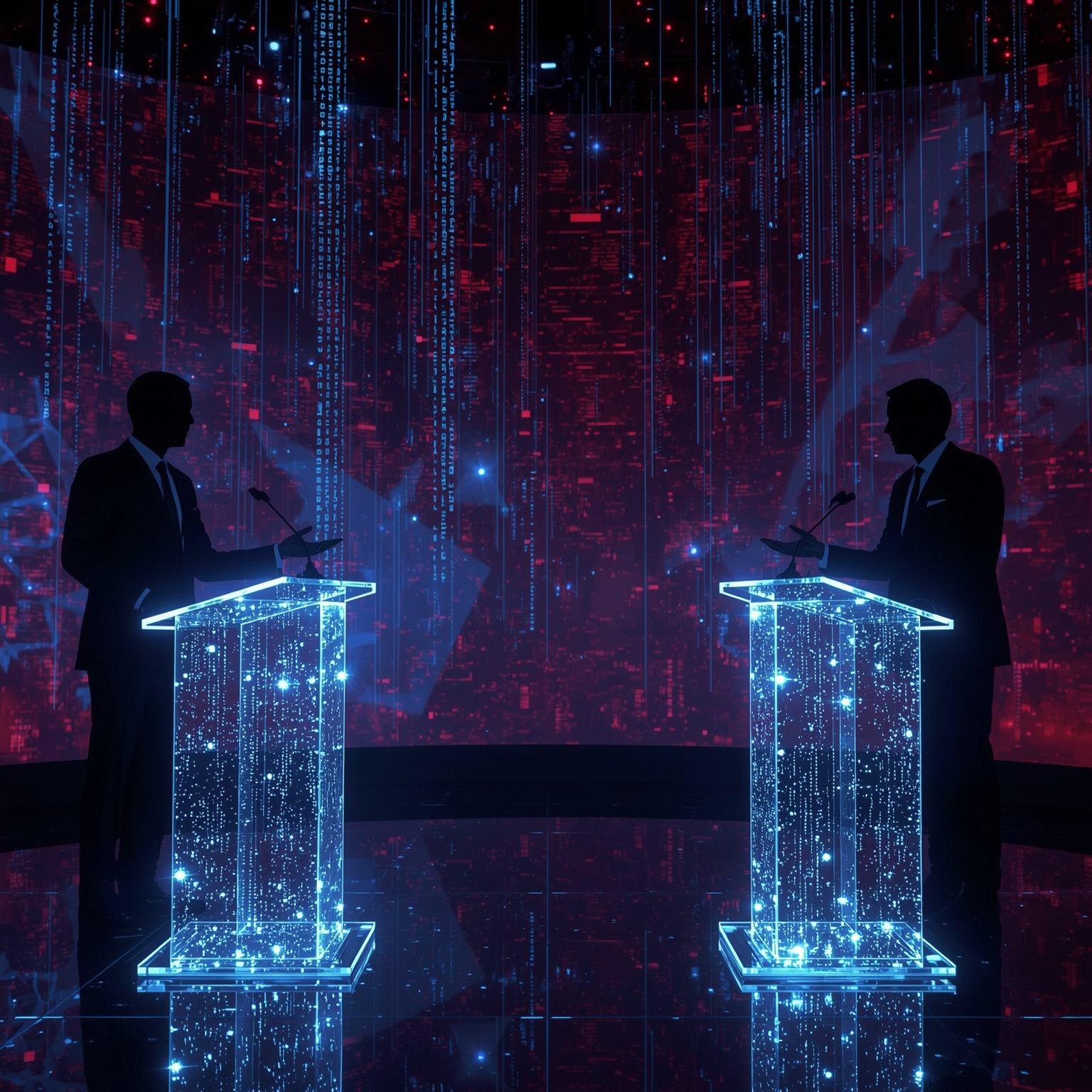
For anyone feeling uneasy about the steadily increasing presence of hyperrealistic, AI-generated content in the political sphere, rest assured that this concern is widely shared—even among elected officials themselves. Democratic Senator Chris Murphy of Connecticut, voicing what many citizens feel, confessed to Business Insider that scrolling through his social media feed now fills him with genuine apprehension. The senator articulated a profound sense of confusion and disorientation, explaining that in today’s digital environment, he often cannot discern what is authentic from what has been synthetically created. This uncertainty, he lamented, poses an existential threat to meaningful political discussion, for a democracy cannot properly function when voters can no longer determine the boundary between factual reality and fabricated illusion.
Across virtually every corner of the internet, politicians and political organizations are incorporating AI-generated images and videos to strengthen their messaging, to mock opponents, or to galvanize support. A particularly eye-catching recent instance involved former President Donald Trump, who shared on social media an AI-created video depicting himself aboard a fighter jet releasing a brown substance—interpreted by many as excrement—onto groups of protesters below. Republican Senator Cynthia Lummis of Wyoming, when asked about the clip, speculated humorously that it might merely have been mud, though she admitted uncertainty. The episode underscores how AI imagery now regularly blurs satire and misinformation, sparking debate about intention and interpretation.
Although Trump and his political allies are frequently cited as major disseminators of artificially generated political materials, Democrats have engaged in similar practices. In the New York City mayoral race, for instance, former Governor Andrew Cuomo has circulated multiple AI-produced videos attacking political rival Zohran Mamdani. Likewise, California Governor Gavin Newsom’s social media feed features a steady stream of exaggerated AI-generated depictions ridiculing Trump and other Republican figures. Ironically, even Trump himself has acknowledged the unnerving nature of the technology’s proliferation, admitting that the sheer volume of digitally falsified material circulating online is, in his words, “a little bit scary.”
A White House spokesperson, Liz Huston, responded by emphasizing Trump’s unparalleled skill in online communication, portraying him as “the greatest communicator in American history” and defending his creative and direct interaction with the public through social media platforms. Yet for many lawmakers, the growing prevalence of AI-altered images and videos—even those made in jest—raises critical ethical and democratic questions. They argue that clearly labeled parodies are tolerable, but the real danger emerges when fabricated visuals appear so plausible that they deceive ordinary viewers.
Democratic Senator Mark Kelly of Arizona expressed this very concern after seeing the Trump video simulating the jet incident. He called the message behind such content “shocking” and “ridiculous,” stressing that his deeper worry lies with pieces that masquerade convincingly as authentic recordings. That fear became concrete after the National Republican Senatorial Committee published an AI-generated video in which Senate Minority Leader Chuck Schumer appears to celebrate a government shutdown. Though the words in the video derived from an interview Schumer had actually given, the visual presentation was an AI fabrication—accompanied only by a small, nearly invisible disclaimer. Joanna Rodriguez, a spokesperson for the committee, defended the decision, arguing that they had simply amplified Schumer’s real statements for public awareness, transforming a limited print audience into an online reach of over 1.8 million viewers.
Republican Senator Josh Hawley of Missouri, witnessing how easily manipulated AI content has infiltrated political communication, regards this trend as ominously destabilizing. In his view, if left unchecked, the spread of artificially composed imagery and speech could render all televised political material suspect, eroding citizens’ basic trust in visual evidence and factual reporting. He advocated for careful deliberation, warning that without firm safeguards, “everything you see on TV is gonna be fake.”
Not every congressional voice, however, perceives this technological evolution with alarm. Senator Lummis, reflecting on her own experience running for office decades ago, compared the current moment to earlier eras of political satire. She suggested that the phenomenon is not fundamentally new—merely a more technologically sophisticated continuation of traditional parody, akin to how modern cinema has become more advanced than the earliest films. To her, these digital exaggerations represent evolution, not revolution.
Senator Ted Cruz of Texas, a well-known defender of the AI industry and chairman of the Senate Commerce Committee, echoed that sentiment. He contended that while fraudulent use of AI should indeed be prevented, there is no urgent need for additional regulation specifically targeting political deepfakes. Cruz stressed that constitutional protections for free speech are most vital in political discourse, positing that existing anti-fraud statutes already provide adequate tools for redress. He argued further that overregulation could suffocate innovation “in the cradle.” Interestingly, he even praised Cuomo’s AI-driven critiques of Mamdani, calling them remarkably effective examples of political messaging that no reasonable observer would mistake for real footage.
Even among legislators who believe action must eventually be taken, consensus remains elusive due to the delicate balance between truth protection and free expression. Senator Murphy candidly admitted that “regulation of AI is really hard,” not only from a technical perspective but also because any restrictions must withstand First Amendment scrutiny. He voiced tentative support for measures that would either prohibit synthetic political content entirely or at least require indelible watermarks to ensure transparency. Meanwhile, Senator Hawley has co-sponsored the “Protect Elections from Deceptive AI Act,” a proposed law seeking to outlaw deceptive artificial content designed to sway elections or solicit campaign donations. He asserted that, within the boundaries of constitutional law, the government should forbid the broadcast of realistic yet wholly fabricated political material intended to influence electoral outcomes.
For Senator Mark Kelly, the domestic use of such tools by rival campaigns symbolizes only the beginning of larger, geopolitical risks. He cautioned that the same manipulative technologies, if employed by foreign powers or hostile entities, could undermine national stability. His closing reflection was starkly pragmatic: before worrying about domestic mudslinging, he suggested, the nation must prepare to defend itself from the far more dangerous possibility of AI-generated disinformation attacks orchestrated by adversaries abroad.
In sum, the intensifying presence of AI-crafted media in politics presents an intricate collision of ethics, legality, and democratic integrity. While some policymakers frame it as a natural extension of political theater, others see it as a looming crisis of credibility. In the age of synthetic images and fabricated truths, the shared challenge lies in preserving an informed public—one capable of distinguishing deliberate hyperbole from deceit and defending the very notion of what is real in American democracy.
Sourse: https://www.businessinsider.com/politicians-fear-growing-use-ai-generated-content-politics-2025-10


