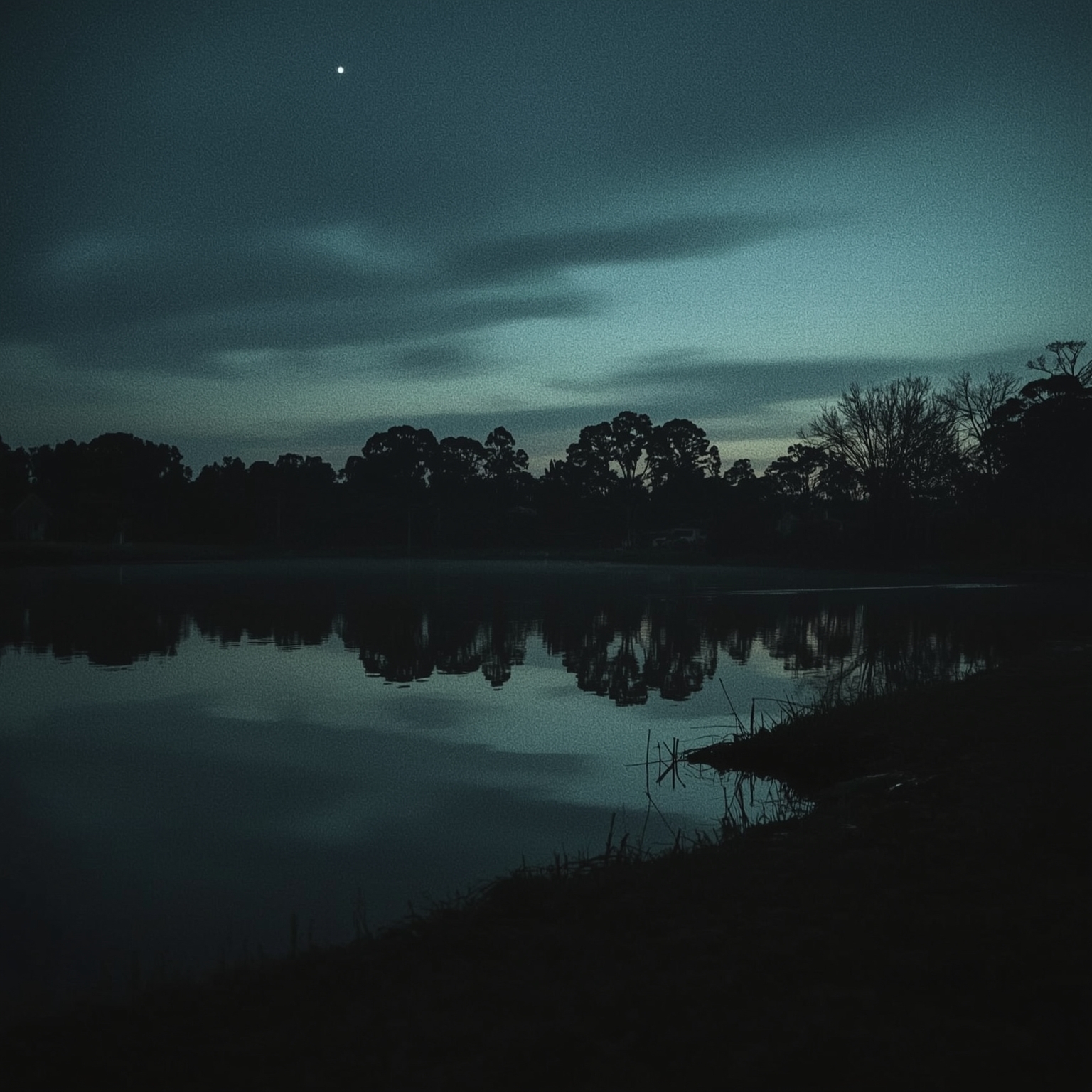
Found-footage films occupy a notoriously challenging niche within the broader landscape of horror cinema. Their very premise hinges on creating an illusion of authenticity so convincing that viewers momentarily forget they are witnessing fiction. Achieving this illusion, however, demands an impeccable balance of narrative control and creative restraint—something that only a handful of filmmakers have truly mastered. For every groundbreaking success such as *The Blair Witch Project* or *Rec*, which manage to combine innovation, realism, and unrelenting tension, there exist countless others that utterly fail to capture the same spark. Titles like *Slender* or *Megan Is Missing* serve as cautionary examples of the genre’s pitfalls—films that, despite good intentions, often descend into forgettability or even come across as offensive to the very essence of cinematic craftsmanship.
Among the rare exceptions that transcend these limitations stands *Lake Mungo*, a work that defies conventional categorization. It functions simultaneously as a found-footage horror piece and as a meticulously constructed mockumentary—a hybrid that unfolds with the slow, deliberate rhythm of a true emotional drama rather than a traditional shock-driven thriller. The film’s pacing is patient and methodical, allowing dread to seep gently into the viewer’s consciousness, while its emotional gravity ensures that every revelation deepens rather than cheapens the story. Even more remarkable is the film’s brevity; clocking in at under ninety minutes, it achieves a level of narrative economy that many longer productions fail to reach, presenting a story that feels whole, immersive, and disturbingly intimate.
At its core, *Lake Mungo* belongs among the most convincingly executed mockumentaries ever committed to film. It emulates the aesthetics and tone of a real investigative documentary so effectively that an unsuspecting viewer could easily mistake it for a genuine chronicle of supernatural events. This credibility stems from multiple elements working in seamless harmony: a restrained visual style, naturalistic performances that never tip into theatricality, and a script that exercises steadfast discipline by avoiding sensationalism. While other horror works employing similar techniques—such as the BBC’s excellent *Ghostwatch*—eventually succumb to exaggeration or narrative excess, *Lake Mungo* resists that temptation. It remains understated even when presenting ostensibly shocking material, such as spectral photographs or alleged ghost footage. The result is a disquieting realism that anchors the viewer in the uncomfortable possibility that what they are seeing might, in some sense, be true.
Written and directed by Joel Anderson, *Lake Mungo* also carries the bittersweet distinction of being his only feature film to date. After its release, Anderson stepped away from directing for over a decade, though he has more recently returned to the film industry, contributing to projects like 2023’s *Late Night with the Devil*. The intermittent nature of his career only enhances the mystique surrounding *Lake Mungo*, imbuing it with the aura of a singular artistic statement that remains as powerful today as it was upon its debut.
The film’s narrative centers on the Palmer family, a seemingly ordinary Australian household forever altered by the sudden and tragic drowning of sixteen-year-old Alice Palmer. In the aftermath of this event, each family member internalizes grief in distinct, deeply human ways. June, the mother, becomes a restless wanderer, spending sleepless nights pacing through her neighborhood in search of meaning or solace. Russell, the father, copes by immersing himself entirely in work, perhaps believing that relentless activity might fend off unbearable sorrow. Meanwhile, Alice’s brother Matthew turns to creative expression, pouring his anguish into photography and video projects. Yet, as the family attempts to reclaim a sense of normalcy, inexplicable phenomena begin to intrude upon their lives—strange nocturnal sounds, unexplainable bruises, and chilling encounters that suggest Alice may not have entirely departed from the realm of the living.
From this seemingly conventional premise, the story evolves into something far more complex and psychologically unsettling. Without venturing into spoiler territory, it can be said that *Lake Mungo* continually subverts audience expectations, taking narrative turns that transform what might have been a typical haunted-house story into an exploration of memory, perception, and the persistence of emotional trauma. Its imagery—grainy camcorder recordings, fuzzy photographs, and fragmented interviews—seeps under the viewer’s skin, generating a slow-building unease that never relies on cheap spectacle. There are no gratuitous jump scares or eruptions of gore; instead, the film exercises perfect control over tension, culminating in a climax that delivers one of the most hauntingly indelible images in modern horror cinema.
Even on a symbolic level, the film’s attention to detail remains extraordinary. The use of the surname “Palmer” appears to deliberately echo *Twin Peaks*, another narrative centered around the death of a young woman in a small community cloaked in secrets. Through interviews, revelations, and recovered footage, the viewer comes to piece together the fragments of Alice’s life and begins to understand the disquieting truth beneath her seemingly ordinary existence. Alice is portrayed as a young woman caught between conflicting identities, struggling in both life and death to be seen for who she truly was. It is this yearning for recognition—her quiet plea to be understood—that gives the film its profound emotional resonance. Just as the surviving Palmers inch toward acceptance and closure, the story delivers its final revelation, a twist so poignant and chilling that it reframes everything that came before.
Because *Lake Mungo* devotes its concise runtime to developing its characters and constructing a rich emotional foundation, its conclusion feels devastatingly earned rather than manipulative. The impact of the ending lingers, recontextualizing the family’s grief and the supernatural occurrences in a way that imbues them with tragic clarity. For those seeking a horror film that transcends genre conventions and delivers a genuine emotional blow, this is an essential experience. *Lake Mungo* may leave the audience subdued, even sorrowful, but its artistry compels an immediate desire to revisit and reanalyze its layers of meaning.
For those wishing to witness this haunting achievement for themselves, *Lake Mungo* is currently available to stream on Fubo, The Criterion Channel, and Plex. It can also be viewed—with ads—on Roku Channel, Prime Video, Tubi, and Fandango at Home. Experiencing it in any of these formats offers not merely a night of eerie entertainment but an encounter with one of the most affecting and authentic psychological horror films ever conceived.
Sourse: https://www.theverge.com/column/812150/watch-the-found-footage-classic-horror-mokumentary-lake-mungo


