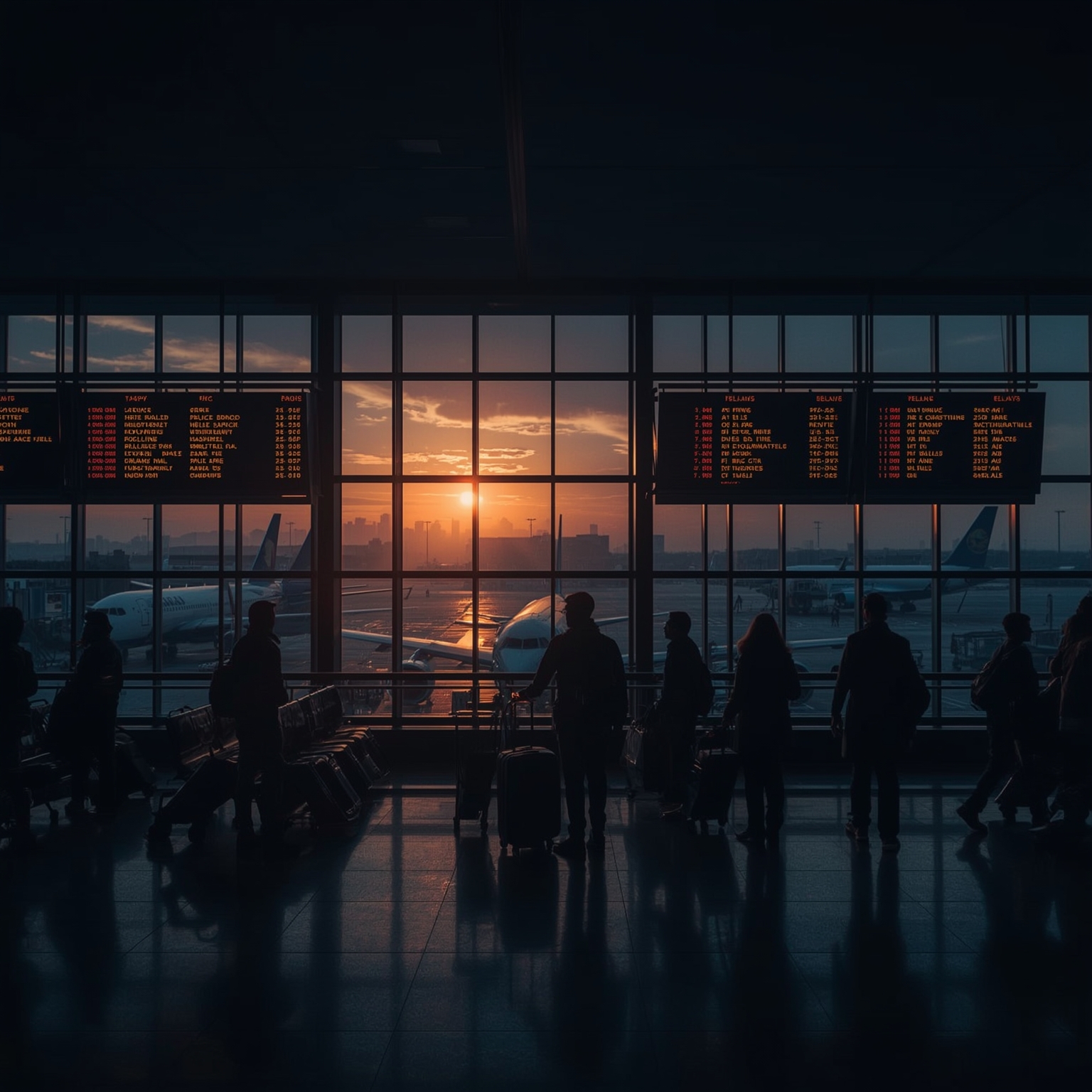
A severe and increasingly disruptive shortage of qualified air traffic controllers on Sunday resulted in substantial ground delays at Newark Liberty International Airport, according to officials from New York City. These authorities cautioned that the logistical repercussions of the staffing deficit could easily extend to nearby major transportation hubs, including John F. Kennedy and LaGuardia airports, thereby magnifying the region’s overall air traffic congestion.
According to current data provided by both the Federal Aviation Administration (FAA) and the flight-tracking service FlightAware, inbound flights bound for Newark experienced average delays of approximately 218 minutes—well over three and a half hours. Such extended holdups are attributed primarily to insufficient tower personnel responsible for directing aircraft safely on the ground and in surrounding airspace. The situation became evident earlier Sunday morning, when the New York City Emergency Management agency issued a formal statement on X, the social media platform formerly known as Twitter. The agency reported that Newark was operating under an FAA-imposed ground delay program due to abnormally low staffing levels in its control tower, significantly constraining the airport’s capacity to manage normal flight volumes.
Further elaborating on the seriousness of the matter, the agency’s post referenced FAA planning documents indicating the potential for an even more restrictive full ground stop should workforce shortages worsen or flight demand continue to rise throughout the day. Officials emphasized that disruptions originating at Newark frequently have a cascading effect, spilling over to other key New York metro airports such as JFK and LaGuardia. Consequently, the statement advised travelers flying to, from, or through the New York City area to anticipate revised flight schedules, extended gate holds, and an increased likelihood of missed connecting flights.
The current crisis did not occur in isolation but rather stems directly from the ongoing federal government shutdown that began on October 1. This political impasse has triggered a national shortage of certified air traffic controllers, leading to pervasive flight delays, widespread cancellations, and operational disarray at airports across the United States. Initially, controllers received partial pay for a few weeks following the onset of the shutdown, but those payments ceased on October 28. As a result, these highly skilled aviation professionals have been compelled to continue performing their demanding duties without compensation just as the busy holiday travel season approaches—a period traditionally marked by heightened passenger volumes and increased air-traffic complexity.
Transportation Secretary Sean Duffy, addressing the issue during an interview on CBS News’ “Face the Nation” Sunday morning, described the ethical and personal strain confronting hundreds of air traffic controllers nationwide. “They’re being forced to make impossible choices,” Duffy explained, portraying the reality many face as they weigh basic financial obligations against their professional duties. “Do I put food on my children’s table? Do I fill my car with gas? Do I pay the rent—or do I go to work knowing that I won’t be paid?” Duffy said he has urged all controllers to continue reporting for duty despite the grim circumstances, expressing empathy for their predicament and emphasizing that such life-altering decisions should never be imposed on public servants critical to national safety.
Echoing the Secretary’s concerns, Nick Daniels, the president of the National Air Traffic Controllers Association (NATCA)—the labor union representing these workers—issued a statement on Friday underscoring the psychological and operational hazards associated with the shutdown. Daniels noted that the prolonged lack of pay and ongoing uncertainty generate immense mental and emotional burdens for controllers already operating in one of the most high-pressure professions in the transportation sector. “This situation creates profound distractions for individuals engaged in extraordinarily stressful work,” he stated. Daniels warned that the combined financial anxiety and fatigue undermine concentration and decision-making, thereby heightening risk within the National Airspace System and progressively eroding its overall safety with every additional day that the shutdown persists.
In an effort to help passengers monitor evolving conditions, the flight-tracking company FlightAware introduced an interactive visual tool on October 30 known as the “Misery Map.” The platform enables travelers to observe in real time which airports across the country are experiencing the most severe disruptions. By early Sunday afternoon, the map indicated a total of 51 flight delays originating from Newark alone, along with six outright cancellations. Major airports in other regions, including Denver International Airport and Chicago’s O’Hare International Airport, also displayed more than 50 reported delays each, highlighting the widespread nature of the current aviation bottleneck.
When contacted for comment regarding the ongoing situation, representatives from both Newark Liberty International Airport and the Federal Aviation Administration did not immediately provide an official response to Business Insider’s inquiries.
Sourse: https://www.businessinsider.com/nyc-hourslong-delays-at-newark-staffing-shortages-2025-11


