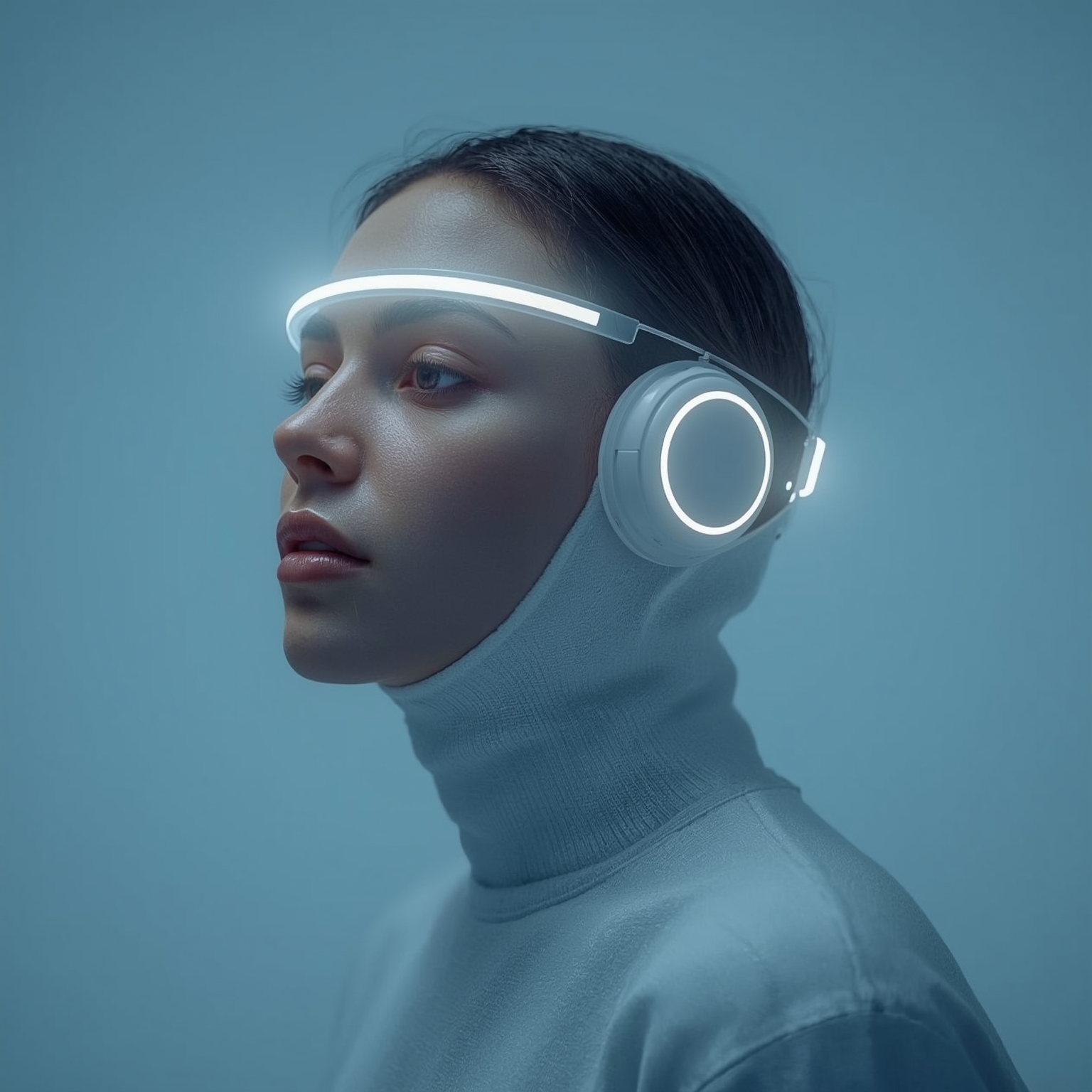
Kevin Rose employs a strikingly instinctive and unfiltered principle when he evaluates emerging investments in artificial intelligence–driven hardware. In his own words, he jokes that if a device makes you feel the urge to punch someone wearing it, it is probably not worth supporting financially. Beneath the humor lies a deeply intuitive philosophy about how technology must coexist with human emotion and social behavior. Rose’s rule encapsulates his conviction that technology should integrate seamlessly into daily life, not provoke hostility or discomfort.
This kind of blunt honesty is characteristic of Rose, a figure well-known in Silicon Valley for his willingness to challenge trends rather than follow them. As a general partner at True Ventures — and previously an early investor in transformative companies like Peloton, Ring, and Fitbit — Rose has witnessed successive waves of enthusiasm for consumer technology. His career has given him a front-row seat to both groundbreaking innovation and the recurring missteps that often accompany it. Observing the new rush toward AI-powered devices, he has deliberately chosen restraint rather than participation. While many investors scramble to get backing in for the latest smart glasses or voice-activated pendants, Rose has taken a step back, preferring to question whether these creations actually enhance human experience or merely exploit novelty.
He argues that much of today’s AI hardware hinges on overreach — the impulse to make devices that incessantly listen, record, and analyze everything around them. According to Rose, such perpetual surveillance threatens fundamental social norms of privacy and trust. He notes that a wave of current AI wearables seems engineered to capture entire conversations without discrimination, shattering those unwritten boundaries people depend on to feel comfortable and respected in social settings. His firsthand insight is that successful technology must align not only with technical sophistication but also with deep emotional intelligence — a product’s ability to feel natural within human rituals, relationships, and spaces.
Rose’s insight comes from years spent evaluating what distinguishes enduring consumer devices from those quickly forgotten. During his tenure on the board of Oura, the company that now dominates the smart ring market, he observed how a product that feels intuitive, stylish, and noninvasive can become a daily essential rather than a temporary fascination. To him, the victory of wearables like Oura’s ring stems less from advanced sensors or data accuracy and more from their subtle harmony with the wearer’s lifestyle. In contrast, devices that flaunt intelligence but disregard emotional resonance frequently provoke discomfort, alienation, or even ridicule.
Speaking at TechCrunch Disrupt, Rose explained that an investor’s role extends far beyond technical validation. He believes every promising technology must also pass what he calls the “emotional litmus test.” A device can be a marvel of engineering, yet if people instinctively recoil from using it — or if it causes social friction among those nearby — its commercial potential dissolves. Many AI products today, he laments, seem designed to impress through constant presence, tirelessly monitoring their environment and striving to appear smarter than their users. To Rose, that form of omniscience feels intrusive and unnatural, emphasizing technical intelligence at the expense of human comfort. “It’s just not healthy,” he remarks, capturing the dissonance between innovation and empathy.
Rose admits that his skepticism comes not from ignorance but experimentation. He has tested numerous AI wearables, including the much-discussed Humane AI pendant, which briefly captivated public attention before fading as consumers questioned its practicality. One awkward domestic moment ended his trial. During a disagreement with his wife, he attempted to refer to the pendant’s recorded logs as proof of what he had — or had not — said. The realization that he was appealing to an algorithmic witness in a personal argument made him recognize how profoundly unnatural such technology could become within intimate human dynamics. As he jokes, no marital dispute should ever hinge on playback data. That experience persuaded him that when technology crosses emotional boundaries, trust breaks down.
Rose argues that current consumer enthusiasm for minor AI enhancements — such as using glasses to identify landmarks or phone apps to delete unwanted people or objects from photos — represents a shallow conception of true innovation. He recalls a friend removing a gate from the background of a picture for aesthetic reasons, only to unintentionally erase part of his home’s memory. Rose warns that such digital alterations, while trivial individually, collectively erode authenticity and our relationship with reality. He likens this moment to the early days of social media, when platforms seemed harmless but later revealed vast social and psychological costs. In his view, the world may soon look back on this AI craze with similar regret, wondering why we believed applying “intelligence” to everything was inherently good.
These reflections have grown even more personal for Rose as a parent. Experimenting with OpenAI’s video generation tool, Sora, he created delightful yet imaginary videos of Labradoodle puppies for his young children. When they eagerly asked where these puppies could be found, he faced an unexpectedly complicated conversation about truth, creation, and illusion. His solution was to liken AI’s abilities to cinematic trickery — explaining that just as actors in movies only appear to fly, the puppies and even the on-screen version of “Dad” were fabrications. For him, this underscores a broader societal challenge: helping the next generation differentiate between artificial experiences and genuine human moments.
Despite his warnings, Rose is no technophobe. In fact, he remains strongly optimistic about artificial intelligence as a force reshaping entrepreneurship and the venture industry itself. He emphasizes how dramatically the tools for building software have evolved. Only months ago, creating and launching an application required extensive coding expertise and countless hours debugging errors. Now, thanks to accessible AI development platforms, even novices can produce polished products at breakneck pace. He recounts a colleague’s spontaneous experiment during a road trip from Los Angeles to San Francisco — developing and deploying a full app before the drive’s end. Such acceleration, once unthinkable, symbolizes a seismic reduction of barriers to innovation.
Rose foresees this trajectory continuing. With upcoming iterations of large AI models, such as Google’s Gemini 3, he expects near error-free programming, rendering traditional coding instruction obsolete. Soon, high school students may engage not in rigid syntax lessons but in what he calls “vibe coding,” where creativity and intuition guide digital creation. From this democratization, Rose predicts the emergence of multibillion-dollar enterprises founded by teenagers who once would have lacked both resources and mentorship. The entrepreneurial map, he argues, is being redrawn by accessibility and imagination.
This shift transforms the very mechanics of venture capital. Startups can now achieve meaningful progress before seeking investment or even bypass traditional financing altogether. The balance of power tilts toward founders, who can validate ideas independently before involving investors. Rose views this as not a crisis but an improvement — a cleansing that will reward enduring partnerships and heartfelt collaboration over transactional funding.
In response to these changes, some major firms, such as Sequoia Capital, have expanded by hiring large numbers of in-house engineers to keep pace with AI transformation. Rose, however, believes that the future of great venture capital lies not in technical augmentation but in human understanding. Programming strength can always be outsourced or automated, but emotional intelligence — the capacity to empathize with founders through inevitable turbulence — cannot. The investors who thrive, he suggests, will be those who remain loyal, emotionally grounded, and capable of helping entrepreneurs navigate the psychological strain of creation. Long-term relationships, not opportunistic speculation, will become the true differentiator.
When asked what personal principle guides his own investment selections, Rose refers back to a formative lesson from Larry Page during his early years at Google Ventures. Page advised him to seek out founders defined by a “healthy disregard for the impossible.” For Rose, this phrase encapsulates boldness without arrogance — a fearless curiosity that ignores conventional limits and pursues what others dismiss as folly. At True Ventures, he continues to search for exactly that temperament: entrepreneurs whose ideas may sound outrageous to skeptics but who possess the conviction to pursue them regardless. He admires those willing to confront failure with grace, because a great mind, even when defeated once, often succeeds spectacularly the next time. In Rose’s world, the best investments are less about technology itself and more about the rare psychological alchemy of passion, resilience, and creative rebellion that propels innovation forward.
Sourse: https://techcrunch.com/2025/11/02/kevin-roses-simple-test-for-ai-hardware-would-you-want-to-punch-someone-in-the-face-whos-wearing-it/


