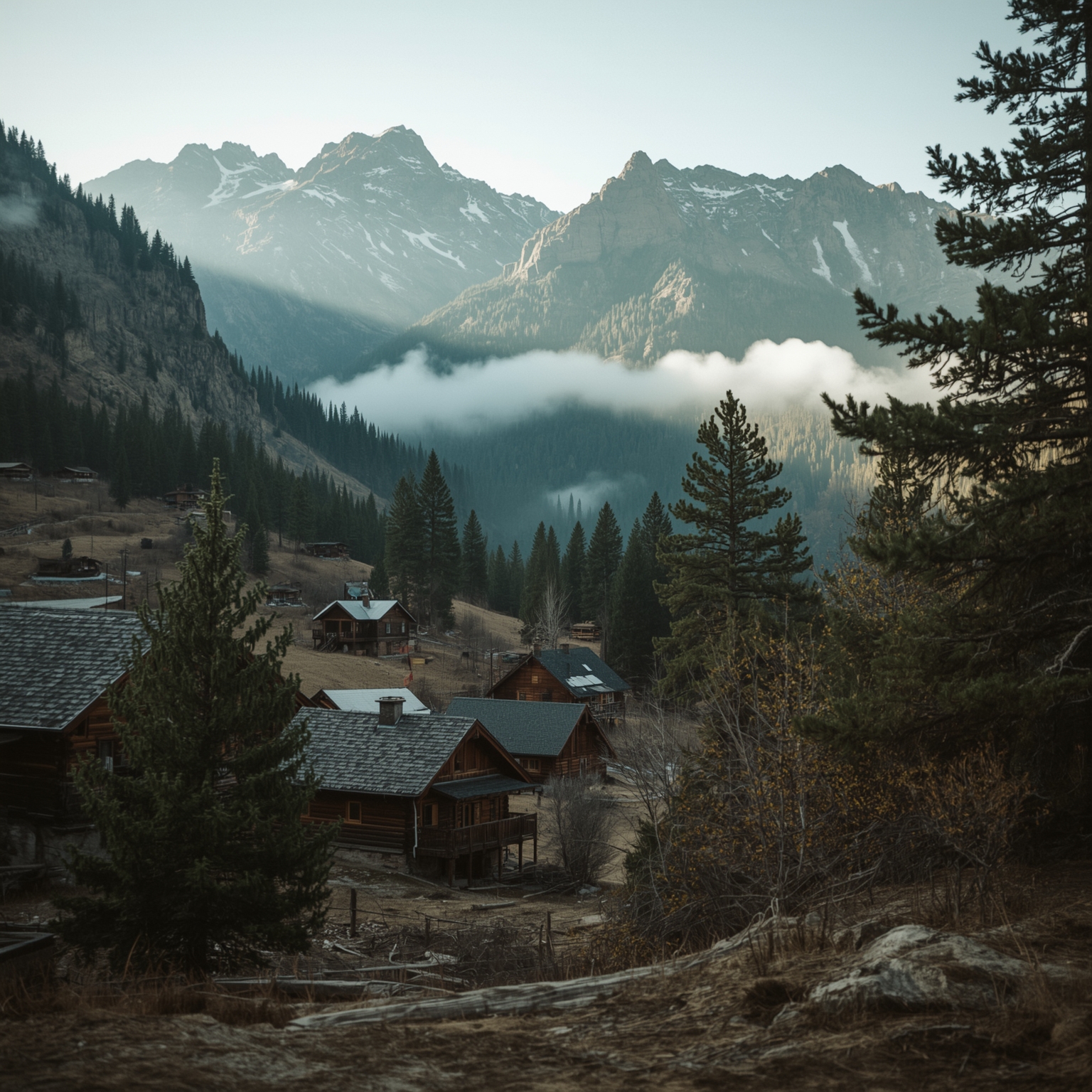
Whenever I mention to someone where my home is located, their immediate response tends to be a kind of wistful admiration—most often something along the lines of, ‘That must be such an incredible place to live!’ And truthfully, when I pause to gaze through our wide living room window at the brilliant mountain sunsets painting the horizon, or when I hoist my well-worn hiking pack for an afternoon excursion on the nearby forest trails, I find myself wholeheartedly agreeing with their sentiment. From the moment we began to dream about leaving our familiar life in the Denver suburbs, we longed for the tranquility and grandeur of what many affectionately call the Heart of the Rockies—an alpine region we had explored during countless vacations, always leaving us wishing we could extend our stays just a little longer.
For years, our conversations circled back to the same idyllic vision: a home with trails close enough to walk from our doorstep, ski slopes that could be reached within minutes rather than after hours of bumper-to-bumper traffic, and a gentler, slower rhythm of daily life that contrasted deeply with the constant motion of suburban existence. In 2017, with my husband approaching retirement and my remote work arrangements finally confirmed, we took a leap toward that long-held dream and purchased two scenic acres just outside Salida, Colorado—a small, artsy town of roughly six thousand residents nestled among mountains so close they seem to wrap you in their stillness. The location fulfilled nearly every hope we had outlined: it was less than a three-hour drive from Denver International Airport, still within our financial reach, and provided instant access to some of the most breathtaking outdoor recreation we could imagine.
Now, having lived here for nearly eight years, we’ve come to cherish the beauty, connection, and fulfillment that this mountain community has brought into our lives. Yet, alongside all the serenity, we have also learned—sometimes the hard way—that day-to-day life in a rural, heavily visited destination presents challenges we didn’t fully anticipate.
One of the first and most practical lessons has been about grocery shopping—a mundane task that took on new layers of complexity once we arrived. In such a small town, the availability of products is unpredictable. Shelves can be disconcertingly bare, and on busy weekends, even basic staples vanish as tourists, eager to stock up for their mountain getaways, sweep through stores on Friday afternoons. We quickly discovered that if one of us spotted an ingredient we might need—a certain kind of yogurt, a bottle of oyster sauce, or even fresh produce—it was best to buy it immediately. Waiting until the next shopping trip was risky; by then, the shelves would often be conspicuously empty. In the suburbs, we had taken for granted the convenience of simply running to the nearest grocery store when a recipe called for a specific ingredient. But here, spontaneity gives way to strategy: we now plan meals midweek to avoid crowds, order pantry essentials online, and adapt when the store’s offerings deviate from expectation. Though our town could never truly be described as a food desert, meal planning now requires flexibility and a good measure of creativity.
Another reality has been the limited access to healthcare—a topic we gave considerable thought to before relocating, though living through it has proved more sobering than anticipated. Salida’s regional medical center is well-regarded and provides an impressive range of services for such a small community, including a hospital and several dedicated specialists. Still, the simple math of healthcare in sparsely populated regions means that finding timely appointments can be difficult. The number of providers simply does not scale with demand, resulting in waiting lists that stretch far longer than what we were accustomed to in the city. For more complex or specialized treatments, many of our neighbors routinely make the five-hour round trip to Denver, while in urgent or life-threatening situations, patients are sometimes flown by helicopter to Colorado Springs or the larger metropolitan hospitals along the Front Range. While we are grateful that we do have access to quality local care—and aware that many rural communities throughout the West have far less—we can’t ignore the growing concern that comes with aging in a place where advanced medical support is hours away.
Connectivity, too, has proven less reliable than we imagined. Until we moved here, widespread outages and total loss of communication were abstract inconveniences—rare and quickly resolved. In a county with few fiber-optic lines and limited infrastructure, however, service interruptions are tangible and can impact nearly everyone. A backhoe severing a cable during road construction or a wildfire destroying a relay line is enough to take down internet and cellular service for hours, sometimes most of a day. Such events, while infrequent, ripple through local life in profound ways: gas stations unable to process payments, ATMs rendered useless, restaurants forced to accept only cash. But perhaps most concerning is the effect on emergency services. During one significant outage a few summers ago, our entire county was effectively cut off; no one could reach 911, and dispatchers struggled to coordinate responders without functional digital systems. It was a stark reminder that in our seemingly peaceful, self-sufficient environment, our safety and connection still depend on fragile lines of communication. County officials and service providers have since made slow but steady progress on building redundancy into the network, though the possibility of future disruptions remains a pressing concern.
Despite these occasional frustrations—the empty grocery shelves, the long medical drives, the sudden disappearance of signal—we often find ourselves marveling at how this imperfect existence has become our version of paradise. On crisp spring days, we might ski through soft, melting snow in the morning, switch to hiking boots after lunch, and spend the evening watching deer wander across the meadow behind our home. Traffic here is so minimal that we jokingly complain when more than half a dozen cars appear on the road at once. The intimacy of small-town life has woven a sense of belonging we never experienced in seventeen years of suburban living; in less than a decade, we have built a circle of friendships deeper and more genuine than we could have imagined.
Every so often, we ask ourselves whether we would make the same decision again—to trade proximity to city conveniences for a quieter, more unpredictable mountain life. Each time, the answer is the same. The challenges—the scarcity, the remoteness, the dependence on nature and infrastructure alike—are far outweighed by the extraordinary beauty and peace we experience daily. For all its imperfections, this rugged stretch of the Rockies has not only met our expectations but reshaped our sense of what it means to truly live where we belong.
Sourse: https://www.businessinsider.com/moved-to-rural-town-tourists-downsides-colorado-mountains-salida-2025-11


