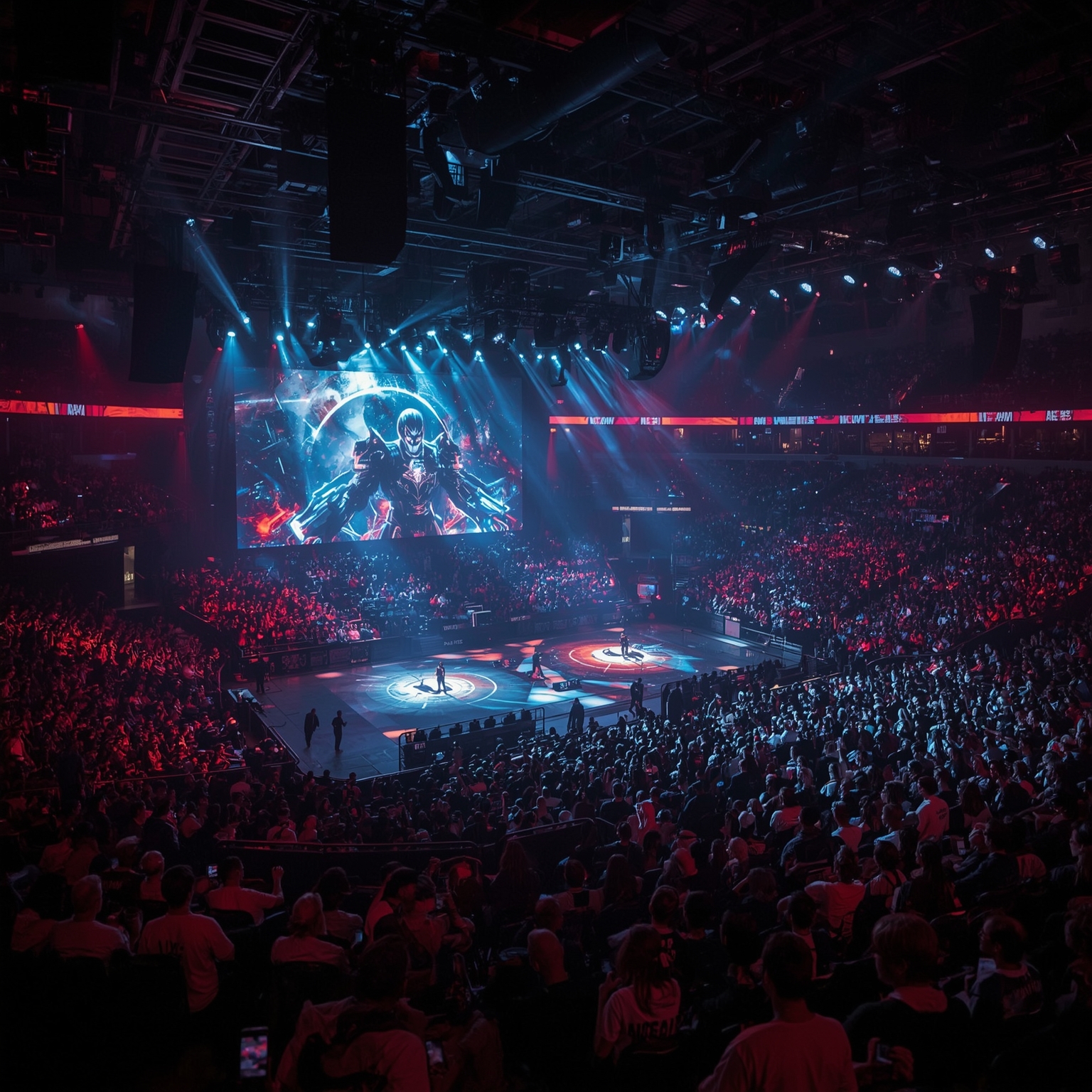
This Sunday, the radiant and technologically vibrant Chinese metropolis of Chengdu will transform into the epicenter of global competitive gaming, becoming the stage for one of the most significant confrontations in the history of esports. The anticipation surrounding the event is palpable, as two of South Korea’s most illustrious professional gaming organizations — T1 and KT Rolster — prepare to enter the virtual battlefield of “League of Legends.” Both teams, financially and strategically supported by their parent telecom conglomerates, have survived a dynamic and unpredictable journey through the semi-finals. Their imminent clash on the Summoner’s Rift will take the form of a best-of-five finale, determining not only who will claim the coveted world championship but also who will inscribe their name most indelibly into the annals of esports history.
The magnitude of the upcoming encounter transcends the digital confines of the game itself. At stake are more than the championship trophy and the substantial monetary rewards — which include a multimillion-dollar prize pool and attendant revenue streams. What truly looms large is the question of prestige, legacy, and the symbolic dominance within the global esports hierarchy. The game at the center of this contest, “League of Legends,” developed by Riot Games, is one of the most meticulously designed and widely played multiplayer online battle arenas in existence. Its primary competitive mode is a five-on-five contest, in which each participant assumes control of a unique champion endowed with distinctive abilities and tactical roles. The overarching goal is clear yet profoundly strategic: to dismantle the opposing team’s defensive structures, termed turrets, and ultimately to obliterate their nexus — the heart of the enemy base — located on the meticulously symmetrical battlefield known as Summoner’s Rift. Every moment on this digital terrain demands coordination, split-second decision-making, and precise execution as the teams combat opposing champions who stand as sentinels between victory and defeat.
The deep-rooted rivalry between these two telecom-backed esports organizations extends far beyond the realm of “League of Legends.” Its origins reach back to the early 2000s, an era when the competitive gaming scene in South Korea thrived around “Starcraft,” a real-time strategy game that captured the national imagination. During that period, both telecommunications giants invested heavily in developing professional teams, transforming individual players into national icons and staging fierce showdowns that became legendary within the esports community. This long-standing competition, often referred to as the “telecom war,” eventually evolved with the rise of new games and genres. When both corporations decided to extend their rivalry into “League of Legends,” their history of competition was rekindled with even greater intensity. Particularly memorable was SK Telecom’s introduction of a then-unknown prodigy, Lee “Faker” Sang-hyeok, who made his professional debut as the team’s mid-laner in 2013 in Seoul. His arrival permanently altered the competitive landscape of the game.
Faker’s incredible career trajectory is now the stuff of legend. Over the years, he has guided T1 to an unprecedented collection of world titles, securing victories in 2013, 2015, 2016, 2023, and 2024 — a record unmatched by any other player. His evolution from a rookie phenomenon to a global esports icon culminated in his current role as both player and part-owner of T1, reflecting his profound influence on the organization’s identity and its brand power. This year marks T1’s fourth successive appearance in the World Finals, maintaining its position as one of the most consistently elite teams on the international stage since its 2022 finals bid in San Francisco — a heartbreaking 3–2 loss to another Korean squad, DRX. By contrast, this year represents a breakthrough moment for KT Rolster, which, despite decades of national-level success and intense local rivalries, will be competing for the first time in a League of Legends World Championship final.
Beneath the exhilarating spectacle of digital combat lies an industry of staggering economic value. The global esports sector — and “League of Legends” in particular — has matured into a multibillion-dollar enterprise. Teams such as T1 are now valued at hundreds of millions, owing not only to their competitive achievements but also to their sophisticated business operations, media influence, and extensive brand partnerships. The prize pool, although impressive in its own right, represents only a fraction of the income generated by these organizations and their star players. Like professional athletes in traditional sports — for instance, NFL stars such as Travis Kelce, who parlay athletic excellence into entertainment ventures and endorsements — top players in esports secure lucrative, multiyear contracts and collaborate with major brands to further monetize their fame and success. Victory, therefore, brings not only personal triumph but also commercial windfalls in sponsorships, streaming partnerships, and merchandise.
For Faker, the financial and professional rewards of victory extend far beyond in-game glory. As a part owner of T1 and a global ambassador for competitive gaming, his triumphs contribute directly to the organization’s brand value. His personal endorsements and collaborative deals with global technology brands amplify both his net worth and the sport’s visibility. The narrative of T1 and KT Rolster’s journey to this point has been far from straightforward. The 2024 season tested the resilience of both organizations. KT Rolster entered Worlds as South Korea’s third seed — a respectable position — while T1, having struggled through parts of the season, narrowly claimed the fourth seed, just managing to secure a berth in the global tournament. Their qualifications alone were a testament to perseverance and strategic refinement.
As Worlds progressed, KT Rolster delivered a stunning performance on November 1, toppling renowned powerhouse Gen.G — a team celebrated for its tactical perfection and led by the celebrated mid-laner Jeong “Chovy” Ji-hoon — to earn a coveted place in the grand final. Not to be outdone, T1 rediscovered its championship rhythm after an uncertain start to the competition. On November 2, they achieved a decisive 3–0 sweep against China’s formidable Top Esports, signaling a return to peak form at precisely the right moment. Both teams now approach the finals with renewed confidence, tactical clarity, and a burning desire to etch their names into gaming immortality.
The 2024 “League of Legends” World Championship Finals are scheduled to unfold this Sunday, promising an electrifying event that will captivate millions of spectators across continents. Fans around the world will tune in via major streaming platforms such as Twitch and YouTube, collectively bearing witness to a meeting of legends — a contest that, whether through individual brilliance or flawless teamwork, will shape the legacy of competitive gaming for years to come.
Sourse: https://www.businessinsider.com/league-of-legends-2025-world-final-t1-faker-kt-showdown-2025-11


