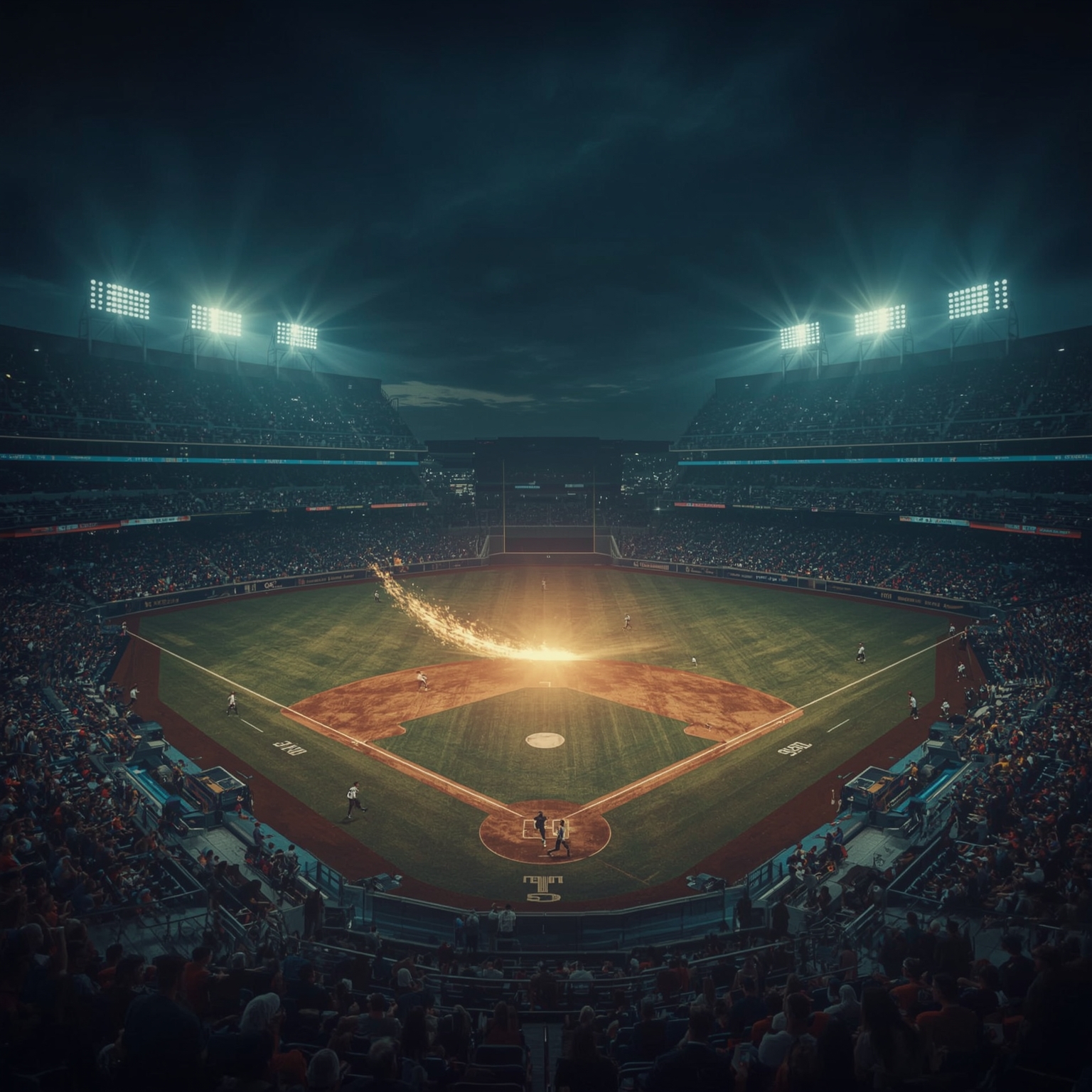
With the swing of a single bat, another October slipped quietly yet dramatically into history for those of us who hold baseball close to heart. Though much of the regular season can appear meandering, even soothing in its predictability, postseason baseball possesses an entirely different temperament — a thrilling combination of tension and exhilaration, where each inning feels alive with the possibility of witnessing something unprecedented. The sheer unpredictability of October baseball transforms it into a nightly ritual of suspense and wonder. Each game promises a fresh narrative, an instant legend to recount for decades. Saturday night’s decisive Game 7 between the Toronto Blue Jays and the Los Angeles Dodgers embodied this very spirit: an evening of breathtaking intensity, the kind that not only concludes a season but perhaps marks the origin story for a new generation of devoted fans.
Approximately twenty-six million people across the United States tuned in, making it the most-viewed World Series contest since 2017, a testament to baseball’s enduring magnetism. North of the border, nearly half of Canada’s population caught at least a portion of the game, evidence of a nation wholly captivated by its lone MLB representative. In the U.S., viewership peaked at 31.5 million around midnight, an extraordinary figure when one considers that the game coincided with Halloween festivities — a night when many were likely out celebrating rather than staying in to watch television. I found myself squeezed into a dimly lit bar corner, eyes fixed on a small phone screen shared with a cluster of strangers, our collective voices rising with each swing and pitch. The game’s emotional peaks — stretching into extra innings and punctuated by a benches-clearing confrontation — transformed it instantly into a classic. This finale crowned a remarkable season for Major League Baseball, one that had already shown encouraging increases in audience engagement. When global viewership data from Japan were factored in, Game 7 emerged as the most-watched MLB broadcast in thirty-four years, reaffirming baseball’s power to transcend cultural boundaries.
Yet despite such moments of brilliance, the sport as a whole has been wrestling with a decline in popularity. Attendance figures and television ratings lag behind those of prior decades, and surveys suggest that baseball has relinquished its once-unquestioned title as “America’s pastime.” For comparison, the sheer spectacle of this year’s Super Bowl attracted over 127 million viewers — a number that dwarfs baseball’s most ambitious reach. Conscious of this shifting cultural landscape, teams and the league as a whole have turned to innovative strategies to reconnect with younger and more diverse audiences. Beyond the nostalgic appeal of stadium giveaways such as whimsical Hello Kitty bobbleheads, Major League Baseball now leans heavily on social media platforms to amplify its visibility. The organization has also implemented a series of structural modifications aimed at enhancing the pace and excitement of play: the introduction of the pitch clock, the incorporation of automatic “ghost runners” during extra innings, and the upcoming deployment of robotic umpires to manage home plate calls next season. Moreover, MLB’s investment in international markets — particularly in Japan, where baseball has long reigned supreme — underscores the league’s ambition to anchor itself firmly within the global sports economy.
The astonishing viewership figures from the World Series might signify the early stages of a renaissance. The pressing question now is whether the league and its franchises can sustain this energy, transforming casual curiosity into lasting fandom. During the championship weekend, I began noticing an extraordinary phenomenon across social media: jewelry-focused Instagram accounts, ordinarily dedicated to luxury fashion, were enthusiastically reposting highlights from the game. The opulence displayed by players on the field became a cultural talking point of its own — Vladimir Guerrero Jr.’s diamond-studded pendant catching the stadium lights, Miguel Rojas’s elegant Van Cleef & Arpels pieces adding an unexpected refinement to his persona, Yoshinobu Yamamoto’s gleaming sapphire necklace glistening under pressure as he heroically closed out the game after an intense previous appearance. Whether these accounts belonged to lifelong baseball supporters or newcomers drawn in by sheer visual glamour, the effect was undeniable. They, too, were swept into the world of baseball, discovering an aesthetic and narrative that spoke directly to them.
The same phenomenon unfolded on TikTok, though through an entirely different cultural lens. The platform buzzed with new kinds of baseball storytelling — fashion enthusiasts dissected pregame outfits, while K-pop fan communities transformed players into pop idols, creating collectible photo cards and stylized edits in what some users aptly described as “K-popifying sports.” According to Kat Marquez, who oversees North American sports partnerships at TikTok, hashtags connected to the World Series exploded in activity: posts tagged #worldseries increased by 160 percent globally, while #dodgers rose by 210 percent and #bluejays skyrocketed by an astonishing 325 percent between late October and early November. These viral surges provided measurable proof that baseball was permeating digital spaces traditionally dominated by other forms of entertainment.
Among the most captivating content circulating online were the frenetic, emotionally charged fan edits — montages crafted primarily by teenage enthusiasts. These short videos, often layered with trending music and rapid, cinematic transitions, transformed game highlights into mini-dramas. They showcased the New York Yankees’ Cody Bellinger framed in wistful nostalgia, the Seattle Mariners’ hard-fought division victory underscored by anthemic film music, and the Dodgers’ Shohei Ohtani paired with poignant ballads, blurring the line between sport and art. The artistry was so compelling that one might argue MLB should enlist these digital creators as unofficial ambassadors — their work already encapsulates the emotional and aesthetic appeal that traditional marketing so often struggles to achieve.
Elsewhere online, platforms like Bluesky pulsed with energy during the climactic game. The site experienced an unprecedented surge in activity as people who rarely mentioned sports suddenly joined in, collectively caught in the same breathless rhythm of every strikeout, hit, and controversial call. For one night, baseball truly escaped the confines of its traditional audience — it broke containment and became a shared cultural event. And for anyone who found themselves unexpectedly drawn in by this moment, there’s more to anticipate: the World Baseball Classic waits just a few short months away.
Ultimately, baseball endures as more than a competition of skill; it persists because it embodies storytelling itself. Its enduring resonance lies in its capacity to weave human narratives — the heartbreak of a team scripted for glory yet denied, the generational dreams of a player like Guerrero Jr., determined to secure a title that would honor his father’s legacy, and the miraculous rise of overlooked athletes elevated into legends overnight. And at the center of modern mythology stands Shohei Ohtani, the transcendent two-way talent redefining the limits of what one player can achieve, now finally rewarded with championship triumphs after years of frustration.
But baseball’s narratives extend beyond the field and into the socio-political currents shaping our world. As the Dodgers and Blue Jays competed, geopolitical tensions lent their own shadows. The lingering trade disputes initiated by former President Donald Trump against Canada resurfaced indirectly in the discourse surrounding the championship, even prompting political advertisements that crackled with controversy. Though the games themselves remained apolitical sanctuaries of sport, the larger drama of international relations hovered in the background, reminding us that no cultural phenomenon exists in isolation.
Equally significant is baseball’s reflection of immigration and identity in America. Over a quarter of MLB players on this year’s opening rosters were born abroad, representing one of the sport’s greatest strengths — its global inclusivity. As the Dodgers battled in Toronto, immigration raids continued back home in Los Angeles, with reports of federal agents wearing Halloween masks during operations. The city, a mosaic of cultures and histories, finds its emblem in its baseball team: diverse, resilient, perpetually under pressure, yet endlessly hopeful. When we watch baseball, we watch more than athletes in motion; we witness entire communities encoded within their stories.
Major League Baseball has thus embraced a philosophy of adaptation — a willingness to modernize while preserving the soul of a sport synonymous with tradition. Early signs indicate that these efforts are beginning to bear fruit. What transforms a pastime into Culture, in its grandest sense, is not merely the game itself but the intricate ecosystems that form around it: the discourse, digital creativity, humor, fan-made art, real-time reactions, and citywide celebrations that collectively weave baseball into the fabric of life. This postseason, with all its unpredictability and brilliance, reminded us how expansive and alive that culture can be. And as it fades into memory, I can already foresee the nostalgia that will grow ever stronger until one day I find myself recounting — as though passing down folklore — the story of the unforgettable 2025 World Series.
Sourse: https://www.theverge.com/report/814483/world-series-dodgers-blue-jays-fandom-social-media


