Just a few minutes’ drive west of the quaint Swedish town of Nora lies a tranquil swath of forest that stretches behind a scattering of summer cottages. This serene landscape, draped in silence and bordered by a shimmering lakeshore, is often enveloped each morning by a thin veil of mist that rises and catches the first golden rays of the sun. Yet, this calm and almost ethereal setting is poised to undergo a dramatic transformation, for it is here that entrepreneur Joakim Sjöblom envisions constructing a modern industrial complex devoted to one of the world’s most perilous manufacturing endeavors — the production of trinitrotoluene, better known as TNT, destined for NATO’s defense supply chain.
Sjöblom, the founder and chief executive of a young startup named Sweden Ballistics AB, or Swebal, shared his motivation during an interview in mid-October, noting with a mixture of pride and gravity that his daughter had just turned one month old. This life event, he explained, crystallized his determination to channel his entrepreneurial experience toward something larger than personal success: contributing to the kind of security and stability that might ensure future generations, including his own child, never face the devastating reality of war.
The forested site he has selected possesses remnants of Sweden’s industrial past — an old railway track still cuts through the wilderness, a relic from a time when the country’s timber and ore shaped its early economy. Soon, if all goes according to Sjöblom’s plans, the towering 80-foot pines will give way to steel and concrete: to chemical tanks, reaction vessels, and a tall pumping tower rising above the treetops, marking the silhouette of a factory devoted to manufacturing explosives under the strictest safety and environmental standards.
Swebal’s proposed TNT facility will occupy land formerly owned by Sweden’s largest forestry company, an area rich in natural resources and logistics infrastructure. Producing TNT is an undertaking burdened by immense risk, as the process involves hazardous reactions and toxic byproducts. For that reason, the startup must first await a court ruling to secure environmental and building permits. Once these are obtained, it intends to raise approximately $90 million in additional funding to erect a semi-automated plant engineered for both safety and precision.
Before turning toward defense technology, Sjöblom forged his career in fintech, having founded and later sold Minna Technologies — a Swedish firm that attracted international attention when acquired by Mastercard. In that same pivotal year, 2024, Sweden formally joined NATO, aligning national interests with the very alliance Swebal now aims to support. The shift was emblematic of a broader European realignment in the face of global instability: nations recognizing that self-sufficiency in critical defense manufacturing is not merely strategic, but existential.
To grasp the significance of TNT production, one must look at its historic and ongoing role in warfare. Since its introduction to the armaments trade in 1902, trinitrotoluene has remained the standard by which the destructive capacity of other explosives is measured. It fills everything from mortar shells to aerial bombs, forming the invisible core of modern artillery power. Today, North America produces none of it domestically, and Europe relies almost entirely on a single operational plant in Poland for NATO-certified TNT. The rest is sourced primarily from Asia — particularly India and China — creating a severe strategic bottleneck should global conflict sever supply chains.
“There’s been a political awakening across Europe,” Sjöblom observed, referencing the collective realization among policymakers that dependence on foreign explosives production leaves NATO states dangerously vulnerable. “If borders suddenly close or trade routes are impaired, we must be capable of sustaining production internally. No nation wants its defense capacity held hostage by import dependencies.”
This drive for supply chain autonomy aligns closely with the European Union’s new defense procurement framework, which mandates that by the year 2030, at least 60% of all defense spending must be sourced within EU borders. While producing TNT domestically is far more expensive than importing it, European governments increasingly view this as a necessary investment rather than a financial burden — a price to pay for sovereignty and readiness.
Sjöblom’s Swebal plans to source every single raw material from within Sweden and nearby regions around the Baltic Sea, bolstering both logistical resilience and economic circulation within local industries. According to experts like Dr. Lukas Bauer of Ludwig-Maximilian University of Munich, the fundamental precursors to TNT — chemicals such as toluene and strong acids — are relatively inexpensive and widely accessible in large quantities. But availability of ingredients is not what makes TNT production difficult — rather, it is the narrow margin for error in handling reactions that can, under uncontrolled conditions, result in catastrophic explosions or the release of deleterious waste.
It is precisely this danger, combined with strict environmental standards and post–Cold War complacency, that led Western nations to outsource explosive production in the first place. Now, however, the war in Ukraine has revealed the deep fragility of that decision. NATO’s artillery reserves are strained; production of 155mm high-explosive shells — the staple ammunition for howitzers — has fallen behind the pace demanded by sustained conflict. Russia, according to alliance estimates, now manufactures four times more shells than all NATO partners combined, despite possessing only a fraction of the West’s overall economic output.
Recognizing this imbalance, multiple projects have sprung up across Europe and even in North America. Finland announced plans for its own TNT facility slated for completion by 2028; construction has also resumed on a dormant TNT plant in Greece. Meanwhile, the U.S. Army has commissioned a new production complex in Kentucky, likewise targeting 2028 for operational readiness. Yet even with these initiatives in progress, Sjöblom projects that Western capacity will remain barely half of what Russia currently produces.
On the ground in Sweden, Swebal’s efforts have proceeded with deliberate caution — and immense regulatory scrutiny. To secure an environmental permit, the firm undertook fourteen distinct studies over two years, surveying the land for protected species, historical artifacts, and any ecological sensitivities that might prohibit construction. The main factory will occupy roughly three acres directly within a managed pine-and-birch production forest, but the company holds the option to purchase an additional sixty acres to ensure a buffer zone separating industrial activity from nearby homes or natural reserves.
According to project managers, the surrounding woodland offers more than aesthetic isolation — it provides an essential layer of protection. Should the unthinkable occur, and an accidental explosion take place, the forest’s density would help absorb the impact, diffusing both noise and force while reducing potential harm to the broader community. The facility’s structural plan includes sizable embankments encircling the chemical compounds, twenty feet high, designed to contain blasts. A network of electric fencing, surveillance systems, and continuously staffed security will safeguard the perimeter.
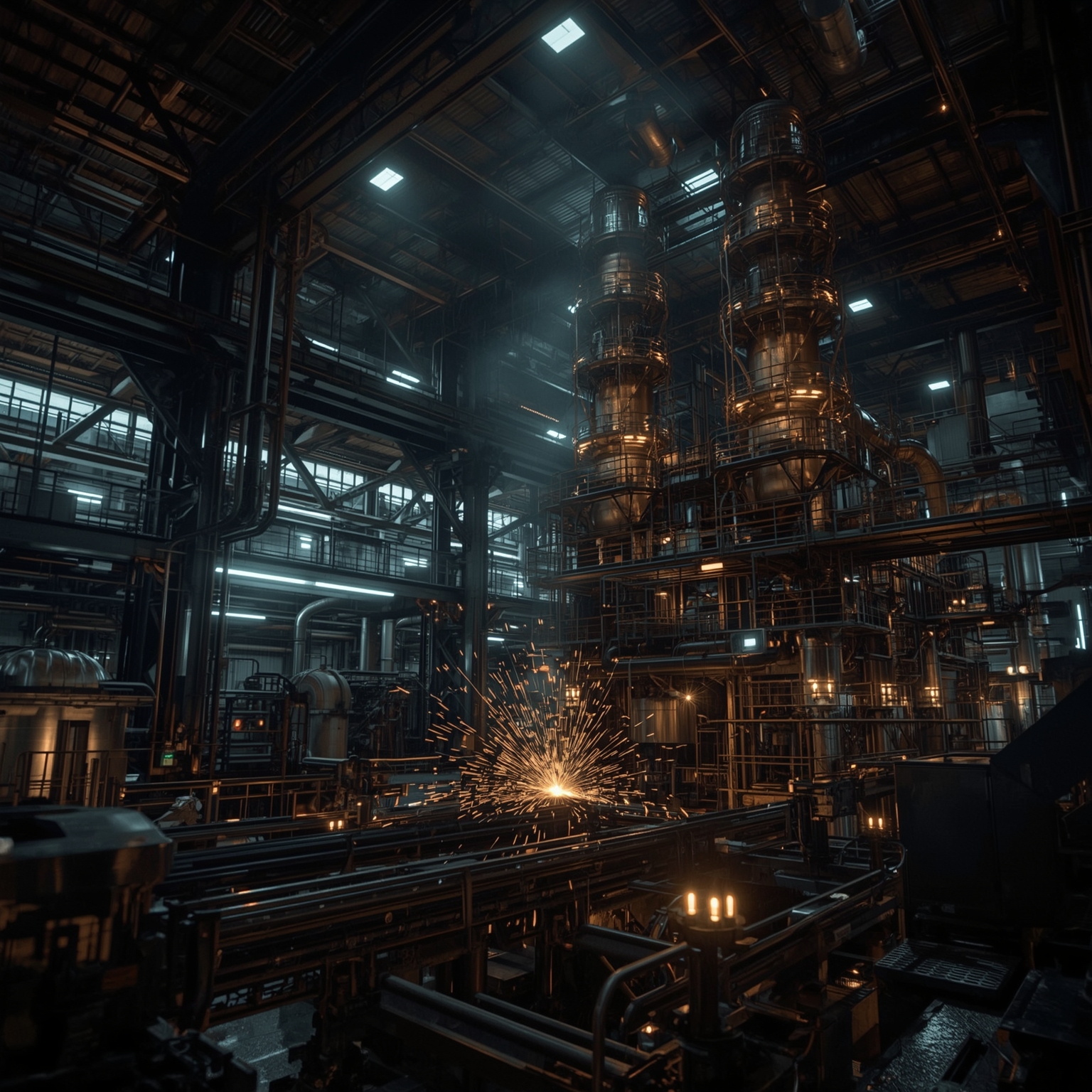
Inside the plant, the architecture will center on a 90-foot acid concentration tower feeding a 4,300-square-foot process area. Here, reactive acids and toluene will be carefully blended and managed through an automated sequence with minimal human intervention. Indeed, Sjöblom’s ultimate vision is almost entirely robotic — he aims for a plant where people are present only in two safeguarded rooms: a control hub and a laboratory dedicated to final quality tests.
Such precautions are justified not only by the risk of explosion but by the adverse ecological consequences associated with TNT production. The process generates a dangerous effluent known as redwater — a vivid, contaminated liquid described by scientists as carcinogenic and mutagenic. Historically, many facilities recklessly discharged redwater into nearby rivers, causing severe environmental damage. Modern regulations now demand that it be stored and destroyed under rigorous containment. Accordingly, Swebal will truck this byproduct to a specialized waste management facility located about forty-five minutes away, ensuring that no incineration or disposal occurs on-site.
Though Swebal’s current team consists of only three employees — Sjöblom, cofounder Carl Duforce, and construction manager Sebastian Reismer — the enterprise already coordinates work among fifty consultants and contractors. Once the factory becomes operational, the company expects to employ roughly fifty full-time staff, transforming into one of the region’s most significant employers. Financing, however, remains a high-stakes endeavor. The company estimates its total capital requirement between 80 and 90 million euros and has so far secured an initial $3.5 million from investors, including Thomas von Koch, former managing partner of EQT Partners. With regulatory approval expected imminently, Sjöblom plans to initiate a substantially larger funding round.
Beyond the practical challenges lie social and environmental sensitivities. Duforce, who relocated to Nora to manage local outreach, has spoken directly with residents, some of whom fear that the new plant — with its anticipated traffic and necessary clearing of forest — will disturb the peace that makes the lakeside community so appealing. To foster goodwill, Swebal has begun sponsoring local sports clubs, integrating itself into the area’s civic fabric. Nevertheless, not all concerns are easily quelled.
“There are people unhappy about the increase in trucks or the fact that some trees will be felled,” Sjöblom has admitted candidly. Yet he defends the project as a vital act of foresight. In his view, building deterrence and supply chain independence represents a moral responsibility: without such industrial strength, peace itself could vanish. Gesturing toward the woods that surround the site, he remarked that if another war erupted, the natural landscape — from forest to wildlife — could be lost entirely.
Ultimately, the transformation unfolding west of Nora captures a wider European reckoning. Decades of peace lulled the continent into outsourcing core defense capabilities, trusting efficiency over resilience. Now, through ventures like Swebal’s, Europe seeks to regain command of its essential industries — pairing modern automation and environmental stewardship with the hard reality that security, like freedom, demands infrastructure to sustain it.
Sourse: https://www.businessinsider.com/europe-tnt-factory-swebal-russia-war-nato-startup-defense-manufacturing-2025-10


