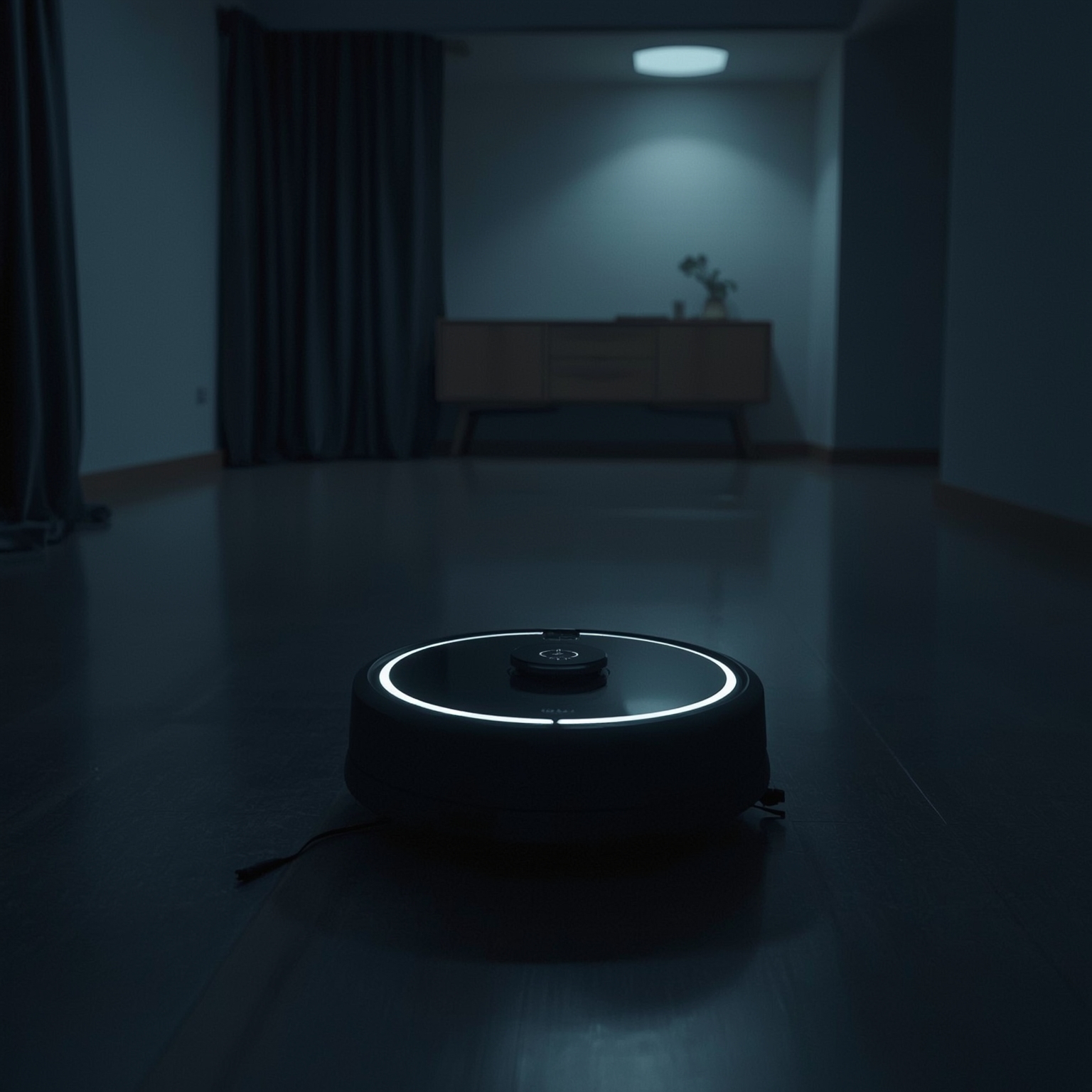
Once considered the undisputed ruler of household robotics, the Roomba redefined how millions approached the once mundane task of floor cleaning. Its sleek, circular silhouette and autonomous navigation system became synonymous with innovation, placing iRobot—the Massachusetts-based company behind the device—at the forefront of consumer robotics. For years, iRobot not only dominated living rooms but also commanded a substantial share of the global marketplace it helped to invent. Yet the same company now finds itself facing a stark reversal of fortune, battling against the dual pressures of dwindling capital and intensifying competition as it hovers perilously close to bankruptcy.
A trailblazer birthed from MIT’s cutting-edge robotics culture, iRobot once embodied the promise of engineering ingenuity transforming everyday life. However, recent developments suggest that its future may be constrained by financial exhaustion. The company has publicly admitted it is confronting severe economic distress and, most troublingly, an alarming shortage of liquidity. This fiscal crisis has been deepened by the collapse of Amazon’s planned $1.4 billion acquisition in early 2024—a deal that had been seen by investors and analysts alike as a potential lifeline. When that merger disintegrated under regulatory pressure, the fallout left iRobot grasping for alternative buyers or investors capable of reversing its downward trajectory.
According to the firm’s most recent disclosures, iRobot spent months in exclusive negotiations with prospective acquirers, only for its last potential buyer to withdraw after extended discussions. The proposed offer they left behind valued iRobot’s shares at a price notably below the company’s recent trading levels—an unpleasant reflection of waning investor confidence. Facing heavy debt and rising operational strain, iRobot warned in official filings that the absence of new funding could force it to drastically shrink its operations, potentially halting them altogether and seeking protection through bankruptcy proceedings.
That warning stings all the more given the scale of iRobot’s accomplishments: over 50 million Roomba units sold worldwide since its debut. Yet, despite this impressive milestone, an iRobot spokesperson maintained that the company would adhere strictly to its communications policy and refrain from commenting beyond its public disclosures. As the crucial holiday season approached, the spokesperson sought to reassure stakeholders that the company remained focused on delivering quality products and sustaining its long-standing relationships with customers, partners, and consumers alike.
The alarms first rang publicly in March of the same year, when iRobot’s quarterly earnings report acknowledged a “substantial doubt” regarding its ability to continue operating as a viable entity. Nevertheless, the company pressed forward with optimism, unveiling a new generation of Roomba devices and companion mopping units. Chief Executive Officer Gary Cohen heralded the releases as a strategic attempt to reestablish iRobot’s leadership in a sector it had itself pioneered. Yet even amid these fresh launches, the company tempered expectations with caution, acknowledging in its filings that numerous variables—ranging from consumer demand and global competition to macroeconomic turbulence and international tariff policies—could easily undermine the products’ success.
For a company that once symbolized the dawn of practical robotics, iRobot’s current predicament is all the more striking. The firm’s roots stretch back to 1990, when three visionary roboticists from the Massachusetts Institute of Technology—Colin Angle, Helen Greiner, and Rodney Brooks—founded it with the explicit mission of bringing robots out of the laboratory and into daily human life. Before household vacuums entered the equation, iRobot was best known for its high-stakes projects in space exploration and military innovation. One of its earliest milestones came in 1998, when it secured a lucrative contract with the Defense Advanced Research Projects Agency (DARPA) to design tactical mobile robots. That partnership yielded the PackBot, a robust machine later deployed at Ground Zero in the aftermath of the September 11 terrorist attacks, marking an early and profound demonstration of robotics’ potential for humanitarian and defense applications.
Over the following years, iRobot’s machines played roles in diverse missions—exploring the Great Pyramid of Giza, identifying submerged oil after catastrophic spills in the Gulf of Mexico, and assisting in crisis zones around the world. When iRobot went public in 2005 at an initial offering price of $24 per share, it had already established itself as both a commercial innovator and a technological pioneer. By the start of the following decade, it had sold over 10 million home-cleaning robots, vastly outpacing the few thousand military and security units it continued to supply. In 2016, iRobot decisively pivoted away from defense by selling its security division to Arlington Capital Partners for up to $45 million—a move intended to concentrate resources on the rapidly expanding consumer robotics market.
At its financial zenith in 2021, iRobot reported annual revenue of $1.56 billion. However, this prosperity proved short-lived. The home robotics landscape evolved rapidly, and aggressive rivals—particularly Chinese technology brands such as Roborock, Dreame, and Ecovacs, alongside challengers like Shark and Samsung—flooded the market with increasingly sophisticated and competitively priced alternatives. The result has been a gradual erosion of iRobot’s dominance. The company acknowledged in filings that heightened competition and continuous product proliferation in the floor-care sector had led it to lose some of the market leadership it once commanded.
The failed acquisition by Amazon represented both a missed opportunity and a turning point. Initially announced in 2022 at a price of $61 per share and structured as an all-cash transaction, the deal was expected to provide a strategic boost to both organizations: Amazon would gain direct access to data-driven household robotics, and iRobot would gain stability under a corporate giant’s umbrella. Instead, after two years of regulatory resistance—particularly from the European Union—the merger collapsed in early 2024. The immediate consequence was devastating. iRobot announced widespread layoffs, cutting approximately 31% of its staff, or 350 employees, while cofounder and longtime CEO Colin Angle stepped down. These actions underscored both the company’s financial desperation and its attempt to recalibrate in the face of collapsing support.
Anticipating the Amazon deal, iRobot had obtained a $200 million loan from private equity firm Carlyle Group in mid-2023 to sustain operations through the expected merger period. But once the acquisition fell apart, that debt became a central burden. In subsequent months, company filings indicated a series of extensions to its loan waivers as iRobot struggled to identify new capital sources. The firm disclosed that discussions with lenders were ongoing, focusing on obtaining the additional financing necessary to maintain operations. In the absence of such relief, company executives suggested bankruptcy protection could soon become inevitable.
The persistent uncertainty has battered iRobot’s market standing. As of the most recent calculations, its stock trades at a mere fraction of its prior value—around $2.70 per share, down roughly 65% since the start of the year. Yet even amid this adversity, iRobot has not abandoned hope. Its public statements affirm a continued search for strategic solutions—be that a refinancing arrangement, a sale, or another form of corporate restructuring—to rescue the enterprise from insolvency.
Thus, iRobot’s story, once celebrated as a testament to American technological ingenuity, now serves as a sobering case study in the fragility of innovation-led businesses. The company that helped define the modern smart home finds itself struggling to survive in the very industry it created, battling the merciless pace of global competition and the unforgiving logic of economics. Whether iRobot manages to regain its balance or ultimately succumbs to the pressures surrounding it will determine not only the fate of the Roomba but also the broader perception of how even groundbreaking pioneers can falter in an ever-evolving technological era.
Sourse: https://www.businessinsider.com/roomba-irobot-bankruptcy-warning-rise-fall-2025-11


