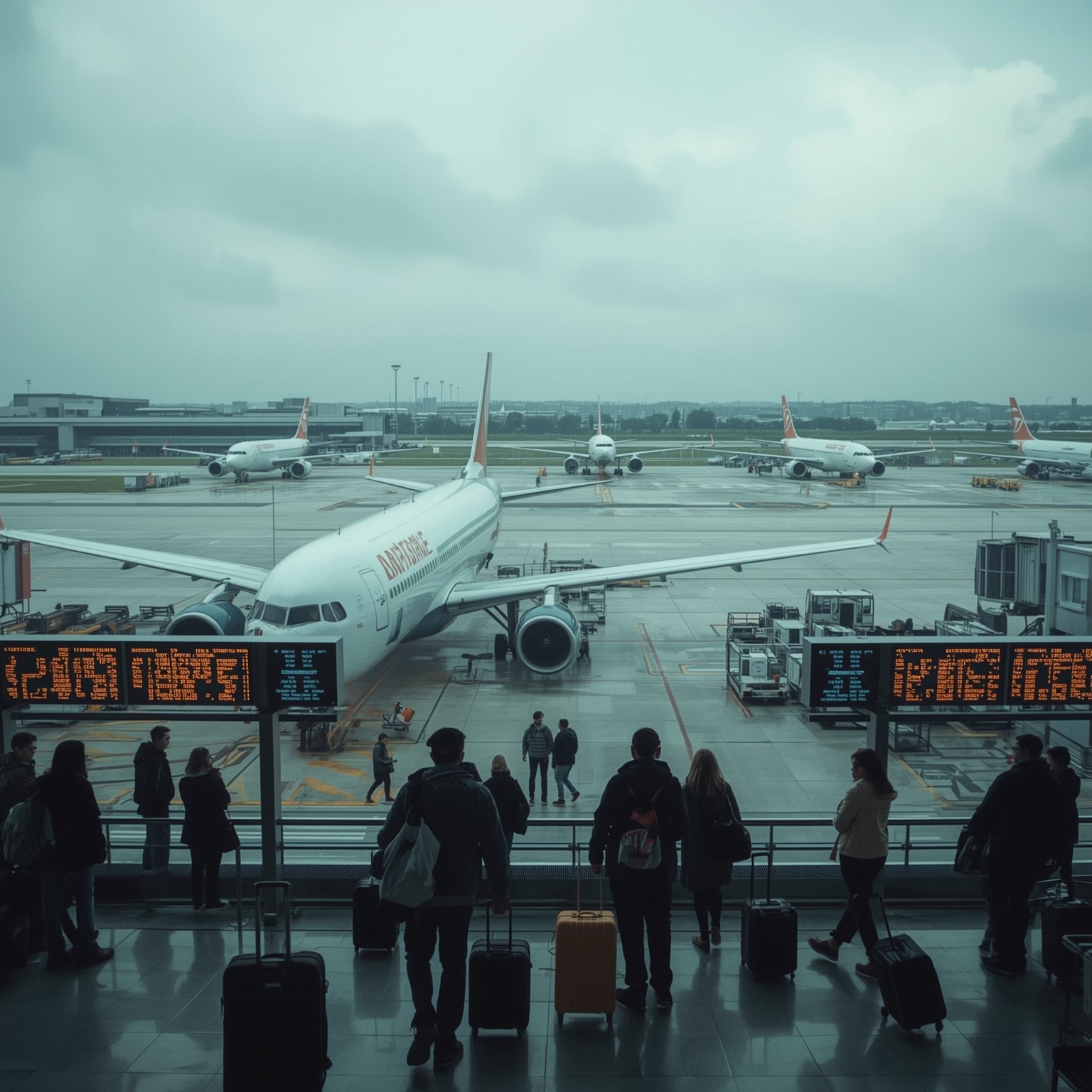
The turmoil generated by the ongoing government shutdown—already straining countless institutions—appears poised to intensify dramatically within the nation’s airports. What began as mounting inconvenience is now developing into a full-scale crisis. On Wednesday, the Federal Aviation Administration (FAA) formally announced that it will impose a 10 percent reduction in flight volumes across forty of America’s largest and most heavily trafficked airports. This unprecedented measure, intended as a direct response to the escalating effects of the prolonged shutdown, is likely to disrupt between 3,000 and 4,500 flights each day. These reductions are expected to hit particularly hard in the nation’s busiest hubs, including major transportation centers in Atlanta, Dallas, New York City, and Los Angeles—locations that handle a vast share of the country’s domestic and international air traffic, according to reporting from CBS. Yet, the FAA has not disclosed precisely which airports will be subject to capacity limitations, leaving airlines, passengers, and airport administrators uncertain about the full scope of the impending slowdown.
At a press briefing reported by the Associated Press, FAA Administrator Bryan Bedford underscored the extraordinary nature of the agency’s decision. He remarked that in his 35 years of experience within the aviation sector, he could not recall any prior instance in which the FAA was compelled to implement restrictions of such magnitude. His statement reflects both the severity of the crisis and the lack of precedent for the current predicament, highlighting how exceptional the situation has become in the modern history of American air travel.
The shutdown—already recognized as the longest in United States history—has for weeks been inflicting widespread disruption throughout the nation’s transportation infrastructure. Airports across the country have experienced substantial increases in flight delays, with thousands occurring daily, as well as prolonged security lines that test the endurance and patience of travelers. In extreme instances, certain major airports have been forced to operate for hours without the full oversight of air traffic control, an operational impossibility under normal conditions and a testament to the immense strain now placed upon federal aviation personnel.
Compounding the crisis are the human consequences borne by critical employees such as air traffic controllers and Transportation Security Administration (TSA) agents. These professionals, designated as essential government workers, are legally required to continue performing their duties even during periods when their pay is suspended—a situation that has now stretched across multiple pay cycles. Many of these employees, facing financial hardship and fatigue, continue working without compensation in order to uphold the nation’s air safety and maintain vital operations, despite the extraordinary stress such conditions impose.
Meanwhile, political tensions surrounding the shutdown have continued to escalate. Transportation Secretary Sean Duffy has emerged as one of the most outspoken voices within President Trump’s cabinet, directing pointed criticism toward Democratic leaders. His rebukes have included the circulation of inflammatory AI-generated images targeting Chuck Schumer and Hakeem Jeffries on the social media platform X—an act that has drawn widespread condemnation for its offensive nature. In turn, Democratic lawmakers have accused Duffy of exploiting his control over federal aviation infrastructure as a means of leverage in the ongoing political standoff. Illustrating the deepening clash, Duffy told CNBC earlier this week that he possessed the authority to “shut the whole airspace down” should the shutdown persist, a remark that underscored both his influence and the gravity of the nation’s political impasse.
In sum, what was once a partial administrative lapse has now evolved into a systemic crisis reverberating through the heart of U.S. air transportation. With thousands of travelers stranded, airport operations constrained, and critical staff unpaid yet obligated to work, the ripple effects of the shutdown promise to grow even more disruptive in the days ahead.
Sourse: https://www.theverge.com/news/815359/faa-flight-cuts-airport-government-shutdown


