As a college professor who calls Los Angeles home but holds a teaching position in San Jose, my workweek begins not behind the wheel of a car but in the cabin of a plane. Each week, I travel by air to reach my place of employment, a routine that has now become both familiar and surprisingly efficient. Before the onset of the COVID-19 pandemic, I had been living in the San Jose area to be close to the university. However, when remote work abruptly became the norm, I seized the opportunity to relocate roughly 350 miles south to Los Angeles, a city where my family felt more connected and at ease.
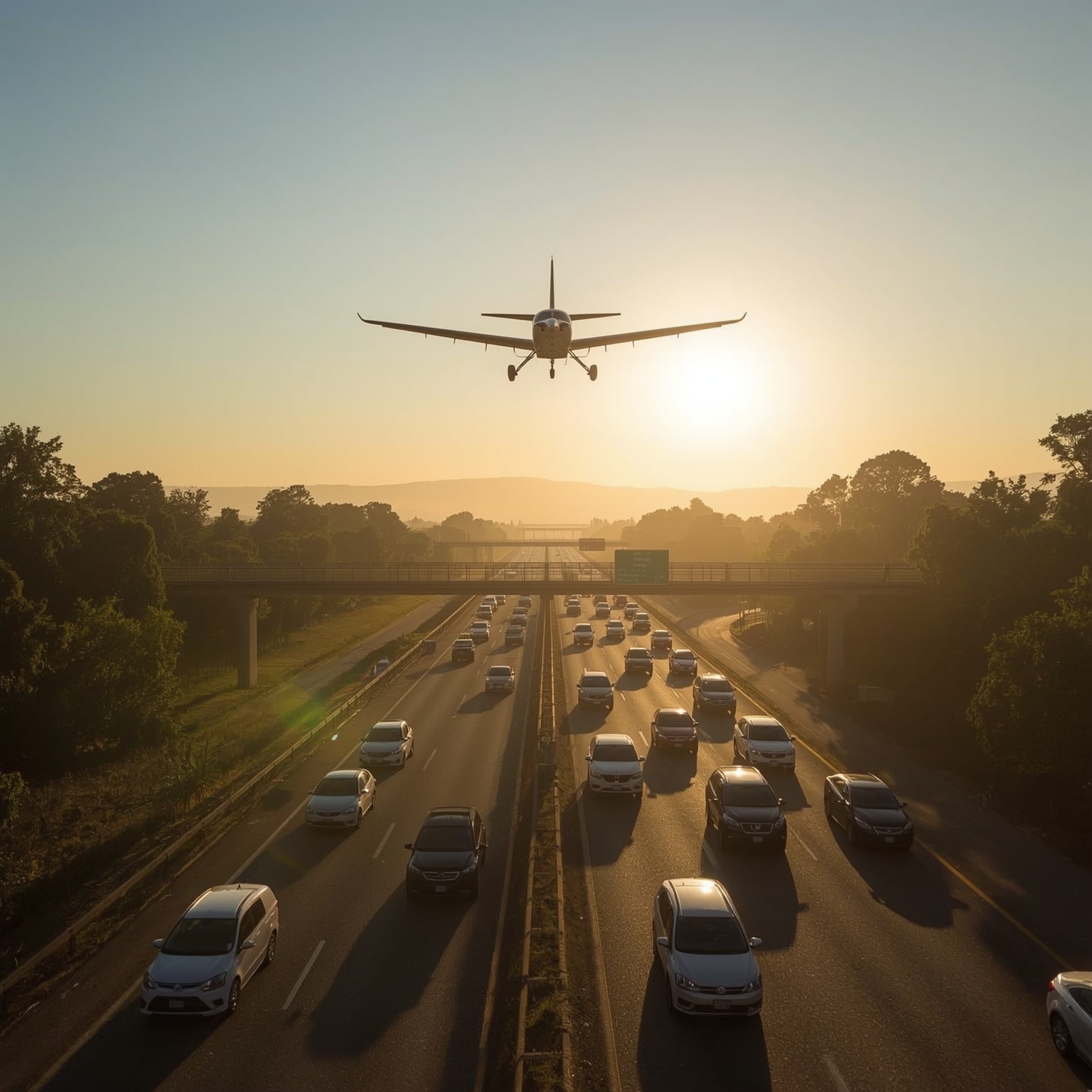
When the university announced in 2021 that remote work had ended and on-campus teaching would resume, I faced a pivotal decision: uproot my family again and return north, or remain in Southern California, where my husband and children had discovered a sense of belonging and where we were within easy reach of our extended family. The choice ultimately was clear. Between the unappealing option of spending more than ten hours a day driving through California’s infamous traffic and the alternative of a brief flight, I opted for the skies. That decision has shaped my life for the past four years — I now board a plane to work each week, a modern commuter navigating the skies above the congested freeways below.
Over time, this unconventional commute has become a disciplined ritual supported by strategies that make the process as smooth and predictable as possible. While Los Angeles International Airport (LAX) is the most convenient starting point — located a mere fifteen minutes from my home — I sometimes choose alternative airports to economize. Los Angeles’ dense network of airports offers unexpected flexibility: occasionally, I depart from Long Beach or Burbank when ticket prices make the change worthwhile. The flight itself, a short hop lasting just over an hour, transforms what would otherwise be an exhausting ordeal into a manageable journey. From the moment I leave my front door to when I arrive at my office in San Jose, the entire trip rarely exceeds three hours.
Once I land at San Jose International Airport, my commute continues smoothly with public transit. Rather than opting for an expensive Uber ride, I board a bus that connects to the city’s light rail. In about twenty minutes, the train delivers me directly to campus. Though this approach is slightly slower than using a ride-share, the cost savings are significant, and the time spent in transit becomes an opportunity to handle administrative tasks or respond to work emails. For me, travel time is simply another form of productive time.
Experience has taught me to design my schedule around minimizing uncertainty. Flight delays are the bane of any traveler’s routine, so I adhere to a simple but highly effective rule: always take the earliest outbound flight and avoid the final return flight of the day. Morning departures tend to run on time because they are less likely to be affected by the cascading delays that can ripple through airline schedules later in the day. Following this rule also helps me avoid the disruption of being stranded overnight in San Jose — something I have managed to sidestep entirely thus far.
Given the frequency of my travel, many people assume such a routine must be prohibitively expensive. In reality, my system of cost-saving tactics ensures the opposite. Flexibility, foresight, and strategic use of rewards programs allow me to keep expenses impressively low. I regularly monitor airfare fluctuations among the Los Angeles-area airports, and when I find a lower fare out of Long Beach, only fifteen miles away, I gladly adjust my departure point. I also take advantage of seasonal airline sales, booking an entire semester’s worth of flights at once to capitalize on discounted rates.
One of the most effective financial strategies I use involves an airline credit card. Although I typically avoid cards carrying annual fees, I made an exception for the Southwest Rapid Rewards card. Its annual fee of ninety-nine dollars has proved to be a minimal investment compared to the rewards it generates. Because I primarily fly with Southwest Airlines, I earn points rapidly and have been able to redeem them for numerous round-trip tickets that cost me almost nothing out of pocket. By combining these accrued points with careful scheduling, the price of my flights typically ranges between five and sixty dollars each — remarkable, considering the distance traveled.
My savings extend beyond airfare. I deliberately avoid purchasing food or beverages in airports, where prices are notoriously inflated. Instead, I bring my own easy-to-prepare meals that comply with airport security regulations. Among my favorite travel hacks is carrying packets of instant oatmeal or ramen — lightweight, compact, and satisfying. Once in the air, I simply request hot water from the flight attendants, and in a few minutes I have a warm breakfast or lunch ready to enjoy. This small ritual not only saves money but also transforms the flight into a pleasant, self-contained routine.
While maintaining a weekly air commute may not be the simplest arrangement, it is one that harmonizes with both my personal and professional priorities. The arrangement allows me to enjoy the cultural and environmental advantages of living in Los Angeles while continuing my work and academic life in San Jose. My family thrives in Southern California’s climate and lifestyle, and I am able to fulfill my professional responsibilities without forcing them to sacrifice their own comfort or proximity to loved ones.
When I mention this routine to others, their reactions are often incredulous. Some imagine that only a wealthy professional could afford such a lifestyle or that my employer must subsidize the travel. Others assume I spend more time in airports than at home. In truth, the opposite is the case. My commuting system is not only feasible but surprisingly economical, and it affords me the unique satisfaction of balance — living in my preferred city, working in the academic environment I value, and spending time with the family members dearest to me. Ultimately, I find serenity in my seat at thirty thousand feet, laptop open, oatmeal in hand, knowing that I’ve traded hours of gridlock for a journey through the open sky — a daily compromise that consistently feels like a win.
Sourse: https://www.businessinsider.com/fly-to-work-commute-by-plane-affordable-benefits-tips-2025-11


