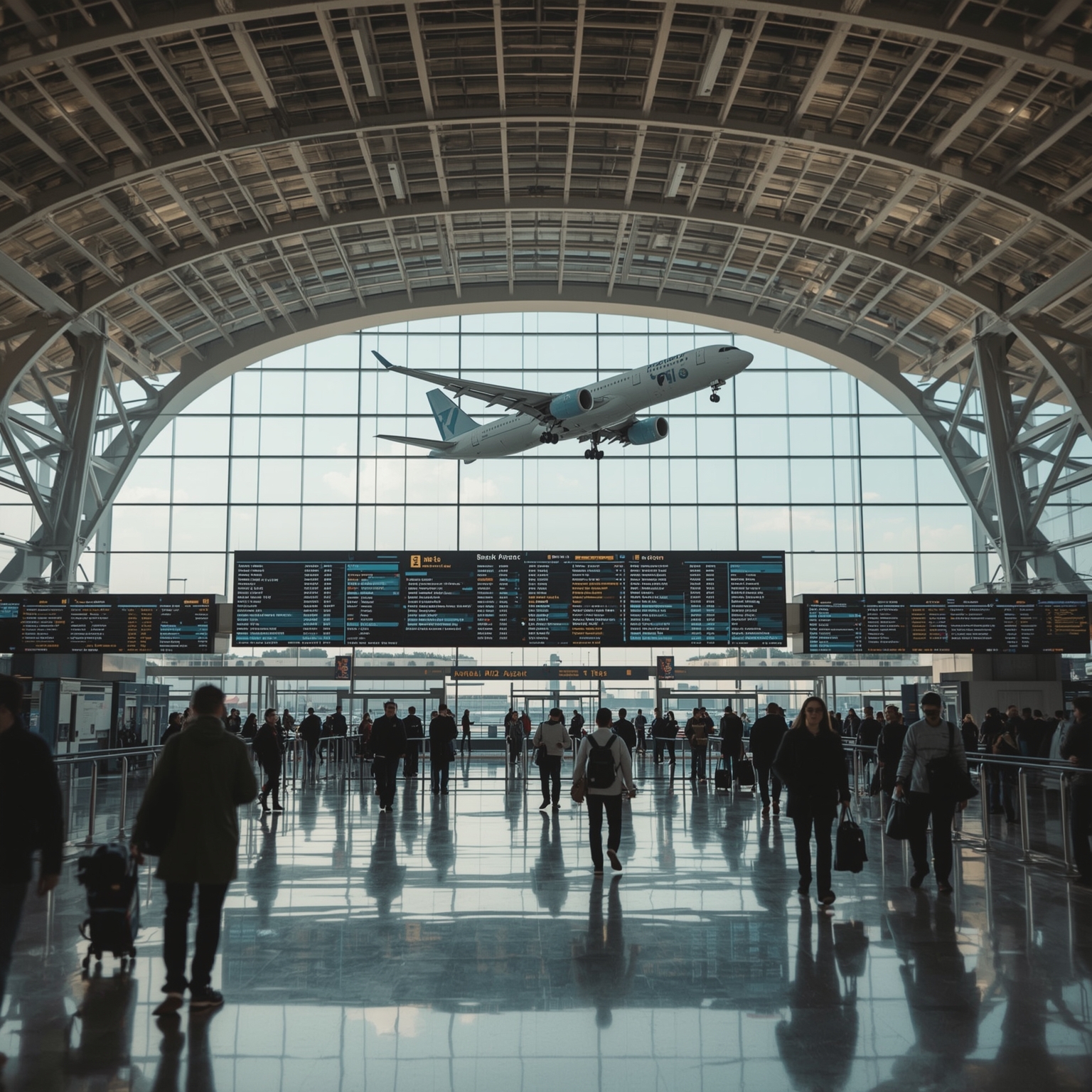
Holiday travel in the United States is increasingly shaping up to be an unpredictable and potentially chaotic experience. What was already a stressful period for travelers is now facing additional strain as a continuing shutdown has triggered extensive delays across the nation’s air traffic control system. These operational disruptions have resulted in some airports becoming so critically understaffed that they were forced to suspend operations temporarily, creating ripple effects that are being felt throughout the aviation network. Starting this Friday, federal authorities are planning to implement a strategic reduction in air traffic volume by cutting approximately ten percent of flights at forty major U.S. airports. This measure is intended to alleviate pressure on the overstretched system and prevent further bottlenecks.
Four major airports—Charlotte, Boston, Seattle, and Philadelphia—have officially confirmed to Business Insider that they will be among those temporarily losing some flight services as part of these operational adjustments. However, the Federal Aviation Administration (FAA) has yet to release a definitive list of every airport affected. In the absence of that official data, the aviation analytics firm Cirium has compiled a comprehensive analysis identifying around one hundred high-traffic airports that are most likely to experience these cuts. According to Cirium’s projections, the reductions could include as many as 1,800 flights, which translates to the elimination of roughly 268,000 passenger seats in a single day of service adjustments.
The Cirium list reads like a catalog of the most recognizable names in American aviation. It ranges from Chicago O’Hare International Airport and Hartsfield–Jackson Atlanta International Airport to major hubs such as Los Angeles, Dallas/Fort Worth, Denver, Houston, and New York’s John F. Kennedy. It also includes airports in coastal and regional centers such as Miami, San Francisco, Phoenix, Seattle, Boston, and Washington. The list extends further to encompass other important domestic intersections like Detroit, Minneapolis, Nashville, and Salt Lake City, as well as key facilities in the South and Midwest including Louisville, Indianapolis, and St. Louis. Even prominent leisure travel gateways like Orlando, Fort Lauderdale, and Honolulu are among those potentially affected. This broad distribution illustrates that no single airline or region is immune from the operational strain spreading through the country’s aviation infrastructure.
Additional reports from CBS News and The Washington Post echo Cirium’s findings, suggesting that roughly forty airports will experience direct cutbacks, though federal agencies have yet to formally verify these figures. In the meantime, Business Insider has reached out to many of the airports named in Cirium’s analysis to obtain confirmation and further comment. Airports such as those in Indianapolis, Fort Lauderdale, Los Angeles, Detroit, Memphis, and the metropolitan areas of Houston, New York, and Dallas indicated that they are aware of potential flight reductions but have not yet received formal notification regarding their inclusion on the list. They directed inquiries to the FAA and the airlines, signifying the ongoing uncertainty surrounding the exact implementation of these reductions.
Meanwhile, officials at Minneapolis–Saint Paul International Airport reported that, as of Thursday, their operations remain normal. Nevertheless, they cautioned that if the proposed cuts are activated, passengers should anticipate significant travel disruptions not only locally but at airports nationwide. The FAA and the Department of Transportation, for their part, have not yet issued any substantive public statement or response to media requests for clarification, adding another layer of uncertainty to an already fluid and challenging situation.
The timing of these reductions could hardly be worse. They coincide with the onset of the holiday travel season, encompassing the high-demand periods around Thanksgiving and Christmas when millions of Americans take to the skies. Airlines, federal regulators, and airport authorities are reportedly working at a rapid pace to identify which flights can be canceled or consolidated with minimal disruption, yet the limited timeframe before implementation has left little room for careful adjustment. Although some carriers have attempted to reassure travelers by outlining general expectations, specific details about schedules and destinations remain scarce.
Frontier Airlines, for example, has said that the majority of its scheduled operations should proceed according to plan, although it emphasized that plans are subject to change and that customers would be informed proactively if adjustments become necessary. Its statement lacked route-specific details, however. Similarly, Southwest Airlines acknowledged that it does not yet possess precise figures for potential cancellations or adjustments. United Airlines CEO Scott Kirby provided slightly more transparency, explaining that the pending reductions would not impact the airline’s international long-haul or hub-to-hub routes; rather, they will primarily affect smaller regional connections and select domestic mainline flights that do not link two major hubs. United currently operates seven significant U.S. mainland hubs—Chicago, Denver, Houston, Los Angeles, Newark, San Francisco, and Washington Dulles—plus an additional one in Guam.
Cirium’s latest estimations indicate that Chicago O’Hare International Airport would experience the highest number of cancellations across all airlines, potentially losing 121 flights on Friday alone. Atlanta’s Hartsfield–Jackson, a cornerstone of Delta’s network, is projected to rank second with approximately 104 flights removed from its schedule, demonstrating how deeply these adjustments could cut into major carriers’ operations.
For travelers, the overall effect is heightened uncertainty. Experts are advising passengers to exercise patience and plan for extended waiting times at every stage of their journey—from check-in and baggage drop-off to security screening and boarding. Audrey Kohout, co-CEO of LuggageForward and LugLess, noted in a press statement that travelers should expect substantial lines and should therefore arrive significantly earlier than usual. She further advised packing critical items, valuables, and any necessities in carry-on luggage to avoid potential issues arising from delayed or lost checked bags.
In cases where flights are canceled altogether, most airlines are expected to accommodate passengers by offering rebooking options or full refunds at no additional cost. Major carriers such as American, Delta, Frontier, and United have publicly stated that affected customers will have the option to modify or cancel their itineraries without paying change fees. Southwest has made similar assurances, promising refunds to travelers facing canceled services. However, Alaska Airlines, as of midday Thursday, had not yet announced a flexible travel policy to address possible disruptions. In the midst of this turbulence, some airline executives are counseling travelers to prepare for the most difficult scenarios. Frontier Airlines CEO Barry, for instance, cautioned in a recent online post that if a traveler’s flight is canceled, the odds of being stranded could be high—and therefore, those wanting to ensure mobility might consider booking a backup ticket on a different carrier.
Taken together, these developments depict a national air travel system under acute operational stress, one that is bracing for significant turbulence just as the nation’s busiest season approaches. Passengers are advised to remain attentive to official airline updates, check their flight status regularly, and prepare contingency plans where possible. This moment is a reminder of how tightly interlinked policy, personnel, and logistics are within the aviation ecosystem—and how quickly disruptions at the federal level can cascade through an entire network that millions depend upon to reunite with families and loved ones during the holidays.
Sourse: https://www.businessinsider.com/list-of-airports-cutting-flights-faa-government-shutdown-2025-11


