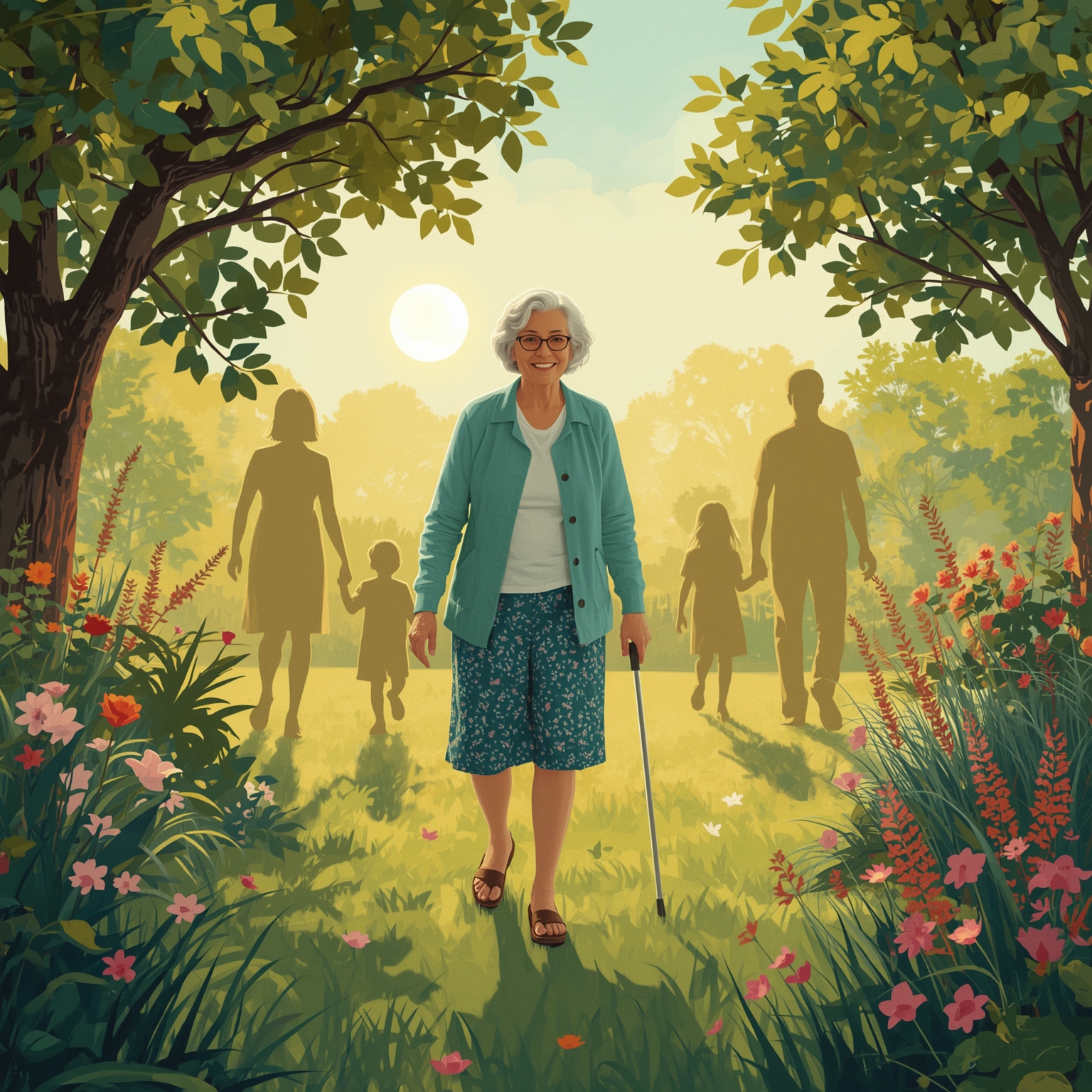
Last New Year’s Eve found me at home, comfortably dressed in my favorite pajamas, preparing for the simple pleasure of watching the famous ball drop on television—a familiar ritual marking the transition into a new year. Just as midnight approached and the anticipation built, my phone rang unexpectedly. On the other end was my eighty‑year‑old Nana, her voice alive with excitement and unmistakable authority. She wanted all her grandchildren and great‑grandchildren—an entire clan spanning several generations—to gather at her house that very evening to welcome the new year together.
To anyone else, such a request might have seemed almost impossible given the size of our family. My grandmother raised seven children, and through them came a network of grandchildren and great‑grandchildren so numerous that family gatherings easily resemble community events. Naturally, I was surprised—almost incredulous—that she would wish to host us all at once. Yet none of us hesitated. We bundled the younger children, packed food and laughter, and headed to her home. That spontaneous gathering, filled with warmth and noise and her unmistakable laughter, perfectly encapsulated who she is: a woman driven by vitality, generous spontaneity, and a contagious joy for living.
Now, at eighty‑one, she often reflects on the simple principles that, in her words, have sustained her longevity. She attributes her continued health and happiness not to any secret supplement or special routine but to the life she has intentionally built—a life centered on faith, family, and a reimagined understanding of success. For her, real accomplishment does not rest in accumulation of wealth or social recognition but in nurturing a large, resilient, and loving family.
Her journey, though, began far from where she now lives. Born in Jamaica, she spent her early years surrounded by strong community bonds and vibrant culture. There, she welcomed her first two children into the world before making the courageous decision to move to England. That transition, made in pursuit of broader opportunities and a more stable life, reflected both her pragmatism and fierce devotion to her children. In England, she expanded her family, bringing three more children into her embrace while simultaneously adapting to a country with customs and social rhythms vastly different from her Caribbean home. Later, with her unrelenting determination, she moved once again—this time to the United States—where she completed her family with two more children.
Each relocation demanded reinvention. When she arrived in America, she knew almost no one and thus began the delicate process of rebuilding a sense of belonging from the ground up. She found that sense of community mostly through her church, where kindness and shared faith offered both emotional nourishment and practical support. Little by little, she learned the nuances of American traditions—how holidays were celebrated, how people exchanged kindness—and she wove herself into the social fabric. Over time, she thrived, embracing new customs without abandoning the grace and fortitude of her Caribbean roots.
Community remains her lifeblood. To this day she delights in being surrounded by people, especially her many grandchildren, who keep her curious and laughing. They share with her the latest trends, introduce her to music and technology she never would have discovered alone, and fill her home with the sound of new generations growing. She says that their energy keeps her vibrant, that their constant questions force her mind to stay active and open.
Another one of her guiding principles is to stay constantly engaged in life’s rhythms. My grandmother refuses the notion of idleness. Whenever I call her, she is invariably doing something—chatting animatedly with a neighbor, pruning her garden, reading her Bible in a patch of sunlight, or preparing to head out for some appointment or another. Recently, during one of our conversations, she shared a simple yet profound statement: “Your mind will keep working if you keep working it.” It is advice she embodies daily, a belief that mental stimulation and purposeful motion are as vital as any medication or treatment.
Her discipline extends naturally to her physical and spiritual well‑being. She is conscientious about her diet, preferring fresh, organic foods whenever possible, and she supplements her meals with vitamins. Each morning begins with quiet ritual—she rises early, prays with intention, enjoys a wholesome breakfast, and then spends time meditating in her garden. The gentle routine of tending to the earth, surrounded by her plants and the sounds of nature, grounds her.
Although she maintains her physical health with care, she believes true wellness lies deeper than the body. In her view, emotional harmony and mental clarity matter even more. Physical strength may fade with age, she says, but peace of mind and stability of spirit can sustain you indefinitely. This equilibrium—between body, heart, and mind—is what keeps her steady and strong through the years.
Our long phone conversations often meander toward discussions of wellness. Together we explore topics like nutrition, reflexology, and chiropractic care. These talks inevitably return to a unifying idea: the importance of remaining curious and tending carefully to both body and mind. Curiosity, in her understanding, is not a trivial pastime but a spiritual practice—a way of keeping the soul alert to life’s possibilities.
What strikes me most is that my grandmother never measured success in the conventional way. While many, including myself, have grown up chasing careers, degrees, and tangible achievements, she has always seen success in simpler, deeper terms. To her, the true measure of a life well lived resides in love, kinship, and the legacy of compassion one leaves behind. She occasionally admits, with both nostalgia and candor, that there are moments when she wonders what might have happened had she pursued a more independent or professionally ambitious path. Yet even in such reflections, she questions the cultural obsession with relentless ambition. She cautions that the endless pursuit of external validation comes at the cost of peace, health, and genuine contentment.
Her philosophy is elegantly straightforward: when you learn to love and appreciate what you already have—especially your family—you find yourself invigorated in ways no external accomplishment can replicate. She believes that gratitude and acceptance are the true preservatives of youth, whereas constant comparison and striving can quietly diminish joy.
When she shared that insight with me, it profoundly altered my own outlook. For years, I had equated success with accumulating educational credentials, professional recognition, and measurable milestones. But her example has revealed that real freedom lies elsewhere—in consistency, in faith, and in the unending curiosity to learn and grow, regardless of age. She has built her happiness not on material success but on a foundation of laughter, learning, and love. That, she says, is the essence of longevity.
Now, as I move forward in my own life, I find myself following her lead, striving to remain grounded in gratitude and open to new learning. Her influence continues to remind me that the truest success cannot be tallied through possessions or social status but is instead reflected in how deeply and authentically one lives. In the end, her wisdom endures as both a lesson and a legacy: life’s highest achievement is not how much you accomplish, but how wholeheartedly you choose to live.
Sourse: https://www.businessinsider.com/superager-grandma-key-to-longevity-not-chasing-success-2025-11


