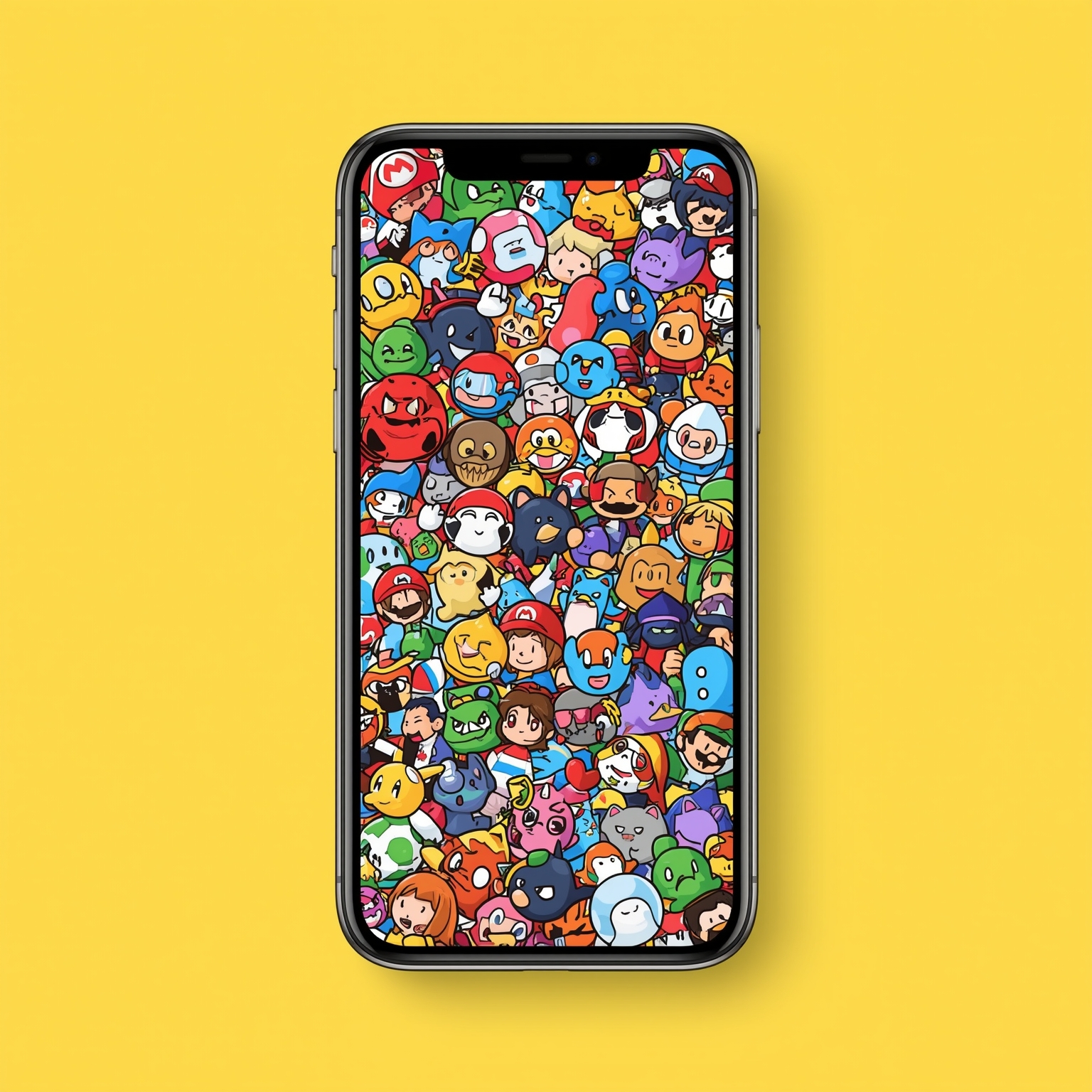
Nintendo has officially unveiled a new mobile store application for both Android and iOS platforms, further expanding its digital ecosystem. This latest addition gives users the convenience of purchasing hardware, accessories, and video games for both the Nintendo Switch and the upcoming Switch 2 directly from their phones. Yet, as exciting as this may sound, the experience also brings a sense of digital crowding. When I unlock my phone and scroll through my apps to the letter N, I now find an entire, unbroken row dedicated to Nintendo alone — four separate icons representing four distinct functions: the main Switch app, the music app, the Nintendo Today news app, and now the newly launched store. Together, they create an impressive but arguably excessive suite of branded software that feels both comprehensive and overbearing.
Historically, Nintendo has been the most idiosyncratic of the major gaming publishers — the one company among the industry’s “big three” that consistently follows its own creative instincts rather than the prevailing market trends championed by Microsoft and Sony. This independent philosophy has produced mixed results. On one hand, its deliberate resistance to chasing industry trends can act as a safeguard whenever those trends fail to deliver results; for example, when expensive investments in live-service games by competitors backfire, Nintendo’s more cautious approach keeps it insulated. On the other hand, this same reluctance to innovate where others do can place the company at a disadvantage in terms of technical performance and user experience. A case in point is voice communication: while integrated console voice chat has long been standard on rival platforms, Nintendo only introduced such a native feature with the release of the Switch 2 this year.
This latest suite of mobile applications encapsulates Nintendo’s distinctive duality — a balancing act between innovation and belated imitation. By deploying multiple specialized apps, Nintendo appears simultaneously eager to modernize and committed to building its ecosystem on its own terms. Unfortunately, the result feels less unified than one might hope, bordering on confusing and cumbersome. Do users truly require four independent apps to manage their Nintendo-related activities? It’s not that these apps lack merit — each fulfills a useful function — but the cumulative effect is undeniably overwhelming. In the current state of my digital life, managing my Nintendo presence feels like a fragmented task spread across too many platforms, each demanding attention.
To break it down: the primary Switch app remains a necessity for features like screen capture management, social interactions, and connectivity between the console and mobile device. The new store app, of course, is indispensable for purchasing physical and digital products. The Nintendo Today app, while not strictly essential, still serves a practical purpose, providing timely news, game release reminders, and exclusive announcements that often surface there before appearing through Nintendo’s other channels. Lastly, there’s the music app — another specialized tool that enables fans to listen to Nintendo’s celebrated soundtracks, which remain conspicuously absent from mainstream streaming platforms. Those who rely on YouTube for these tracks know that results can be inconsistent and incomplete, making the official music app an appealing, if somewhat restrictive, alternative.
Yet the redundancy across these apps is difficult to ignore. Functionality and content overlap to an almost comical degree. For instance, my play activity appears in both the store and the console companion app. The store even contains a news section that surpasses Nintendo Today’s offerings in breadth and polish. This duplication raises an obvious question: why not integrate these tools into a single, cohesive platform? Both Sony and Microsoft have achieved this through their respective PlayStation and Xbox mobile applications, which provide streamlined, all-in-one experiences that allow seamless transitions from checking captured footage to browsing digital storefronts.
To be fair, the music app may warrant exception. Incorporating a dedicated player directly into an administrative utility might make that app unnecessarily unwieldy. Still, the decision to isolate it behind its own branded interface feels like overengineering a straightforward solution. Nintendo’s rigid control over its intellectual property is well documented, but one must wonder whether that justifies forcing users to download an additional app solely to enjoy the company’s own soundtracks. Complicating matters further, access to this music app requires an active Nintendo Switch Online subscription, suggesting that the exclusivity could be a deliberate strategy to increase the perceived value of that service. There is also speculation about potential financial motivations: since the app does not provide credits to composers — a legal necessity for tracks hosted on conventional streaming platforms — this self-contained approach may help Nintendo avoid paying external royalties.
As the gaming industry continues to evolve, competition is expanding beyond the traditional boundaries of hardware and software. Companies are no longer vying solely with one another for consumer attention; they are also contending with the social media platforms and digital entertainment ecosystems that dominate users’ daily lives. Many developers have responded by diversifying their strategies — for example, by bringing once-exclusive games to competing platforms to reach wider audiences. Nintendo, characteristically, is pursuing a different vision, one that is arguably broader and more ambitious.
Earlier this week, Nintendo president Shuntaro Furukawa articulated this philosophy in a statement posted on the company’s investor relations website. He wrote, “We hope for Nintendo to be a name that people naturally turn to, part of everyday life and there for families as they grow.” That mission, to embed Nintendo in the fabric of everyday living, is visible across numerous projects: from the whimsical Alarmo, designed to blend gaming joy with morning routines, to the My Mario line aimed at younger children; from immersive animation and film ventures that extend beloved franchises to theme park experiences that turn digital worlds tangible; and finally, to Hello, Mario, a dedicated children’s application that integrates interactive learning with character-driven fun. Collectively, these initiatives illustrate a company intent on evolving from a games manufacturer into a multifaceted lifestyle brand.
Some of these efforts are evidently bearing fruit, reinforcing the perception of Nintendo as an enduring cultural touchstone. However, as the company broadens its ecosystem and saturates mobile devices with app after app, it risks triggering user fatigue. If Nintendo is not careful in refining its digital strategy — particularly regarding the number and organization of these applications — its audience’s goodwill may erode. Inevitably, when people start to feel overwhelmed by brand clutter, they will declutter. And if that happens, the first space they are likely to reclaim will be on their own mobile screens, one Nintendo icon at a time.
Sourse: https://www.theverge.com/games/815741/nintendo-apps-nintendo-store-nintendo-music


