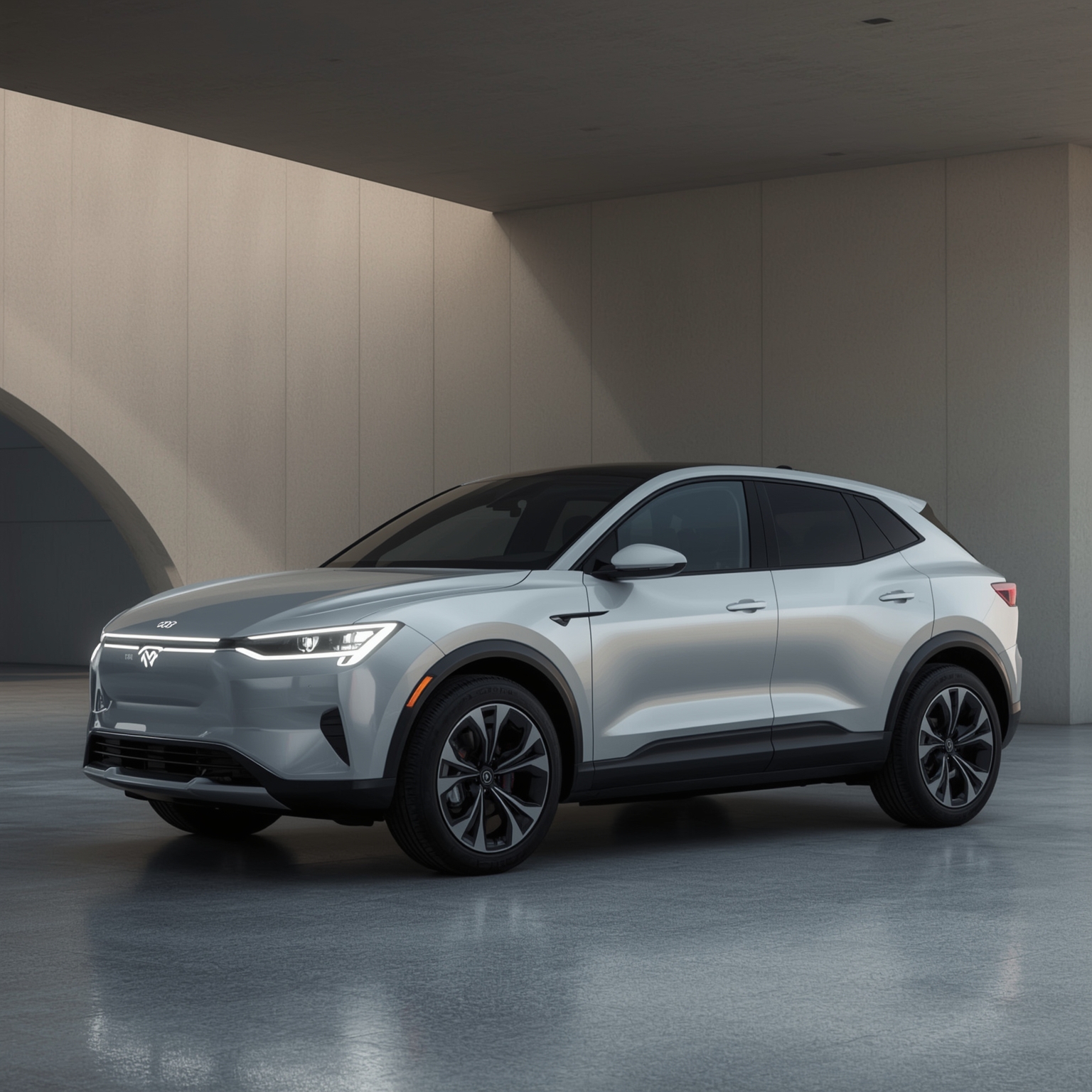
Since debuting its Polestar 2 sedan in 2021, the Swedish electric vehicle manufacturer Polestar has steadily evolved from a promising newcomer into a brand that embodies the intersection of minimalist design, cutting-edge technology, and sustainable performance. Following that initial launch, the company expanded its lineup to include two additional models: first, the Polestar 3—a spacious, compact crossover SUV designed to capture the growing SUV market without abandoning Polestar’s signature balance of refinement and efficiency—and now the Polestar 4, a sleeker, more dynamically styled, and slightly smaller crossover that leans more heavily toward sportiness. Its placement in size between the 2 and 3 may perplex consumers familiar with more conventional numerical hierarchies, yet nothing challenges expectation quite like one of its defining and most unusual traits: the complete absence of a traditional rear windshield.
With a starting price of $57,800, the forthcoming 2026 Polestar 4 presents a fusion of nuanced engineering decisions and distinctive design choices that at first glance may appear unorthodox. However, once experienced firsthand, the model reveals itself to be one of the most engaging and enjoyable EVs of the year—an experience that, while initially disorienting, gradually makes perfect sense as one becomes accustomed to its idiosyncrasies. The car devotes itself to a core aesthetic of restraint and understated sophistication—a visual minimalism that is unmistakably Swedish. Its exterior carries a strong, muscular stance anchored by crisp, sculpted body lines and uniquely shaped headlights that project a sense of confidence and purpose. Yet the most arresting element remains the rear hatch, conspicuously devoid of glass, a feature that draws immediate attention on the road and sparks curiosity from onlookers. The logic behind this omission, paradoxically, is one of practicality: by removing the rear window, Polestar’s designers could achieve a fluid, coupe-like silhouette while preserving generous headroom and legroom for rear passengers—an architectural compromise resolved through ingenuity rather than concession.
That design gamble seems to have paid off. Despite my tall frame, I found the rear seating area unexpectedly accommodating, even with the seat reclined slightly. Cargo capacity is similarly well considered: with 19 cubic feet available in standard configuration and a high load floor that simplifies handling of bulky items, storage expands to an impressive 54 cubic feet when the rear seats are folded flat. The front cabin, meanwhile, feels spacious and unencumbered, with ample head, leg, and shoulder room, making even long drives exceptionally comfortable.
Inside, the Polestar 4 exemplifies the brand’s commitment to both functional design and tactile quality. Dominating the dashboard is a 15.4-inch touch display arranged horizontally, partnered with a clean 10.2-inch digital gauge cluster. Only a single tactile control—a central rotary knob serving as a combination play/pause and volume dial—interrupts the otherwise pure surface language of the cockpit. The setup epitomizes Swedish minimalism in its purest form: highly intentional, elegantly sparse, and ergonomically satisfying. Material choices reinforce this ethos, with premium-feeling hard surfaces, scarce use of decorative metals, and luxurious synthetic woven textiles covering much of the cabin. The infotainment system itself is intuitively structured, marrying practicality with a hint of playfulness through its series of ambient lighting themes inspired by celestial bodies across our solar system—a subtle but clever nod, perhaps intended to entice curious Tesla Model Y owners seeking something equally sophisticated yet refreshingly distinct.
Mechanically, the Polestar 4 offers two drivetrain options catering to different driving styles and performance expectations. The single-motor, rear-wheel-drive variant delivers 272 horsepower and 253 pound-feet of torque, while the dual-motor, all-wheel-drive configuration, available for an additional $6,500, substantially increases output to 544 horsepower and 506 pound-feet of torque. Correspondingly, acceleration metrics tell an engaging story: the single-motor version achieves 0–60 mph in 6.9 seconds, whereas the dual-motor setup slashes that time to an exhilarating 3.7 seconds. Both variants are powered by a 400-volt lithium-ion battery with a usable 100 kWh capacity, enabling DC fast-charging capabilities of up to 200 kW. Real-world range estimates are equally impressive—310 miles for the single-motor and 280 miles for the dual-motor—positioning the Polestar 4 competitively within the growing luxury EV arena.
On the road, standard dual-motor models offer a commendably balanced ride, comfortable damping, and steering that feels reassuringly weighted, though perhaps not as sharp as one might expect from a performance-oriented crossover. That perception, however, shifts notably with the addition of Polestar’s $4,500 Performance Pack. This package fine-tunes the chassis for greater responsiveness, equips sticky Pirelli summer tires for improved grip, and installs large Brembo brake calipers for more confident braking performance. With these enhancements, the Polestar 4 transforms from a refined cruiser into a poised and engaging driver’s machine—without losing the inherent comfort and composure that define the brand’s dynamic philosophy.
Yet, the most perplexing and conversation-provoking element of all remains its lack of a conventional rear window. Instead, a rear-facing camera feeds live imagery to a digital display integrated into the rearview mirror—an idea that, while initially counterintuitive, proves more effective than anticipated. The system subtly adjusts the camera’s perspective to the left or right in tandem with the activation of turn signals, enhancing situational awareness. Together with well-positioned side mirrors that mitigate blind spots, this camera-based solution manages to deliver a surprisingly confident driving experience. Still, traditionalists may need time to adjust; glancing over one’s shoulder only to be met by an opaque bulkhead rather than open glass requires a small but meaningful shift in driving habit. While Polestar representatives proudly highlight the camera’s resilience in low-light, rainy, or even snowy conditions, real-world performance will inevitably vary depending on one’s regional climate and seasonal extremes.
In its entirety, the 2026 Polestar 4 stands out as a distinctive and alluring addition to the realm of high-end electric vehicles. It merges bold design choices, innovative technology, and a playfully spirited demeanor that invites even casual drivers to rediscover the joy of motion. Yet amid evolving uncertainties—particularly following the federal government’s discontinuation of certain EV tax credits—the strategic timing of introducing such a specialized model raises questions about long-term market impact. When asked about this, Dean Shaw, Polestar North America’s Director of PR and Communications, explained that the brand views the current period much like the cyclical nature of retail: after a typical December sales surge comes a predictable slowdown, only for momentum to rebuild as the new year progresses. Shaw expects a brief reset this month followed by gradual recovery and eventual growth.
He further emphasized that few automakers operate purely within the EV domain. As legacy brands recalibrate or temporarily pause their electrification strategies, Polestar perceives a rare opportunity to secure a more dominant foothold in the segment. The Polestar 4 embodies that ambition—bridging artistry and performance, marrying Scandinavian precision with driver engagement, and offering an immersive experience that feels both futuristic and human in equal measure. Perhaps its most daring trait remains that signature glassless rear—an outward symbol of the company’s willingness to challenge convention and redefine what modern automotive design can be.
Sourse: https://www.theverge.com/transportation/814717/polestar-4-review-specs-price-rear-windshield


