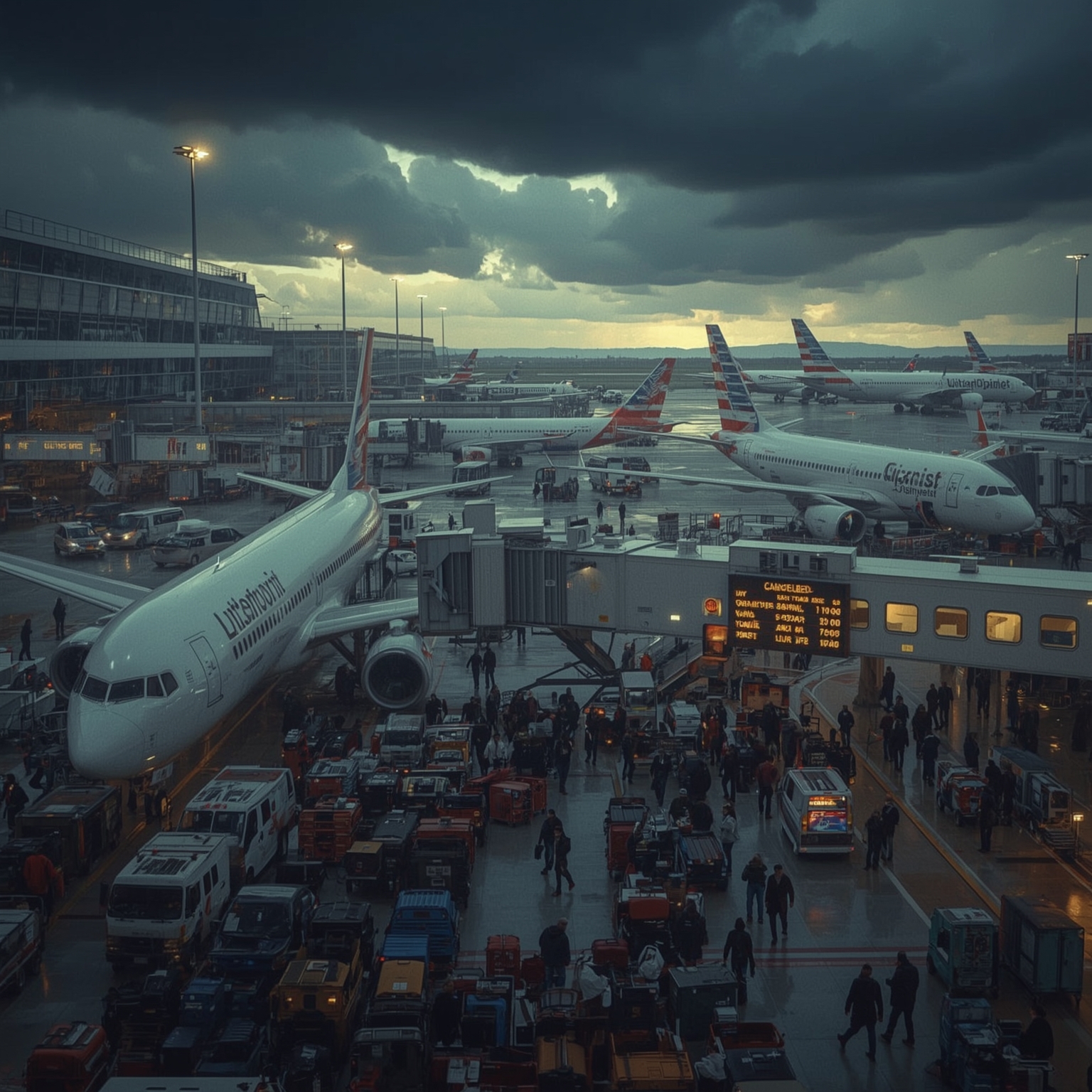
The ongoing government shutdown, now stretching well beyond its initial weeks, has begun to seriously disrupt travel plans for thousands of people across the nation. What might once have been considered a temporary political standoff has now translated into tangible consequences for citizens, particularly those relying on air travel for business, family commitments, or much-needed vacations. With federal operations partially suspended, the aviation system, one of the most intricate and interdependent infrastructures in the country, is beginning to show visible strain.
Among the hardest hit are the nation’s air traffic controllers, professionals whose role is indispensable to maintaining the safety and efficiency of air navigation. Since October 1, these individuals have continued performing their demanding duties without receiving pay. Over time, this financial uncertainty and emotional exhaustion have led to a noticeable rise in the number of controllers calling in sick, a silent but powerful indicator of how prolonged fiscal and operational instability can erode workforce morale. As the shutdown stretches into its second month, the cumulative effect of these absences has begun to ripple throughout the entire aviation system.
Confronted with a shrinking pool of qualified controllers available for active duty, the Federal Aviation Administration (FAA) has been forced to take significant and unprecedented measures. One such step is the imposition of a mandatory 10% reduction in flight operations at forty of the busiest airports across the United States — major hubs that handle an enormous share of the nation’s daily air traffic. This directive is not merely a bureaucratic adjustment but a calculated attempt to preserve overall safety and manageability amid a shortage of essential personnel. However, for the traveling public and the airlines that serve them, the results are immediate and disruptive: large-scale flight cancellations, rebookings, and growing frustration at the terminals.
The process of reducing flight capacity began modestly, with a 4% cut implemented on Friday as a preliminary attempt to stabilize operations. Authorities have outlined a schedule indicating that this reduction will escalate to a full 10% by November 14, a timeline that underscores the seriousness of the staffing predicament. Each incremental phase of this cutback represents hundreds of grounded flights and thousands of passengers forced to alter or abandon their plans.
As of 6 a.m. Eastern Time on Friday, approximately 750 flights had already been canceled, according to data compiled by Cirium, a respected aviation analytics firm that monitors real-time airline performance worldwide. These figures provide a quantitative glimpse into how deeply the shutdown’s logistical consequences have entrenched themselves within U.S. air transport. Notably, the FAA’s mandate presently affects only domestic routes, sparing international flights from direct intervention for now. Yet within the country’s borders, the impact is far from evenly distributed. Major airline hubs — the bustling crossroads of the American flight network — are bearing the most substantial burdens, as restrictions there reverberate outward through connecting flights, schedules, and passenger itineraries nationwide.
In essence, what began as a political impasse in Washington has evolved into a nationwide operational challenge, demonstrating the intricate interplay between federal governance and the everyday functioning of public infrastructure. Each delay, cancellation, and staffing shortage ultimately manifests the real-world cost of administrative paralysis, felt most acutely by those stranded travelers watching departure boards flash the word ‘canceled’ again and again across airports from coast to coast.
Sourse: https://www.businessinsider.com/cancelled-flights-faa-airlines-shutdown-live-updates-2025-11


