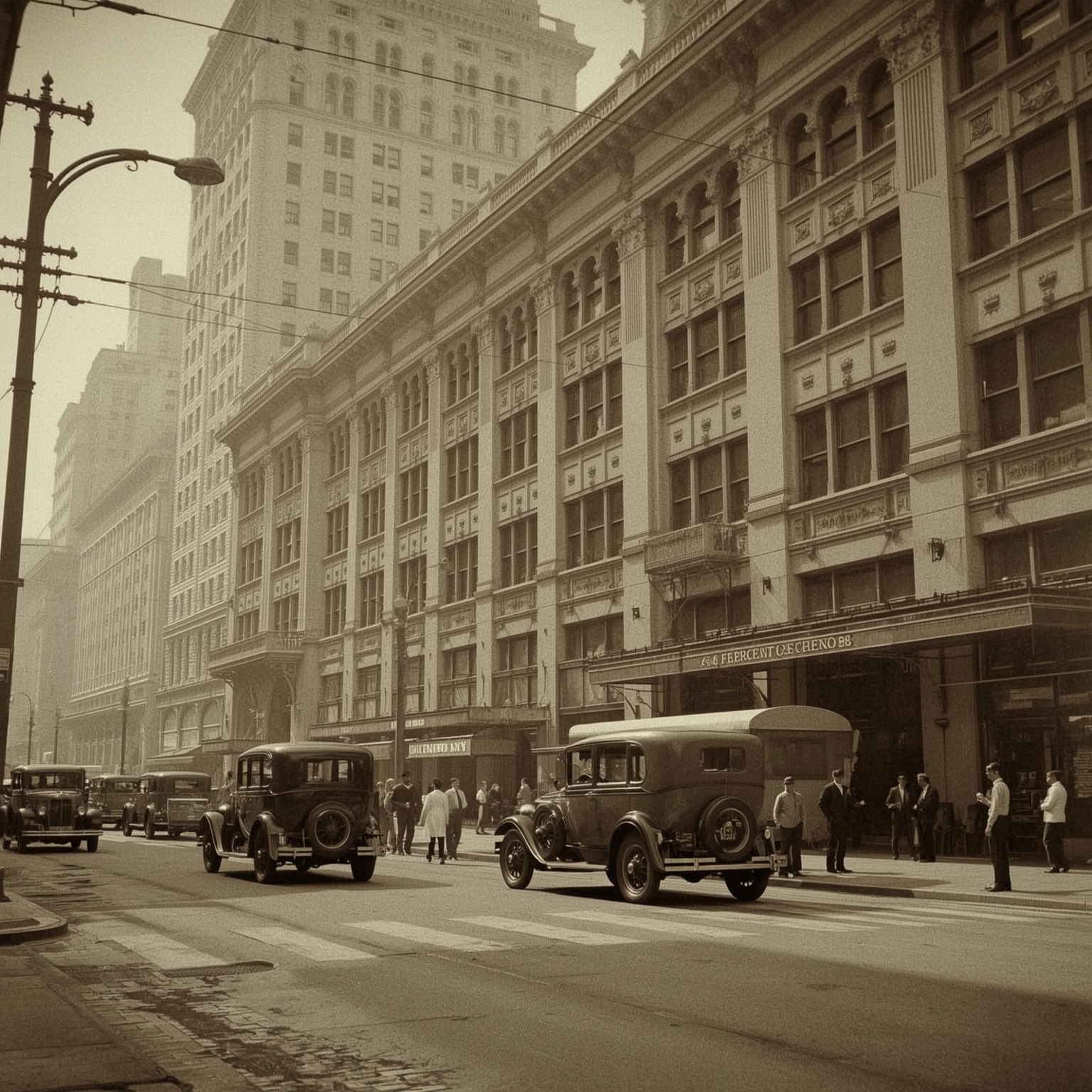
Life during the 1920s unfolded as an extraordinary fusion of transformation, recovery, and reinvention across cultural, political, and economic dimensions. The decade—often remembered as the Roaring Twenties—was marked by dazzling prosperity, new freedoms, and the collective yearning for modernity that followed the devastation of the First World War. From the syncopated rhythms of jazz that drifted out of smoky speakeasies to the daring silhouettes of flapper fashion that rejected the strictures of Victorian modesty, every detail of daily life seemed to pulse with vitality and innovation. This was a society eager to redefine itself, and in doing so, it laid the groundwork for many aspects of contemporary culture.
The Harlem Renaissance, for instance, represented far more than an artistic movement—it was an intellectual and cultural revolution led by Black Americans who transformed Harlem into a thriving epicenter of literature, art, and music. Through poetry, painting, and jazz, figures such as Langston Hughes and Zora Neale Hurston captured both the joy and pain of the African American experience, pushing their stories to the center of national consciousness for the first time. Meanwhile, in the gleaming towers of New York and the quiet parlors of Midwestern towns, Americans experienced a tension between exuberant optimism and unspoken inequality—between the glittering promise of progress and the social injustices that continued to scar the nation.
Amid this climate of change, architectural marvels and grand estates rose across the United States as symbols of wealth and ambition. One such example was the opulent Florida estate built for cereal heiress Marjorie Merriweather Post and financier Edward F. Hutton—a reflection of the extravagance that defined the upper echelons of 1920s society. Literature also mirrored these contrasts. F. Scott Fitzgerald’s classic novel, crafted in this same period, immortalized the decade’s intoxicating cocktail of glamour and disillusionment. His world of lavish parties and elusive dreams became an enduring metaphor for the age itself. Nearly a century later, that very estate, now known as Mar-a-Lago, would again summon the spirit of Fitzgerald’s fictional world when a modern president hosted a Gatsby-themed celebration, bridging the symbolism of opulence across generations.
Beneath the glitter of celebration, however, the 1920s were also an era of profound social struggle and contradiction. Women achieved a major victory with the ratification of the 19th Amendment in 1920, securing the legal right to vote—a turning point that promised equality but fell short of full inclusion. For millions of Black women, Indigenous women, and other women of color, racial and systemic barriers meant that this right remained largely theoretical for decades. Yet despite ongoing exclusion, the spirit of empowerment flourished. Women began rejecting the constraints of traditional femininity, cutting their hair into stylish bobs and embracing fashions that allowed freedom of movement, independence, and personal expression. Satin, fringe, and sequined fabrics ruled both runway and nightlife, while the sharp geometric elegance of Art Deco gave visual form to the age’s fascination with speed, machinery, and progress.
Economic growth spurred industrial modernization, transforming not just fashion but also transportation and architecture. The rise of the automobile redefined mobility, granting ordinary citizens an unprecedented independence. Ford’s Model T became emblematic of this shift—a machine that connected rural America to the expanding web of roadways that would soon bind the nation together. City skylines stretched upward as engineers and investors vied to construct the tallest buildings, leading to icons such as the Chrysler Building, whose glistening spire would later become a symbol of Art Deco sophistication and human ambition. Even daily commutes evolved, as subways, trains, and buses carried millions efficiently through expanding urban centers.
The period’s fascination with speed and novelty extended to leisure and entertainment. Jazz music—the decade’s defining soundtrack—thrived in clubs and ballrooms, bringing together people across diverse backgrounds through powerful improvisation and contagious rhythm. The Charleston became the dance of choice, symbolizing youthful exuberance and rebellion against conservative norms. Meanwhile, the film industry underwent its own revolution: transitioning from silent cinema to the era of “talkies,” with productions like *The Jazz Singer* in 1927 ushering in a new age of sound and spectacle. Vaudeville stages and circus tents dazzled crowds with acrobats, comedians, and animal acts, offering a brief escape from the societal tensions simmering beneath the surface.
Yet not all aspects of the Roaring Twenties were celebratory. The decade unfolded under the shadow of Prohibition, a sweeping ban on alcohol that inadvertently gave rise to organized crime and clandestine speakeasies. Racial segregation continued to fracture the nation, particularly in the southern states governed by the cruelty of Jim Crow laws. Immigrants from Asia faced exclusionary federal policies that curtailed their rights to citizenship, while Japanese “picture brides” navigated unfamiliar lands marked by exploitation and prejudice. Even as progress bloomed in art and industry, inequality persisted, reminding the world that innovation alone could not heal the moral divisions of a fast-modernizing society.
Education, science, and public discourse also took center stage in the decade’s transformations. The famous Scopes Trial of 1925 ignited national debate over evolution and religion, reflecting the growing friction between tradition and modernism. Similarly, advances in technology reshaped communication and domestic life: the first commercial radio broadcast revolutionized how Americans consumed news and entertainment, while telephones and early electrical appliances began to ease the burdens of everyday tasks. In classrooms, shifting pedagogical ideals introduced the concept of “progressive education,” emphasizing creativity, access to light, and outdoor learning environments over rigid instruction.
As much as the 1920s celebrated invention and liberation, they were equally rooted in human stories—photographs capturing seaside holidays, café gatherings, and bustling fairs convey moments of ordinary joy that remain timeless. People still danced, dreamed, and sought comfort in good company, reminding future generations that beneath every wave of innovation lies a universal longing for connection and meaning.
Viewed from the vantage point of 2025, the decade appears both distant and strikingly familiar. Its echoes resound in the cyclical nature of fashion, in the pursuit of technological wonder, and in ongoing struggles for equality and inclusion. The Roaring Twenties were a paradoxical moment—prosperous yet precarious, progressive yet imperfect—but their cultural resonance endures. A hundred years later, as we revisit its images and artifacts, we glimpse both how far society has advanced and how enduring the pleasures, ambitions, and challenges of human life remain.
Sourse: https://www.businessinsider.com/photos-of-1920s-100-years-ago-2020


