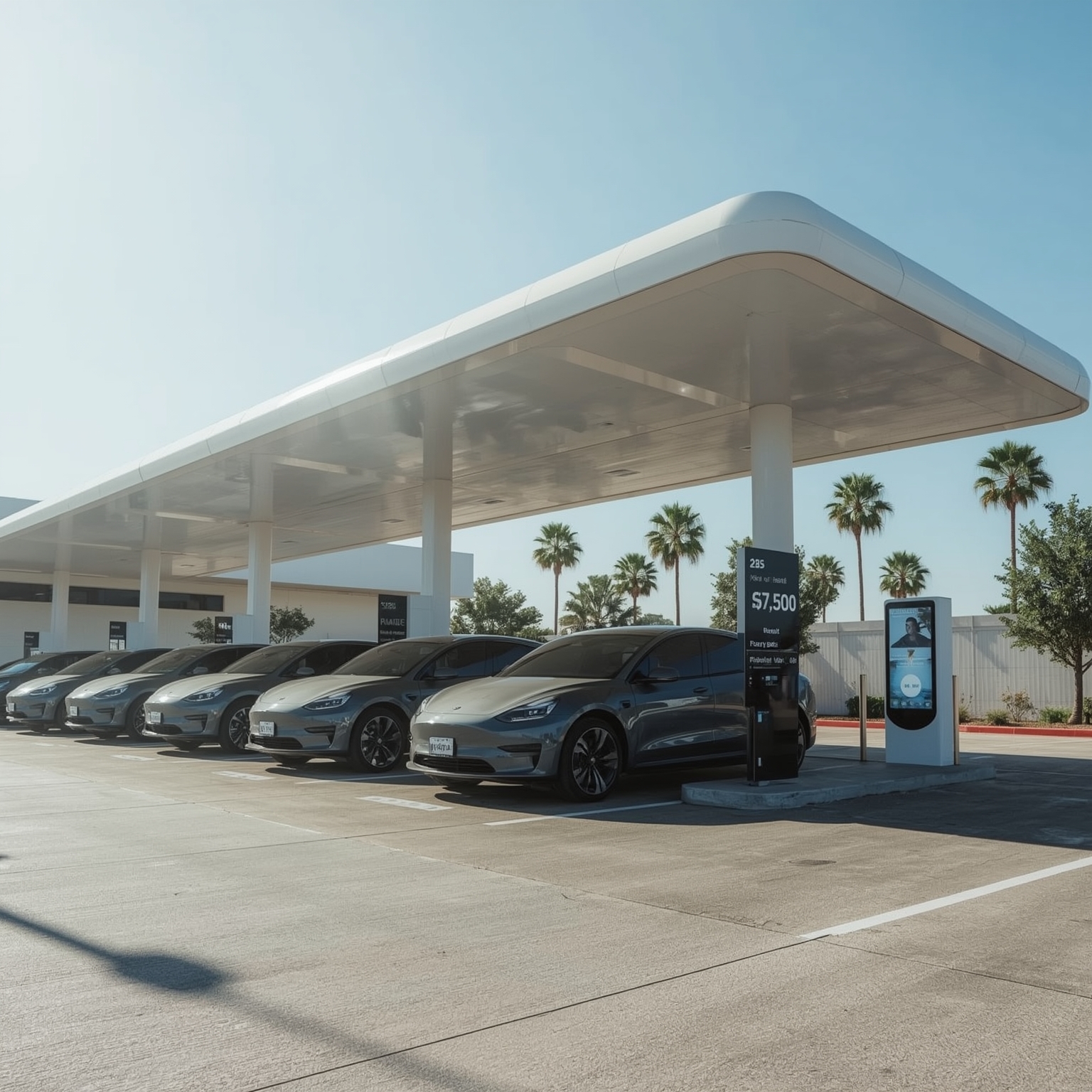
Tesla has recently ventured into the short-term vehicle rental industry, marking a significant strategic shift aimed at countering a slowdown in its U.S. sales. This deceleration in demand follows the expiration of federal tax incentives that had previously encouraged consumers to purchase electric vehicles. To navigate this changing market landscape, Tesla has introduced a rental program allowing customers to experience its vehicles without committing to ownership, thereby broadening access to its cutting-edge electric technology.
At present, this innovative service is available in two of Tesla’s retail stores located in California—specifically in San Diego and Costa Mesa. These locations serve as the pilot sites for an initiative that the company reportedly intends to expand to several additional destinations within the state before the end of the year, according to information from Electrek. Through this trial phase, Tesla appears to be gauging consumer response while optimizing operational logistics for broader adoption.
Under the program’s structure, consumers can rent Tesla vehicles for periods ranging from three to seven days. Pricing begins at approximately sixty dollars per day, with the precise rate dependent on the model selected—more advanced or high-performance variants command a higher fee. In an effort to further enhance the program’s appeal, Tesla provides several notable incentives designed to distinguish its offering from conventional rental services. Renters receive complimentary access to the company’s extensive network of Supercharger stations, ensuring convenient, rapid charging throughout their rental term. Moreover, Tesla includes limited use of its supervised Full Self-Driving functionality at no additional cost, giving users an opportunity to experience the brand’s most advanced driver-assistance technologies firsthand. To further entice potential buyers, those who rent and subsequently decide to purchase a Tesla vehicle are granted a $250 credit applied toward their acquisition.
Although external rental providers such as Hertz already include Tesla models in their fleets, this new initiative allows Tesla to bypass intermediaries entirely, giving interested customers the option to rent directly from the manufacturer. This direct relationship not only strengthens brand loyalty but also allows Tesla to showcase the performance, efficiency, and software capabilities of its vehicles to potential purchasers in an immersive way that typical dealerships or test drives might not achieve.
The company’s decision to introduce a first-party rental program arrives at a critical juncture for the American electric vehicle market. With the conclusion of the $7,500 federal tax credit on October first, consumer enthusiasm that previously fueled strong EV sales has begun to wane. Many potential buyers accelerated their purchases to take advantage of the incentive before its expiration, leading to a temporary surge followed by a subsequent dip in demand. Now, in the absence of that government-backed motivator, producers of exclusively electric automobiles—such as Tesla, Rivian, and Lucid—are exploring creative strategies to sustain sales momentum and prevent unsold inventory from accumulating in their showrooms. Tesla’s short-term rental scheme therefore represents not merely a business experiment but also an adaptive response to broader industry and regulatory developments that continue to shape the future of electric mobility in the United States.
Sourse: https://www.theverge.com/news/817477/tesla-direct-short-term-ev-rentals-tax-credit


