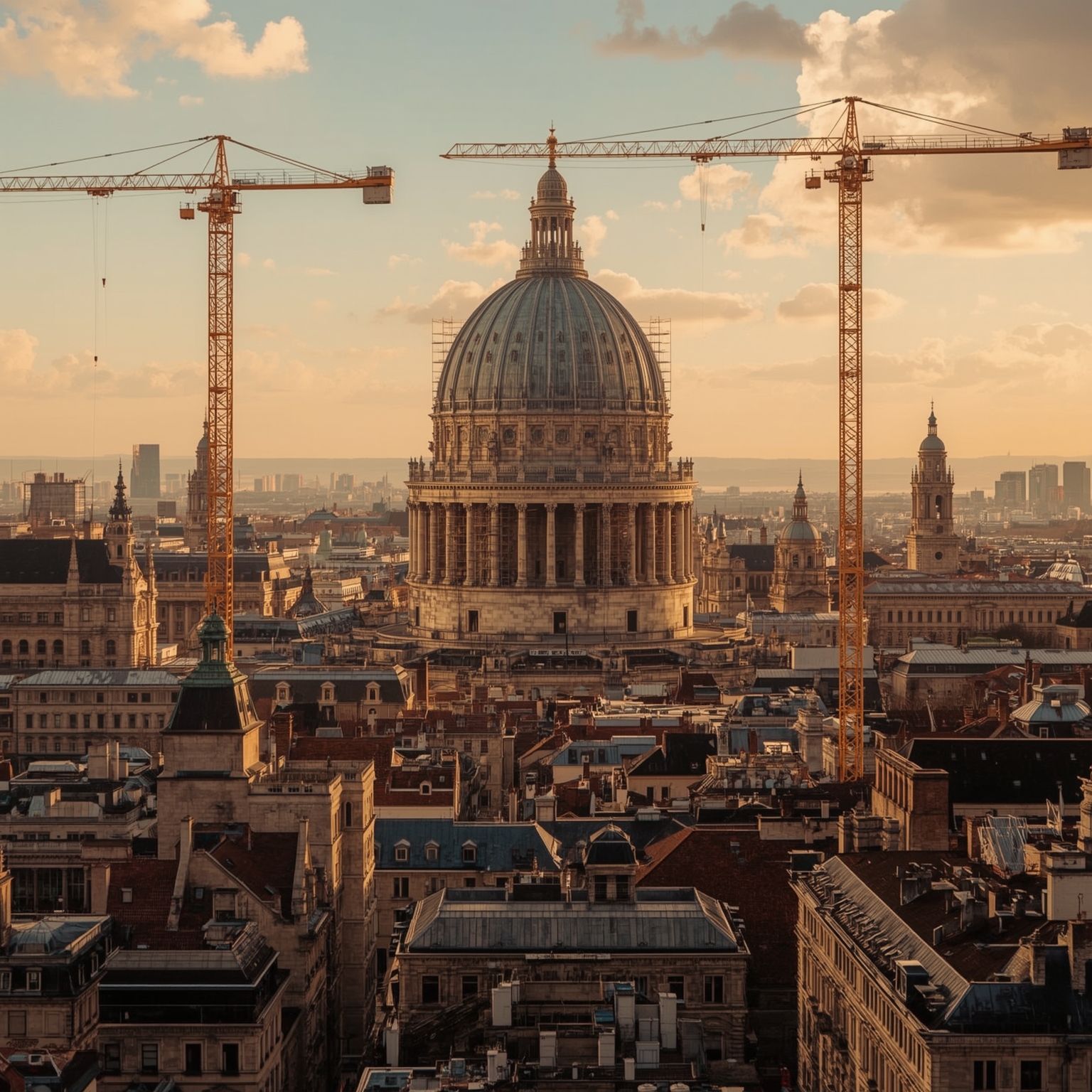
Throughout human history, the construction of recognizable landmarks such as the Statue of Liberty, the Eiffel Tower, or the Sydney Opera House has not only represented remarkable architectural achievement but has also served as a testament to vision, perseverance, and engineering genius. These structures—so familiar now that they define their cities’ skylines—once began as mere sketches, ideas, and heaps of metal or stone. Each monument tells a profound story of ambition and creativity, illustrating how artistry and science often merge to reshape the human environment.
Take, for instance, the creation of the Sydney Opera House, one of the defining icons of twentieth-century architecture. Its inception was the result of an international design competition that drew hundreds of submissions from across the world. The winning proposal by Danish architect Jørn Utzon presented an extraordinary vision: a building whose soaring “shells,” composed of reinforced concrete, would mimic the sails of ships floating gracefully across Sydney Harbour. Realizing this vision required unprecedented innovation. Engineers had to custom-design cranes capable of maneuvering the million gleaming ceramic tiles that still cover the structure today. Over the course of fourteen grueling years—and at the cost of more than one hundred million Australian dollars—the Opera House finally opened its doors in 1973, just in time for a royal inauguration by Queen Elizabeth II. Even before its completion, however, the building’s unfinished scaffolding resonated with cultural symbolism. In 1960, the great African American singer and activist Paul Robeson ascended its skeletal platforms to perform “Ol’ Man River” for construction workers—a poignant moment linking work, art, and human resilience. Today, the Opera House draws over ten million visitors annually, a UNESCO-recognized masterpiece whose stages host performances from opera to symphonies, embodying Australia’s modern cultural identity.
Similarly, the Eiffel Tower’s construction represented both visionary artistry and engineering innovation. Erected in Paris between 1887 and 1889 as the centerpiece of the World’s Fair celebrating the French Revolution’s centennial, Gustave Eiffel’s team—led by senior engineers Maurice Koechlin and Émile Nouguier—assembled more than eighteen thousand iron components into the elegant lattice framework that still soars above the Champ de Mars. Originally intended as a temporary exhibit, the tower faced considerable opposition from critics who deemed it an eyesore. Yet, when city officials realized its potential as a communications hub, its demolition was cancelled in 1909. In the decades that followed, “La Tour Eiffel” evolved from industrial curiosity to cultural icon, standing an imposing 1,063 feet high and eventually serving as the model of structural daring for generations of architects. Today, though dwarfed in height by Dubai’s Burj Khalifa, the Eiffel Tower remains a globally unparalleled symbol of modern France.
In contrast to the Tower’s iron filigree, Dubai’s Burj Khalifa stretches upward in a gleaming spiral of glass and steel. Completed in 2009 after just five years of construction, the structure rises an astonishing 2,716.5 feet—almost three times the height of the Eiffel Tower. It broke multiple world records, including those for the tallest building, tallest free-standing structure, highest restaurant, and longest-traveling elevator. Its completion marked not only a milestone in architectural ambition but also the transformation of Dubai into a nexus of technological and cultural aspiration, showcasing how modern cities continue the legacy of monumental design.
Long before these modern wonders, the Statue of Liberty was conceived as an emblem of the enduring relationship between France and the United States. Designed by Frédéric Auguste Bartholdi and engineered by Gustave Eiffel, the statue required both artistic genius and practical ingenuity. Its iron skeleton supported vast copper plates carefully constructed in Paris, then disassembled, packed into crates, and shipped across the Atlantic to New York. When reassembled atop its pedestal on Liberty Island in 1886, “Lady Liberty” towered over the harbor—305 feet from the ground to the flame of her torch. Bartholdi’s inspiration for her face came from his mother, an intimate gesture that gave the symbolic monument a familial humanity. A century later, in 1986, the statue underwent extensive restoration, including the installation of a torch gilded with sheets of 24-karat gold. To countless visitors, the Statue of Liberty remains one of the most potent emblems of freedom, democracy, and hope.
Across the Pacific, San Francisco’s Golden Gate Bridge exemplifies both perseverance and elegance in civil engineering. Originally dismissed as an impossibility due to treacherous tides and frequent fog, the project began in earnest in 1933 after detailed persuasion by engineers such as James H. Wilkins and Michael O’Shaughnessy. Four years later, the bridge linked northern California with the San Francisco Peninsula across an 8,981-foot span of steel, painted in its distinct shade of “International Orange.” The color, inspired by the red primer used to protect the steel, enhances the bridge’s visibility against fog and ocean backdrops. Upon its completion in 1937, it was the world’s longest suspension bridge and an instant masterpiece of function and form—a symbol of both America’s Great Depression resilience and the human capacity to bridge literal and figurative divides.
In London, the majestic Tower Bridge similarly transformed its city’s landscape when it opened in 1894 after eight years of construction involving over four hundred workers and thirty-one million bricks. Combining a bascule mechanism with Gothic revival design, the bridge quickly became an architectural marvel. For decades, however, its upper walkways remained unused and even notorious for unsavory activity before being reopened in 1982 as part of a historical exhibition. Now, the bridge sustains daily use by tens of thousands of pedestrians and vehicles, a vital artery between London’s historic and modern districts.
Few projects, however, rival Antoni Gaudí’s Basílica de la Sagrada Família in Barcelona for both scale and spiritual devotion. Begun in 1882, the cathedral grew under Gaudí’s deep synthesis of Gothic complexity and organic, nature-inspired geometry. When Gaudí died in 1926, only a quarter of the basilica was finished. Despite wars, funding shortages, and continually evolving design interpretations, construction endures to this day, with plans to reach completion in 2026—one hundred years after the architect’s death. The structure’s intricate façades, elaborate towers, and luminous stained glass form a living testament to timeless artistic pursuit, where every carving and curve manifests Gaudí’s desire to blend faith, light, and natural order.
Other monuments around the world tell analogous tales of aspiration. Mumbai’s Gateway of India, designed by Scottish architect George Wittet, was erected in 1924 to honor the 1911 visit of King George V and Queen Mary. Its Indo-Saracenic style, merging Islamic and Hindu design elements, stands majestically above the harbor, an enduring symbol of colonial history and, later, independent India’s cosmopolitan identity. Likewise, Buenos Aires’s Obelisco, completed in 1936 for the city’s four-hundredth anniversary, rose amid controversy to become Argentina’s foremost gathering place—a white stone landmark around which the nation celebrates soccer victories and national festivals.
On the American frontier, monumental ambition took on literal form in the carving of Mount Rushmore. Proposed by historian Doane Robinson and sculpted by Gutzon Borglum, the colossal mountain relief paid tribute to four U.S. presidents—Washington, Jefferson, Roosevelt, and Lincoln—each representing a central facet of American democracy. Constructed on land sacred to the Lakota Sioux and completed in 1941 after fourteen years, the monument remains both revered and contested, embodying America’s complex relationship with its own history.
New York’s Empire State Building, another twentieth-century engineering miracle, sprang up in record time. Built upon the former site of the Waldorf Astoria Hotel, it rose more than one hundred stories into the sky within just thirteen months, symbolizing the urgency and optimism of early modern America. When President Herbert Hoover inaugurated it remotely from Washington, D.C., in 1931, the skyscraper immediately became an emblem of urban ambition. Its observation decks—allowing panoramas of up to eighty miles—remain among the most visited spots in the world.
In the arid Southwest, the Hoover Dam emerged as a monument to industrial might and social necessity. Conceived during the Great Depression to tame the Colorado River’s floods and provide hydroelectric power, it required the labor of more than twenty thousand workers under punishing desert conditions. Completed in 1936 and later named after President Herbert Hoover, the dam generated the reservoir Lake Mead—the largest artificial lake in the United States. It continues to supply power, irrigation, and water to millions across California, Nevada, and Arizona, epitomizing the scale of infrastructural ambition that characterized twentieth-century progress.
And in Los Angeles, what began as a temporary advertising stunt became one of the most recognized symbols of popular culture: the Hollywood Sign. Erected in 1923 to promote a real estate development called “Hollywoodland,” the massive white letters quickly outlasted their original marketing purpose. Over the decades, the sign deteriorated, only to be restored thanks to celebrity-led fundraising and public affection. Now officially protected as a city landmark, the sign turns one century old as a glowing tribute to the entertainment industry’s dreamlike allure.
From Paris to Dubai, from San Francisco to Mumbai, these monuments embody humanity’s ceaseless desire to turn imagination into reality. They commemorate moments of political hope, artistic daring, or technological triumph, standing as timeless reminders that greatness—whether expressed in stone, steel, or light—emerges from the bold determination to create what once seemed impossible.
Sourse: https://www.businessinsider.com/famous-landmarks-under-construction-photos


