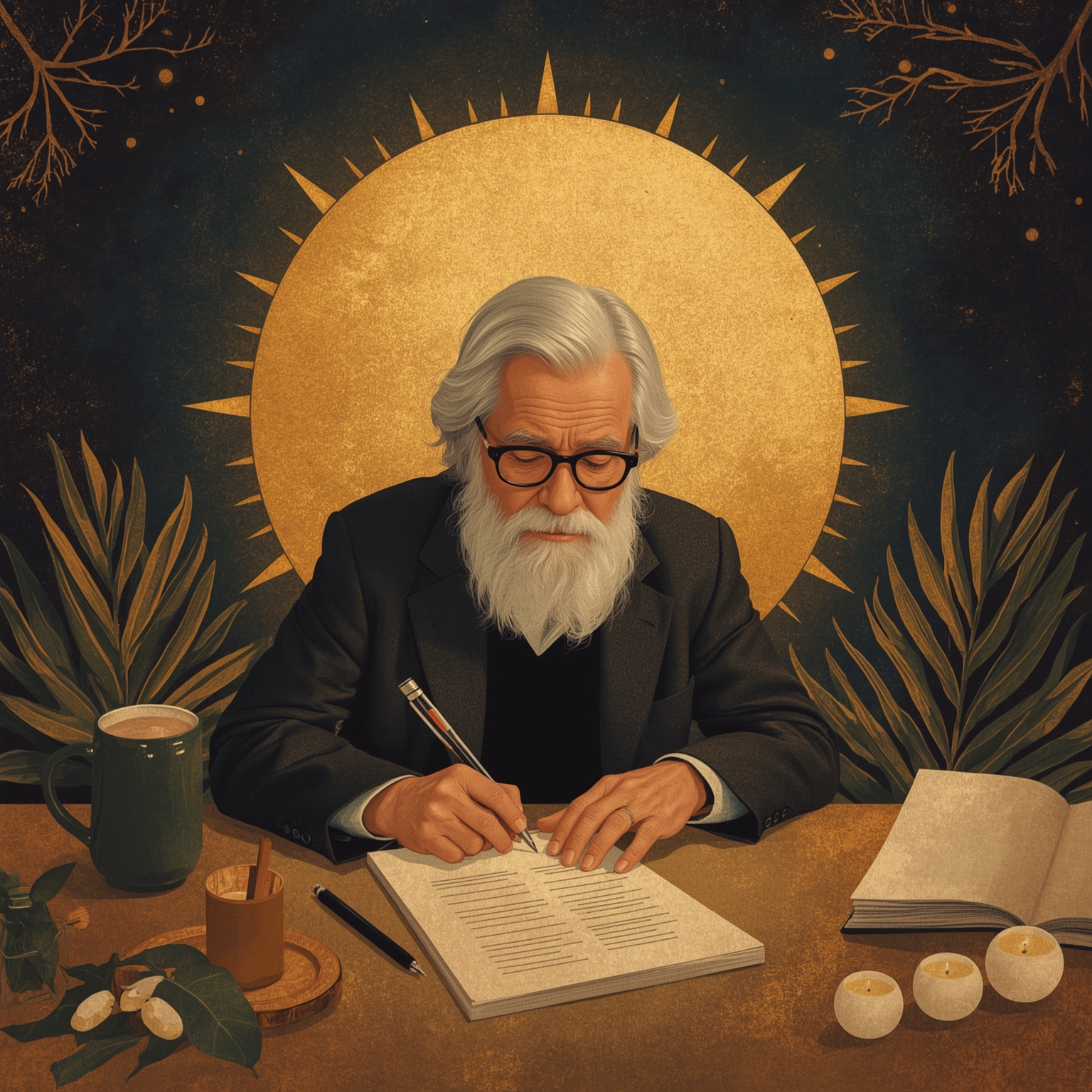
On Monday, Warren Buffett published what will be remembered as his final letter to Berkshire Hathaway’s shareholders in his capacity as chief executive officer, marking the close of one of the most remarkable chapters in American business history. Now preparing to relinquish his CEO title before the coming new year, Buffett’s words resonated deeply with his vast global following. The reactions that poured in from admirers, investors, and fellow business leaders were tinged with a mixture of nostalgia, sorrow, and immense appreciation for a man whose wisdom and humility have long transcended the realm of finance.
At 95 years old, Buffett stands as a living legend of commerce, an individual who has, over more than six decades, reshaped an ailing textile manufacturer into a formidable conglomerate valued at approximately one trillion dollars. Through an extraordinary combination of strategic foresight, patience, and principle-based investing, he transformed Berkshire Hathaway by purchasing a wide range of businesses—from the insurance powerhouse Geico to the beloved fast-food chain Dairy Queen—and by building enduring stakes in some of the world’s most respected corporations, such as Coca-Cola and American Express. His career has exemplified the power of compound decision-making and steadfast conviction, illustrating how vision and integrity can convert even modest beginnings into an empire that endures.
In his concluding shareholder letter, Buffett announced that while he will be stepping down as CEO, he intends to continue a long-standing tradition: drafting a Thanksgiving letter as chairman of the board. This ongoing correspondence will allow him to reflect on both his personal journey and the larger lessons his life’s work has imparted. Within the same message, he expressed deep gratitude toward the individuals, circumstances, and moments of serendipity that he credits for enabling his unprecedented success. He was candid about having enjoyed advantages that not all share, emphasizing that his achievements were not born solely of intellect or effort but were intertwined with fortuitous timing and the kindness of others.
Characteristically modest, Buffett reiterated his conviction that virtues such as kindness, humility, and empathy far outweigh financial gain, social clout, or fleeting fame in defining a life well lived. He assured Berkshire’s shareholders that his chosen successor, Greg Abel, is deeply competent, principled, and fully prepared to guide the enterprise’s next era. Buffett himself remains optimistic about the company’s trajectory and reiterated his belief in Berkshire’s enduring culture of rationality, ethics, and independence. While he prepares to hasten the transfer of his roughly $150 billion fortune into his family’s philanthropic foundations, his optimism for the business’s future remains unwavering.
Following the letter’s publication, nine of Buffett’s most devoted followers and longtime observers shared with Business Insider their heartfelt reactions and thoughtful analyses. Their comments, distilled for brevity and clarity, capture the essence of what Buffett’s farewell represents.
1. **David Kass**, finance professor at the University of Maryland and veteran Buffett commentator, described the letter as Buffett’s “valedictory address.” He noted that Buffett, with remarkable humility, attributed his lifetime achievements to what he called ‘being very lucky’—fortunate to have been born in the United States, to have enjoyed long health, and to have been surrounded by supportive and inspiring friends from Omaha to the wider world. In Kass’s view, Buffett’s message was less a celebration of personal triumph than a recognition of circumstance, gratitude, and deep human connection.
2. **Lawrence Cunningham**, scholar, author, and director of the University of Delaware’s Weinberg Center, observed that this was “Buffett’s farewell to the microphone, not to the mission.” In other words, while the letter may close a public chapter, it leaves untouched the enduring philosophy that shaped Berkshire’s culture. Cunningham described the letter as a love note—to Omaha, to America, and to the underlying values of integrity and prudence that transformed a modest company into a global exemplar. In his interpretation, Buffett’s Thanksgiving prose reminded readers that life’s worth lies not in the accumulation of wealth, but in the cultivation of wisdom—that luck’s distribution is uneven, humility is indispensable, and gentleness enriches compound returns not merely in finance, but in life itself.
3. **Chris Bloomstran**, president of Semper Augustus Investments and a Berkshire shareholder for a quarter century, praised the letter as both “phenomenal” and deeply reflective. He expressed hope that this communication would become the first in a continuing series of Thanksgiving missives. To Bloomstran, Buffett’s tone was meditative and grateful, focusing on philanthropy and kindness. More importantly, the message reaffirmed Buffett’s confidence that Greg Abel is the perfect steward for the firm’s future. He took comfort in Buffett’s reassurance that Berkshire remains not only in capable hands, but poised for continued greatness in the decades ahead, sustained by its distinctive ethical and entrepreneurial culture.
4. **John Longo**, finance professor, chief investment officer, and author of *Buffett’s Tips: A Guide to Financial Literacy and Life*, interpreted Buffett’s departure from frequent public commentary as a deliberate gesture of empowerment. By choosing to “go quiet,” Buffett is granting Abel and the broader management team space to shape Berkshire’s evolving identity without the constant comparisons to their legendary predecessor. Nonetheless, Longo noted that Buffett’s influence will remain accessible—his wisdom a guiding presence for those prudent enough to seek his counsel. In his view, the greatest gift Buffett offers is not instruction from above but the freedom for the next generation to lead.
5. **Paul Lountzis**, president of Lountzis Asset Management, found personal resonance in Buffett’s reflections on Omaha and the people who filled his life with meaning. He remarked on the poignancy of Buffett’s happiness deriving not merely from investment triumphs, but from relationships forged over decades. Lountzis described Buffett as an “investing genius,” yet emphasized that his genius resides as much in his humanity as in his intellect. Having followed Buffett’s journey for over half a century—since his own youth at age thirteen—Lountzis confessed that seeing him leave the helm feels like losing a mentor who has subtly guided his entire professional life.
6. **Adam Schwartz**, principal investor at Black Bear Value Partners, voiced a simpler but heartfelt reaction: he will miss not only Buffett’s letters but also his public appearances, speeches, and interviews, which he described as national treasures. To Schwartz, Buffett’s blend of humor, candor, and timeless insight elevated financial commentary into moral and civic reflection.
7. **Brian Gongol**, devoted shareholder and long-time admirer, perceived in Buffett’s letter a pledge to continue contributing without encroaching upon his successor’s authority. The letter, Gongol observed, revealed Buffett’s extraordinary sense of custodial responsibility—his recognition that leadership includes knowing when to step aside. Buffett’s expressed trust in Greg Abel and his determination not to “rule from the grave” mirrored his philosophy of stewardship. Moreover, Gongol highlighted Buffett’s insistence that Berkshire must always remain “an asset to the United States,” reflecting a patriot’s belief that capitalism and conscience can coexist. He admired Buffett’s conviction that business conducted the right way—ethically, thoughtfully, and for the public good—possesses intrinsic worth beyond monetary return.
8. **Alex Morris**, author of *Buffett and Munger Unscripted* and founder of TSOH Investment Research, illuminated another dimension of Buffett’s message. As Morris explained, Buffett’s accelerated pace of charitable giving demonstrates his resolve to act while time remains—he wishes for his children to distribute his philanthropic resources effectively and meaningfully during their own lifetimes, not postpone generosity to some distant horizon. At the same moment, Berkshire retains a structural safeguard: its supervoting Class A shares, which protect the company from short-term activism or external manipulation. Thus, Buffett’s final act is one of balance—advancing his giving while preserving the integrity of the enterprise he built.
9. **Adam Mead**, investor and author of *The Complete Financial History of Berkshire Hathaway*, closed the list of reflections with sober realism. Citing data from the Social Security Administration, he estimated that, statistically, Buffett might have roughly 2.8 years of life expectancy remaining—a reminder that even legends are bound by time. Yet Mead ventured that there remains a fair chance Buffett could surprise shareholders with another Thanksgiving letter, as he himself acknowledged how swiftly age overtakes everyone. Whether or not that happens, Mead concluded, this latest correspondence serves perfectly well as a farewell—a concluding chapter written with the grace and gratitude of a man who knows the power of a legacy earned.
In sum, Warren Buffett’s final letter as Berkshire Hathaway’s CEO functions as far more than a corporate communiqué. It stands as a meditation on luck, purpose, stewardship, and the human spirit. It celebrates a culture sustained by rational optimism and guided by the conviction that integrity and kindness are not peripheral to success but foundational to it. For those who have followed him, it represents not an ending, but the dignified continuation of a moral and financial philosophy that will, like compound interest, keep enriching lives long after its author has set down his pen.
Sourse: https://www.businessinsider.com/warren-buffett-thanksgiving-letter-berkshire-stock-abel-succession-retirement-2025-11


