It was a little more than eleven years ago when my husband and I settled into our new home, a modest terraced house standing shoulder to shoulder with another built in the early years of the twentieth century. The narrow alleyway that separated our two dwellings seemed almost symbolic—an intimate divide that demanded not distance, but connection. Living in such close proximity, we felt an immediate understanding that friendship, or at least good neighborly rapport, would be essential to ensuring peace and warmth in our small corner of the street. Our new neighbors, a married couple both aged seventy-nine at the time, greeted us with the kind of gentle curiosity reserved for people who have seen many generations come and go. We, in turn, took care to extend friendship first, for we knew that what began with goodwill could grow into something enduring.
We brought with us our one-year-old son, shy and bright-eyed, to knock on their door with a plate of still-warm cookies—our simple offering of introduction and goodwill. Each time we encountered them outside, whether hanging laundry or tending to their small garden, we paused to chat rather than simply wave and walk past. The woman, with a literary gleam in her eyes, eagerly revealed that she had spent her career teaching English. She spoke with enthusiasm about the newest novel that had captured her imagination, often recommending authors with a precision and passion that could only come from someone who had devoted her life to words. Her husband, less talkative but equally kind, shared my own fondness for swimming. The shared rhythm of that pastime gave us easy conversation—discussions of technique, stroke, and endurance became a language through which quiet connection grew. Within months, what had started as polite neighborliness had evolved into an unexpectedly sincere friendship. We felt deeply fortunate: our closest neighbors were genuinely good people we liked, respected, and soon came to trust.
Life introduced our two cats, Bonnie and Will, into the mix—a mischievous pair we adored but who consistently challenged our patience by refusing the litter tray no matter how insistently we tried to train them. Eventually, practicality won, and we allowed them the freedom to become outdoor cats. During the day, they roamed freely through the trees behind our house, returning only at night to curl up indoors. It turned out that our neighbors, lifelong cat lovers, had refrained from adopting another feline companion purely out of the tender but sobering fear that they might not live long enough to care for it until the end. The moment they met Bonnie and Will, their restraint melted away. They began inviting the cats into their home during the day, treating them to scraps of chicken and bits of salmon with the affection of devoted caretakers. Naturally, the cats decided that next door offered superior hospitality and began dividing their affection between the two households. We did not mind at all; in truth, we found comfort in the thought that our pets brought them companionship. They had no children or extended family to fill their days, and the small joy of feeding Bonnie and Will seemed to light their afternoons.
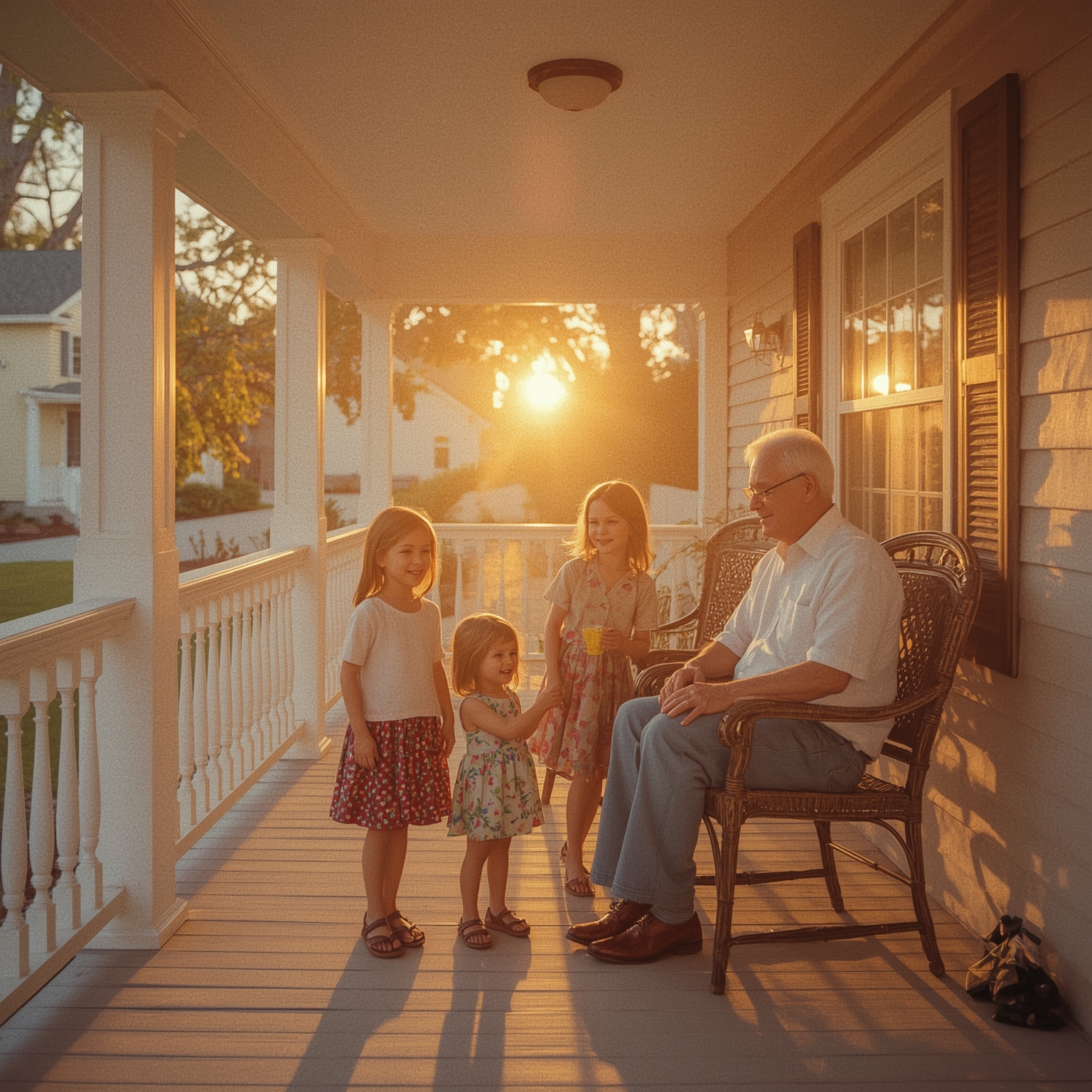
As time moved on, our family expanded. Two more children joined our household, and with each new arrival, our bond with our elderly neighbors deepened further. They began to refer to us, tenderly and without pretense, as the children and grandchildren they had never had. The sentiment was profoundly moving. My husband’s grandparents had long since passed away, and my sole surviving grandmother lived an ocean away. The presence of this couple next door offered us a glimpse of what it might have felt like to still have grandparents nearby—a connection rich with wisdom, warmth, and steady affection. They showered us with kindness in small, consistent gestures: gifts on birthdays and Christmas, boxes of chocolates on Easter, heart-shaped sweets on Valentine’s Day. They delighted in keeping the old traditions alive, even creating new ones shared solely between our two families. When my boys were old enough, they would eagerly ask permission to visit next door after school, where they’d watch cartoons while nibbling on sweets plucked from the neighbor’s perpetually overflowing jar. Each visit was something they anticipated with bright eagerness.
Holidays were especially dear. At Christmas, he would invite us to join them for mince pies and a glass of red wine, following a distinctly British custom that he upheld with quiet pride. On Halloween, they would keep their lights dim to ward off the neighborhood trick-or-treaters, but without fail they would phone us, asking if our boys might stop by for a special visit—and presenting them with full-sized bags of chewy candy reserved just for them. Though they required nothing in return, we made every effort to offer what help we could in appreciation. We brought them groceries when they forgot an item, ran small errands, and handled the occasional home repair task now beyond their strength. When online shopping became complicated for them, we placed their orders ourselves. Yet, what they treasured above all was not the practical assistance, but the time we spent simply sitting beside them—talking, listening, and filling the long, quiet hours of their days with conversation and companionship.
Eventually, however, the passage of years began to reveal its weight. Their health declined gradually at first, then rapidly. Each new sign of frailty left me questioning what more I could do—how often to check in, when to insist on helping, and where compassion ended and intrusion began. When she passed away, I felt an ache that was heavier than I had expected. Her husband, left alone in the house that once echoed with two voices, became quieter, smaller somehow. I began to visit more frequently, worrying about his meals, his solitude, his melancholy. The last time I saw him, I remember leaving their home with a conflicted sense of peace, thinking to myself, “I did what I could do today,” without realizing that those words would mark my final farewell.
Their passing left a tangle of emotions—gratitude intertwined with guilt. Gratitude, because for eleven years, we were blessed to share life with two extraordinary people whose kindness enriched our days in ways that remain immeasurable. They loved our children, teaching them through example what respect and affection toward older generations truly mean. But guilt shadowed the gratitude, whispering doubts that I had not done enough, that somehow my care fell short of all they gave us. And yet, even through that lingering sense of incompleteness, I know that what we shared was real: two households linked not by family blood, but by the deeper, quieter truth of chosen kinship and love.
Sourse: https://www.businessinsider.com/how-our-elderly-neighbors-became-family-over-decade-2025-11


