As parents, we have never harbored resentment or hostility toward the public school system; we simply realized, after years of chaotic early mornings and late-night homework marathons, that the structure and pace of traditional schooling were no longer serving our family’s needs. Our days felt like a blur of obligations—from the crack of dawn to the moment our heads finally hit the pillow. Most mornings began at 5:30 a.m., a time that demanded waking our four children—then aged six, nine, eleven, and fourteen—well before the sun had even begun to rise. The process of getting everyone dressed, fed, and out the door was so mechanical and repetitive that we began to feel like automatons programmed to move through a relentless routine rather than a family enjoying life together.
Those early drives to school were often conducted in heavy silence, our children still half-asleep as we navigated the unforgiving tides of rush-hour traffic. By the time we reached the school gates, the scene had grown rushed and stressful—backpacks were thrust haphazardly into small hands, doors slammed, and we sped off, both relieved and pained. What cut deepest was the logistics of having to ferry our children to two entirely separate schools, a predicament that frequently led to tardiness despite our best efforts. Each delay felt like a personal defeat, a tangible reminder that the system dictating our daily rhythm was simply unsustainable.
In an effort to alleviate this constant strain, we explored before- and after-care programs, hoping they might introduce a measure of relief. Yet when we calculated the nearly $200 monthly fee for just three of our school-aged children, we were struck by how quickly these costs mounted. The financial burden compounded the emotional exhaustion, convincing us that such a lifestyle was, in the long run, untenable.
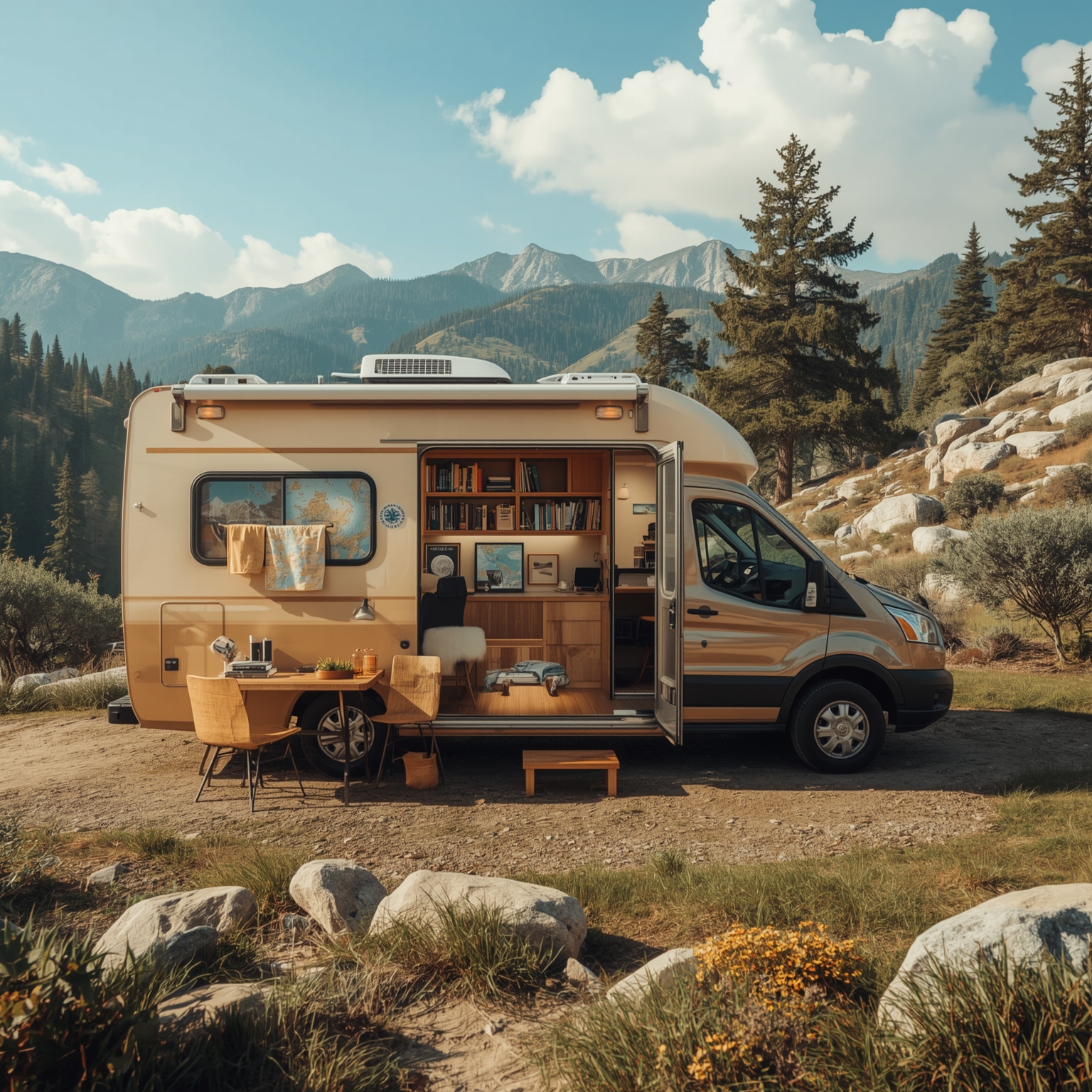
Everything began to change when, at the start of the 2022–2023 academic year, my wife, Lola—a dedicated educator herself—came to me with an audacious idea. She expressed her readiness to resign from her teaching position and take on the full responsibility of educating our own children. Her vision extended beyond homeschooling within the confines of our house; she dreamed of purchasing a recreational vehicle so that our learning could take place not just from textbooks, but from the world itself. I asked the most practical of questions: how would we sustain ourselves financially? At that point, we had no roadmap—only conviction and curiosity.
Our answer arrived serendipitously during a road trip to Key West, Florida. There we encountered the concept of work camping—an ingenious arrangement in which individuals exchange labor for both wages and an RV campsite. It was a revelation. This concept allowed us to merge our need for income with our desire for movement and exploration. The prospect energized me, and even though our children were initially hesitant, fearing the loss of their school friends, the transition gradually nurtured new forms of connection. They remained in touch with old friends for a time but soon expanded their social circles to include peers they met along the road. After journeying through thirty-one states, our children have cultivated friendships that stretch from coast to coast, and even across oceans, with new companions in countries such as Germany and the United Kingdom.
When we reflect on why homeschooling now feels indispensable to our lives, the answer is clear: it grants us the flexibility to tailor our children’s education around who they uniquely are, rather than who a standardized schedule expects them to be. Initially, not everyone around us understood our decision. Some family members openly questioned our choice, voicing concerns that we might be limiting our children’s opportunities. Yet in our hearts, we were certain of our path. We had observed our kids up close, seen their struggles and their triumphs, and understood their needs in ways no external system ever could. Interestingly, when we meet other families on our travels and mention that we homeschool, their reactions are often ones of curiosity and even admiration—many confess that they too have contemplated a similar leap toward educational freedom.
We would never claim to possess all the answers about homeschooling, but we can assert with confidence that this path has cultivated extraordinary growth within our children—developmental, intellectual, and emotional progress that might have been impossible had we remained bound to rigid timetables and standardized assessments. Consider our youngest daughter, for instance. Diagnosed with ADHD at an early age, she struggled within the traditional classroom structure, where sitting still and concentrating on abstract tasks for long stretches was expected of all students. Teachers often mistook her restless behavior for disobedience, not recognizing that she simply needed a more dynamic way to learn. Homeschooling has given us the space to adjust her environment and methods: she can learn while standing, walking, or exploring a new park. The change has been transformational. She engages with lessons more deeply now because the learning environment adapts to her, not the other way around.
For us as parents, the most valuable lesson has been that education comes alive when it is personalized. Our goal is no longer confined to chasing letter grades or test scores but instead centered on nurturing curiosity, creativity, and a lifelong love of discovery. Each child has specific interests and natural aptitudes, and homeschooling provides the luxury of time and attention to cultivate those gifts. Instead of measuring success by a standardized metric, we measure it through growth, engagement, and genuine joy in learning.
When we first began our homeschooling journey, we were determined that it would not simply mimic traditional school in a different setting—it would be experiential, immersive, and alive. The excitement was palpable when we received an email from the Duval County Public School System officially confirming our registration under Florida’s home education statutes. The process of compliance and oversight proved far more convenient than we had anticipated, and the freedom it afforded encouraged us to explore ever more deeply. Even now, three years later, we periodically ask our children if they wish to return to public school, always leaving the decision open. So far, every one of them has responded with a resounding no.
Our travels have become an integral part of our educational curriculum. Each new destination transforms into a living classroom: the museums, monuments, and landmarks we encounter along the way serve as gateways to subjects that appear in textbooks only as static paragraphs. In Washington, D.C., for example, we spent an entire day at the National Air and Space Museum, where our children learned about the evolution of flight and space exploration by standing beneath real aircraft and spacecraft. In Bar Harbor, Maine, we joined a guided nature cruise that immersed them in marine biology, observing harbor seals sunning themselves on coastal rocks and watching Atlantic puffins dive for their prey. Every journey deepens their understanding of science, history, geography, and culture in ways the four walls of a classroom never could.
Of course, homeschooling is not without its challenges. The most persistent one so far is convincing our children that, even without a school bell dictating their start time, sleeping past nine o’clock every morning simply isn’t sustainable. Yet beyond this minor hurdle, we have encountered few difficulties. What matters most is that we no longer feel as though we are missing the fleeting, irreplaceable moments of our children’s childhoods—the laughter over breakfast, the discoveries made on a forest trail, the shared sense of wonder that reminds us why we chose this path in the first place. For now, we are fully present in their learning and their lives, and we would not trade that sense of connection for anything the old routine once promised.
Sourse: https://www.businessinsider.com/homeschool-kids-travel-rv-no-more-public-school-2025-11


