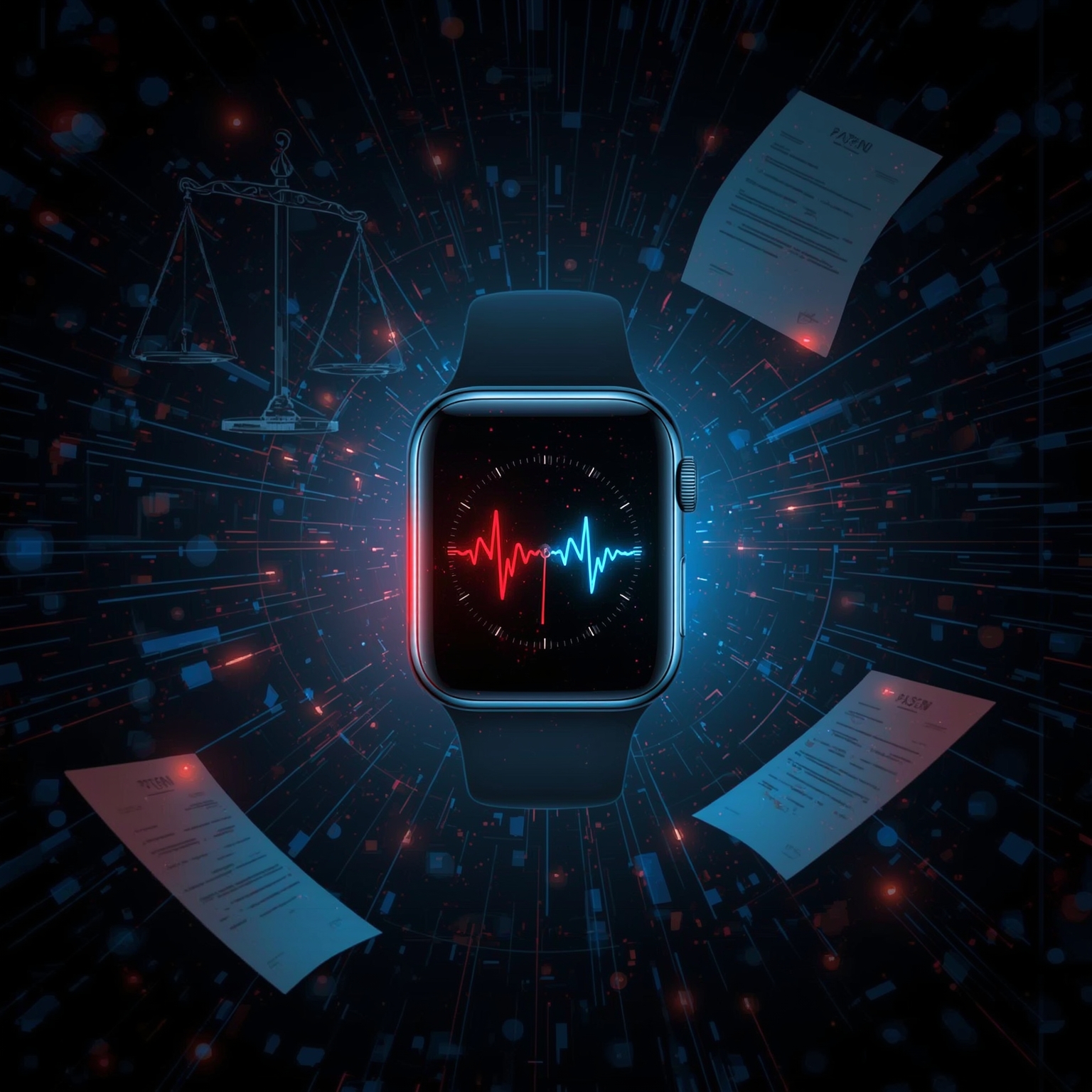
A federal jury in California reached a landmark decision on Friday, determining that Apple must pay a total of $634 million to Masimo, a company recognized globally for its advanced medical devices, after finding that Apple had infringed upon one of Masimo’s key patents involving blood oxygen monitoring technology. According to reporting from Reuters, the jury concluded that specific functions integrated into the Apple Watch — notably, its workout mode and the heart rate alert or notification mechanisms — unlawfully utilized Masimo’s protected intellectual property. The verdict represents one of the more substantial monetary awards in recent tech patent disputes, reflecting the growing complexities at the intersection of consumer technology and medical innovation.
In an official statement following the ruling, Masimo expressed that the decision marks a major and meaningful triumph in its continuing mission to safeguard its technological developments and proprietary inventions. The company emphasized that protecting its intellectual property portfolio is vital to sustaining its ability to create medical technologies that directly improve patient care and enhance health outcomes. Masimo described the verdict as affirmation of its long-standing efforts to defend the foundational work that underpins its inventions and reiterated its ongoing commitment to actively pursue and preserve its rights against any future infringements within the global marketplace.
Representing the opposing side, an Apple spokesperson told Reuters that the tech giant intends to challenge the outcome through an appeal process. The spokesperson pointed out that the single patent at the heart of this litigation had expired in 2022 and characterized it as being tied to what Apple described as historical or legacy patient-monitoring technology developed decades ago. By framing the issue as one rooted in older devices and practices, Apple appeared to underscore its belief that the patent’s relevance to today’s generation of wearable technology — such as modern Apple Watches — is limited. TechCrunch additionally reported that its publication had reached out to Apple for any further clarifying statements, though at the time of reporting, additional comments had not yet been released.
This legal battle between Masimo and Apple centers on pulse oximetry, a sophisticated biomedical technology that determines the oxygen saturation level in blood using an optical sensor to evaluate light absorption and reflection through skin tissues. Masimo, which has long been an innovator in the field of noninvasive monitoring, accused Apple of both infringing on its patents and engaging in targeted recruitment of its specialized personnel — including the company’s former chief medical officer — to gain access to proprietary expertise related to that technology. The friction between the two companies intensified over several years, culminating in multiple legal filings across different jurisdictions.
In a significant development in 2023, the United States International Trade Commission (USITC) ruled in favor of Masimo, resulting in an importation ban on Apple Watches that contained the contested blood oxygen monitoring functionality. As a direct consequence of that ruling, Apple’s wearable devices sold in recent years have omitted support for blood oxygen readings, illustrating how patent disputes can have immediate and visible impacts on consumer products and features highly valued by users.
However, in August of this year, Apple announced that it would be launching an alternative version of the blood oxygen feature, redesigned specifically to comply with the trade restrictions while still offering similar health-monitoring benefits. Under this new system, the measurements of blood oxygen levels would be captured and processed not directly on the Apple Watch itself, but rather through computational functions operating on a paired iPhone. This adjustment, according to Apple, was intended to ensure that the new device model remained marketable and legally permissible under the existing import regulations.
Masimo, unsatisfied with this workaround, subsequently initiated new litigation against the U.S. Customs and Border Protection agency, arguing that the agency had improperly allowed Apple to import Apple Watches equipped with this revised implementation of blood oxygen sensing. Concurrently, Apple lodged its own formal request with an appeals court, seeking to overturn the existing import restrictions implemented by the USITC. The series of appeals and counterclaims have turned this patent dispute into one of the longest-running and most closely watched cross-industry legal sagas between a major technology manufacturer and a biomedical company.
Meanwhile, Apple filed a separate countersuit against Masimo, accusing the latter of violating certain design patents belonging to Apple. In that case, the jury rendered a decision in Apple’s favor, though the damages awarded were relatively symbolic in scale — a statutory minimum of $250. The modest award underscored the divergent outcomes and complexities that often characterize intellectual property litigation between technology firms, where each party typically claims elements of creative or technical innovation.
Overall, the case illuminates broader tensions shared across the technology and healthcare sectors. It highlights the delicate balance between encouraging innovation, respecting proprietary research, and navigating an increasingly competitive commercial environment where the lines between medical-grade tools and consumer-friendly technology continue to blur. The court’s decision, the subsequent appeals, and the evolving product modifications together illustrate a profound moment in the ongoing narrative of how intellectual property law shapes the trajectory of both health technology and the consumer wearable market.
Sourse: https://techcrunch.com/2025/11/15/jury-says-apple-owes-masimo-634m-for-patent-infringement/